






Ken Kesey's 1962 novel, "One Flew Over the Cuckoo's Nest," quickly transcended its literary origins to become a significant work across multiple artistic mediums. Its powerful narrative, set within an Oregon psychiatric hospital, explored themes of institutional processes, the human mind, and individualistic principles. The story's immediate success paved the way for a series of adaptations that brought its compelling characters and critique of authority
to wider audiences, solidifying its place in American cultural history.
From Page to Stage: The Broadway Debut
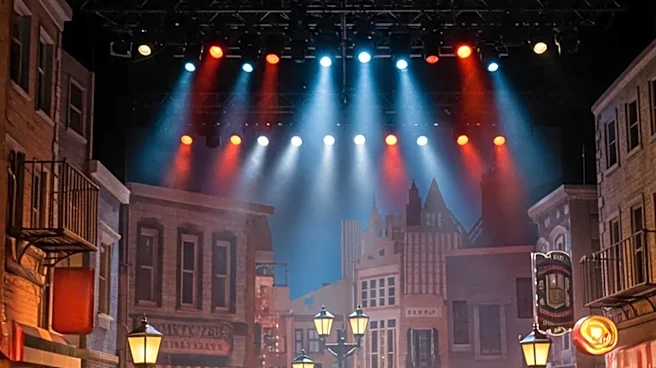
The journey of "One Flew Over the Cuckoo's Nest" from novel to stage began swiftly after its publication. In 1963, just a year after the novel's release, Dale Wasserman adapted Kesey's work into a successful stage play. This adaptation made its Broadway debut on November 13, 1963, at the Cort Theatre in New York City. The original Broadway production featured notable actors, with Kirk Douglas taking on the iconic role of Randle McMurphy and Joan Tetzel portraying the formidable Nurse Ratched. Douglas, in fact, had secured the rights to produce the story for both the stage and motion pictures, demonstrating an early belief in its potential beyond the printed page.The play's initial run established its theatrical presence, and it later saw significant revivals. One such revival occurred off-Broadway in 1971, directed by Lee Sankowich, featuring Danny DeVito as Martini and William Devane as McMurphy. The play's enduring appeal was further highlighted by a Broadway revival in 2001, which earned the Tony Award for Best Play Revival. This production, directed by Terry Kinney, starred Gary Sinise as McMurphy, Amy Morton as Nurse Ratched, and Tim Sampson as Chief Bromden, a role his father, Will Sampson, had played in the film version. Another notable production was staged in London in 2004, featuring Christian Slater as McMurphy and Frances Barber as Nurse Ratched, which later transferred to the Gielgud Theatre.
The Acclaimed Film Adaptation
While the stage play garnered critical attention, it was the 1975 film adaptation that brought "One Flew Over the Cuckoo's Nest" to global prominence. Directed by Miloš Forman and co-produced by Michael Douglas, the film starred Jack Nicholson as Randle McMurphy and Louise Fletcher as Nurse Ratched. This cinematic version achieved immense success, winning the "Big Five" Academy Awards: Best Picture, Best Actor (Jack Nicholson), Best Actress (Louise Fletcher), Best Director (Forman), and Best Adapted Screenplay (Lawrence Hauben and Bo Goldman). The film's screenplay, however, was not based on Wasserman's play script, but rather was a separate adaptation of Kesey's novel.The film's impact was profound, cementing the characters of McMurphy and Nurse Ratched in popular culture. The success of the film also meant that the story reached an even broader audience, influencing perceptions of mental health institutions and individual freedom. The character of Nurse Ratched, in particular, has continued to resonate, even appearing as a recurring character in the ABC series "Once Upon a Time," portrayed by Ingrid Torrance. The various adaptations, from the initial stage play to the acclaimed film and subsequent revivals, underscore the timeless power of Ken Kesey's original narrative and its ability to be reinterpreted across different artistic forms.