


Black tie represents a semi-formal Western dress code for evening events, with specific components that have evolved over time while maintaining a core traditional structure. Unlike the highly regulated white tie, black tie ensembles allow for some variation, though certain elements remain essential for adhering to the dress code. Understanding each component, from the jacket to the footwear, is key to mastering this classic look.
The Dinner Jacket and Its Variations
The dinner jacket
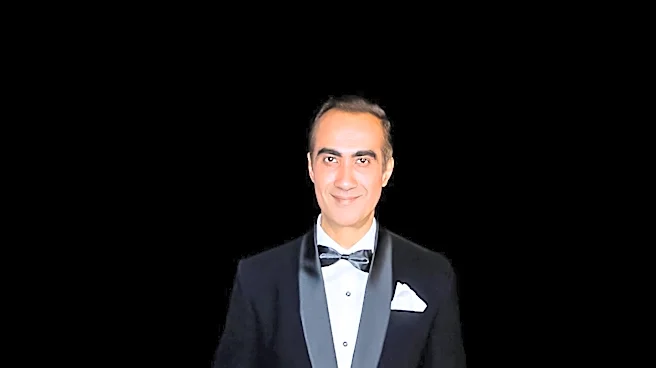
is the centerpiece of the black tie ensemble. Traditionally, early dinner jackets were made of the same black material as the dress coat, featuring one, two, or no buttons, and a shawl collar faced in satin or ribbed silk. By the turn of the 20th century, the peaked lapel became equally popular, and the one-button model became standard. While black remains the most traditional color, midnight blue gained popularity by the mid-1930s and rivaled black. In the 1950s, color, texture, and pattern became increasingly popular for warm-weather jackets, and by the 1960s, these variations were common regardless of season. The 1980s saw a return to the black tone, and notch lapels, once a brief vogue in the 1920s, returned for good. Modern dinner jackets sometimes incorporate traits of business suits, such as two- and three-button styling, flap pockets, and center vents, though midnight blue is a popular alternative today.
Essential Shirt, Neckwear, and Trousers
The dress shirt designed for black tie is often called a "tuxedo shirt" in American English. Traditionally, it is white with a bibbed front that is either marcella or pleated, a turndown collar, and double, or "French," cuffs. While a pique shirt with a detachable wing collar and single cuffs was used in the early 20th century, and ruffled bibs were popular in the 1960s and 70s, the turndown collar is now preferred. Some style authorities argue that the wing collar should remain for white tie. The shirt fastens with matching shirt studs, commonly in silver or gold settings, featuring onyx or mother-of-pearl. Cufflinks, most formally the double-panel type, secure the cuffs.
The only appropriate neckwear is a black bow tie, traditionally self-tied, matching the lapel facing of the dinner jacket and the braiding of the trouser seams. The bow tie is tied using a common shoelace knot. Black tie trousers traditionally have no turn-ups (cuffs in American English) or belt loops. The outer seams are usually decorated with a single braid of silk or a material that matches or complements the lapel facing. Braces, or suspenders in US English, hidden by the waistcoat, are used to support the trousers, as belts are never worn. Trousers may be flat-fronted or pleated, with pleats becoming fashionable in the 1930s.
Waist Coverings and Footwear
A waist covering is generally worn as part of a black tie ensemble, either a low-cut waistcoat or a cummerbund, but never both. While some authorities consider them non-essential, others, like The Emily Post Institute, deem them essential. Waist coverings are not matched to wedding theme colors. A low-cut waistcoat should be worn with a single-breasted coat to conceal the trousers' exposed waistband and the shirt bosom's bottom edge. Waistcoats come in 'V' or 'U' shapes, in backless or fully backed versions, double- or single-breasted, with or without lapels. Before World War II, a white waistcoat was sometimes worn, a style now considered an affectation but still acceptable in the United States. The waistcoat can be made from the same fabric as the dinner jacket or the same silk as the jacket's lapels. A waistcoat is never worn with a double-breasted jacket, as it is never unbuttoned, so the waist of the trousers does not need to be covered.
A cummerbund may be worn with a dinner jacket in lieu of a waistcoat and is considered equally correct, though slightly less formal. It pairs well with a shawl collar dinner jacket. The cummerbund's material should be silk satin, grosgrain, or barathea to match the bow tie. It features upward-facing folds, originally for storing tickets, now primarily decorative. Like waistcoats, cummerbunds are not worn with a double-breasted jacket. Traditionally black, deep and rich colors are endorsed by some guides for introducing color, but bright colors should be avoided, and the bow tie must remain black.
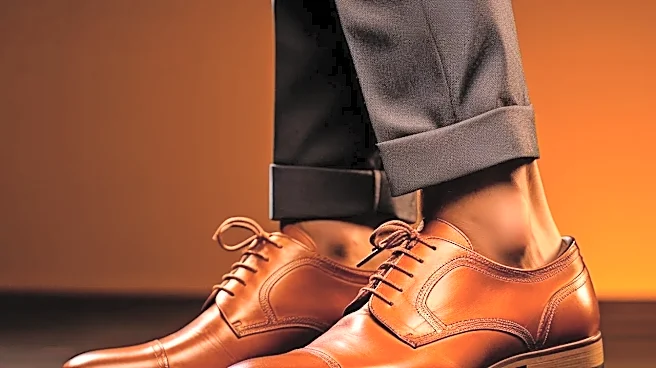
The most formal and traditional shoes are patent leather opera pumps, also called court shoes, decorated with grosgrain bows. A more popular alternative is the black lace-up Oxford shoe, in patent leather or calfskin, with a rounded plain toe. Brogueing or other decorative patterns should never be seen on black tie footwear. Matte finish pumps are also seen. Shoes are almost invariably black, with patent leather considered more formal than matte finishes, and pumps more formal than lace-ups. Shoes with open lacing, like the Derby shoe (bluchers in American English), are generally too informal. Black socks made from fine wool or silk complete the look.