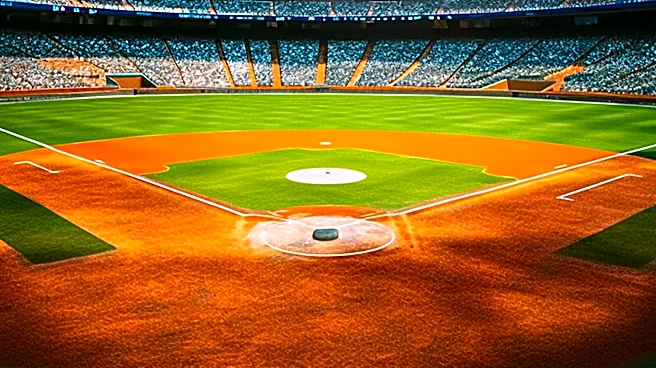





Baseball has had a complex and often debated history within the Summer Olympic Games, transitioning from a series of exhibition matches to an official medal sport, only to be removed and later reinstated. Its journey reflects the changing dynamics between professional sports and the Olympic ideal, as well as the sport's global appeal and challenges. The sport's path through the Olympics is marked by periods of inclusion, controversy, and eventual
return, showcasing its enduring, if sometimes tenuous, connection to the world's premier athletic competition.
Early Exhibitions and Official Recognition
Baseball's Olympic presence began long before it achieved official medal status. It was first played as a demonstration sport in seven different Olympics: 1912, 1936, 1952, 1956, 1964, 1984, and 1988. This made it the sport with the most exhibition appearances in Olympic history. These early showings varied in format, from a single game in its first five appearances to a tournament format in 1984 and 1988. Notable exhibition games included a 1912 match in Stockholm between a U.S. team and host Sweden, and a 1936 game in Berlin where two U.S. teams played before an estimated 90,000 to 100,000 spectators.
The International Olympic Committee (IOC) finally granted baseball official status on October 13, 1986, paving the way for its debut as a medal sport at the 1992 Summer Olympics. This decision marked a significant milestone for the sport, elevating it from a mere exhibition to a fully recognized Olympic event. The 1992 Games in Barcelona saw the first official Olympic baseball tournament, a moment that had been advocated for by figures like Leslie Mann, a former MLB player and coach, despite earlier opposition from IOC leaders like Avery Brundage, who believed professional sports were incompatible with the amateur ethos of the Olympics.
The Rise and Fall of Olympic Baseball
Following its official inclusion, baseball was contested at every subsequent Summer Games through 2008. The inaugural 1992 tournament was won by the Cuban team, who entered as favorites, having won 12 world championships and boasting an impressive 62-1 record in international competitions since 1986. Cuba continued its dominance, going undefeated again at the 1996 Olympics to secure a second consecutive gold medal. The United States earned its first medal, a bronze, in 1996, and then captured gold at the 2000 Summer Olympics. The 2000 Games were notable as the first time Cuba lost a game, first to the Dutch team and then to the Americans in the gold medal match. This era also saw the admission of professional players, though Major League Baseball (MLB) still restricted its 40-man roster players from competing.
However, baseball's tenure as an Olympic sport was not without its challenges. In 2005, the IOC voted to remove baseball and softball from the 2012 Summer Olympics roster, marking the first time sports had been removed from the Olympics since polo in 1936. Several factors contributed to this decision, including the continued absence of top MLB players, concerns about performance-enhancing drugs, and the high cost associated with building baseball stadiums. Appeals to reinstate the sports for 2012 were unsuccessful. Despite its removal from future Games, baseball was still played at the 2008 Beijing Olympics, where South Korea defeated Cuba to win its first gold medal.
Reinstatement and Future Prospects
After its removal, efforts to bring baseball back to the Olympic program continued. In 2009, international governing bodies for several sports, including baseball, petitioned the IOC to fill two sport slots for the 2016 Olympics. However, the IOC ultimately chose rugby and golf for those spots. The situation changed with new IOC policies that allowed host organizing committees to propose additional sports. This led to a second bid for baseball and softball to be included in the 2020 Summer Olympics in Tokyo. On August 3, 2016, the IOC approved the return of baseball and softball for the Tokyo Games.
Japan, the host nation, won the gold medal in baseball at the 2020 Summer Olympics (held in 2021). This return was significant, especially for Japan, where Nippon Professional Baseball allowed its players to compete, even pausing its season for the duration of the Olympics. While baseball was not included in the 2024 Paris Olympics, there is an expectation that it will return, along with softball, for the 2028 Los Angeles Olympics, largely due to the sport's popularity in the United States. This ongoing back-and-forth illustrates the dynamic relationship between baseball and the Olympic movement, driven by factors like professional player participation, global appeal, and host nation interest.