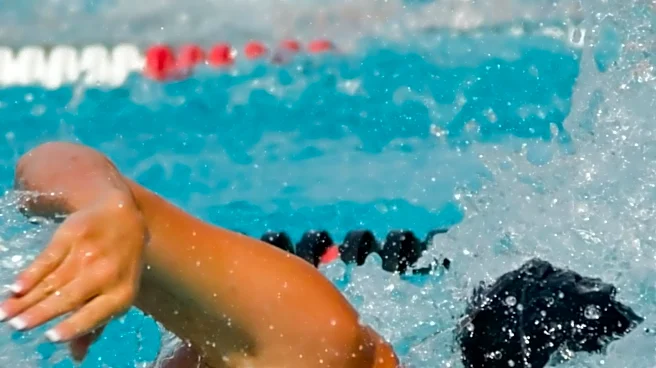




Freestyle swimming events formed a significant portion of the aquatic competitions at the 1920 Summer Olympics, offering a platform for both male and female athletes to showcase their speed and endurance. These races, ranging from short sprints to longer distances, were central to the swimming program, drawing considerable attention and setting the stage for memorable performances. The freestyle category, known for its emphasis on speed and efficiency,
was a highlight of the Games, demonstrating the evolving techniques and athleticism of the era.
Men's Freestyle Challenges
The men's freestyle program at the 1920 Summer Olympics was comprehensive, featuring three distinct individual distances: the 100 meter, 400 meter, and 1500 meter freestyle. The 100 meter freestyle was a pure sprint, demanding explosive power and quick turns. This event was particularly notable as it marked the fourth appearance of the men's 100 meter freestyle in Olympic history, with a total of 31 swimmers from 15 nations competing. The United States notably swept the medals in this event, with Duke Kahanamoku successfully defending his championship from 1912 and breaking his own Olympic record.
Beyond the sprint, the 400 meter freestyle offered a mid-distance challenge, requiring a blend of speed and stamina. The longest individual freestyle event for men was the 1500 meter freestyle, a true test of endurance that pushed swimmers to their physical limits over an extended period. These individual events were complemented by the men's 4 x 200 meter freestyle relay, a team competition that added another layer of excitement and strategic racing to the freestyle program.
Women's Freestyle Achievements
Women's freestyle swimming also played a crucial role in the 1920 Summer Olympics, with two individual events and one relay. The women's 100 meter freestyle provided a sprint opportunity for female athletes, mirroring the men's event in its demand for speed. Additionally, the women's 300 meter freestyle offered a unique mid-distance challenge, allowing swimmers to demonstrate their sustained speed and technique over a longer course.
The women's 4 x 100 meter freestyle relay was another key event, fostering team spirit and showcasing the collective strength of national swimming programs. The inclusion of these freestyle events for women was vital in promoting female participation in competitive sports and highlighting their athletic capabilities on an international stage. The performances in these freestyle races contributed significantly to the overall narrative of the 1920 Olympic swimming competitions.