





Kepler-452b, a candidate for an exoplanet, was discovered by NASA's Kepler space telescope and announced on July 23, 2015. This discovery marked a significant milestone in the search for Earth-like planets, as Kepler-452b was found orbiting within the habitable zone of a sun-like star. However, the existence of this planet has been subject to debate, with subsequent studies questioning its validity.
The Discovery Process
The Kepler space telescope, launched in 2009, was
designed to observe stars and detect transit events, where a planet crosses in front of its host star, causing a temporary dimming. During its mission, Kepler observed 50,000 stars, including Kepler-452, and sent preliminary light curves to the Kepler science team for analysis.
Kepler-452b exhibited a transit roughly every 385 days, leading scientists to conclude that a planetary body was responsible for this periodic dimming. The discovery was significant because Kepler-452b was the first potentially rocky super-Earth planet found orbiting within the habitable zone of a star similar to the Sun. This zone is where conditions might allow for the presence of liquid water, a key ingredient for life as we know it.
The Debate
Despite the initial excitement, the existence of Kepler-452b has been disputed. Two reports refuted the claim, suggesting that the planet might not exist. However, further work reestablished the claim, and as of 2025, the probability of a false positive detection has been estimated at less than 1%, strengthening the case for Kepler-452b's existence.
A study in 2018 by Mullally et al. argued that statistically, Kepler-452b had not been proven to exist and should still be considered a candidate. This ongoing debate highlights the challenges in confirming exoplanets, especially those located far from Earth. At nearly 1,800 light-years away, Kepler-452b is too remote for current telescopes to determine its true mass or whether it has an atmosphere.
Future Prospects
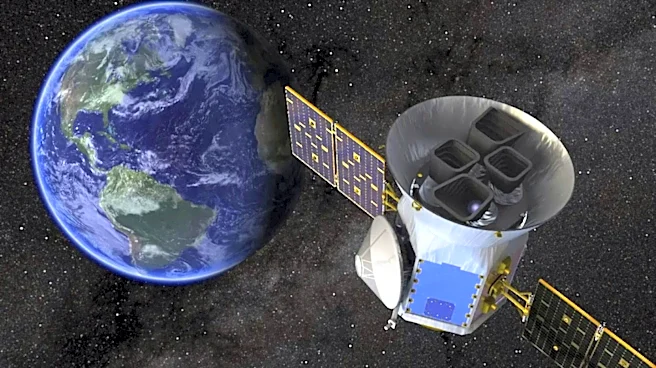
The discovery of Kepler-452b has paved the way for future planet-hunting missions. Next-generation space telescopes like TESS and CHEOPS are set to examine nearby stars across the sky, potentially providing more data on exoplanets like Kepler-452b. The James Webb Space Telescope and future large ground-based telescopes will focus on analyzing atmospheres, determining masses, and inferring compositions.
The debate surrounding Kepler-452b underscores the complexities of exoplanet research and the need for advanced technology to confirm distant worlds. As scientists continue to explore the universe, the search for habitable planets remains a compelling and evolving field.