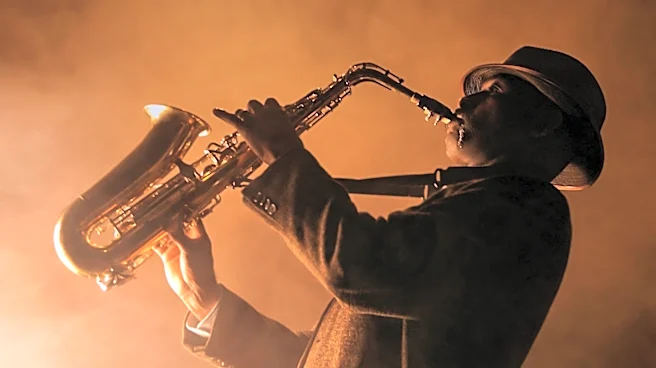








In 1975, saxophonist Hank Crawford released his sixteenth album, titled *I Hear a Symphony*, marking his fifth release on the Kudu label. This album presented a distinct jazz interpretation, diverging from the pop and R&B associations of the title. Recorded in June and July of 1975 at the Van Gelder Studio in Englewood Cliffs, New Jersey, the album captured Crawford's signature soulful playing within a jazz framework. Produced by Creed Taylor, the record
offered a different musical perspective on the phrase "I Hear a Symphony," contributing to Crawford's extensive discography and the Kudu label's catalog of jazz recordings.
Recording and Production Details
Hank Crawford's *I Hear a Symphony* was a product of the mid-1970s jazz scene, recorded over two months in the summer of 1975. The choice of Van Gelder Studio in Englewood Cliffs, NJ, for the recording sessions indicates a commitment to high-quality sound production, as this studio was well-regarded in the jazz community. Creed Taylor, a prominent figure in jazz production, helmed the project, bringing his expertise to shape the album's sound. The album's length, at 33 minutes and 15 seconds, was typical for LPs of the era, offering a concise yet impactful musical statement.
Released on the Kudu KU-26 label, *I Hear a Symphony* fit within Crawford's prolific output during the 1970s. It followed his 1975 album *Don't You Worry 'bout a Thing* and preceded *Hank Crawford's Back*, released in 1976, illustrating a consistent period of recording and releasing new material for the saxophonist. This album further cemented his presence in the jazz genre, particularly within the soulful and funky subgenres he was known for exploring.
Critical Reception and Musical Style
Upon its release, *I Hear a Symphony* garnered attention from music critics. AllMusic awarded the album a rating of 3 stars, indicating a generally positive reception. Thom Jurek's review for AllMusic highlighted the album's energetic quality, stating that "this set is a cooker." He acknowledged that while "the production is a bit dated," the core musical elements transcended this potential drawback. Jurek specifically praised Crawford's "soulful playing" and the "funky-butt moves," along with the "tough riffing of Gale," suggesting a vibrant and engaging musical experience.
The album's genre is firmly rooted in jazz, with elements of soul and funk that were characteristic of Crawford's style. This blend allowed him to create music that was both sophisticated and accessible. The review's emphasis on the "funky-butt moves" and "tough riffing" points to an energetic and rhythmically driven approach, showcasing Crawford's ability to infuse his jazz with a strong groove. Despite any perceived datedness in production, the enduring quality of Crawford's performance and the overall musicality were recognized as significant strengths of the album.