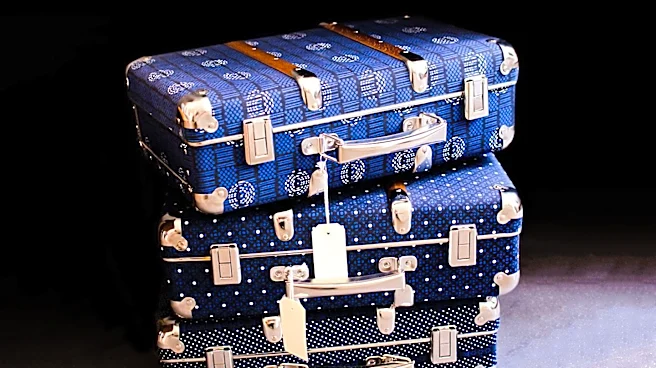










The evolution of luggage is not merely a story of material and mechanical improvements; it deeply reflects and, in turn, influenced social and cultural shifts, particularly concerning travel accessibility and gender roles. From the heavy trunks carried by servants for the elite to the modern wheeled suitcase, each innovation has reshaped who travels, how they travel, and the societal expectations surrounding their journey. The journey of luggage from
a symbol of status to an item of personal convenience highlights broader changes in society.
Travel for the Elite to Mass Tourism
In earlier centuries, travel was largely exclusive to the wealthy. During the 18th century, European elites embarking on the Grand Tour relied on servants to carry their substantial wood and leather trunks. These trunks, often waterproofed with canvas or tree sap and featuring iron bases, were inconveniently heavy, as suggested by the 1596 definition of "luggage" as "inconveniently heavy baggage." This reliance on assistance underscored the class distinctions inherent in travel. The very design of these early trunks, with handles on their shorter sides, made them difficult for a single person to manage, reinforcing the need for porters or servants.
However, as railways and cruise ships made travel more accessible to non-elites, mass tourism began to increase. This shift created a growing need for more practical and manageable luggage. The late 19th century saw the introduction of "suit cases," designed to carry dress suits without wrinkling. These early suitcases, while still substantial, were a step towards personal manageability, featuring a handle on their long side, a departure from the traditional trunk design. This change hinted at a future where travelers might handle their own belongings, rather than relying solely on others.
Gender Perceptions and the Wheeled Suitcase
The introduction of lighter materials in the 1930s and 1940s, such as plastic and cardboard, was partly driven by a 40-pound weight limit for checked bags in the United States. Interestingly, lightweight suitcases were initially marketed primarily toward women. This marketing strategy suggests an early recognition of women's increasing participation in travel, perhaps independently, and a need for luggage they could manage more easily.
Despite early patents for wheeled luggage dating back to 1887 and 1945, and even an American artist, Anita Willets-Burnham, creating a wheeled suitcase in 1928, the travel industry largely viewed wheeled luggage as a niche invention solely for women until the 1970s. This perception highlights a prevailing "macho feeling" that men would consider rolling their luggage "wimpy." Bernard D. Sadow, the inventor of the first commercial rolling suitcase in 1970, encountered significant resistance from department stores, which reportedly refused to sell his invention due to this very sentiment. They believed that women travelers would have their husbands carry their suitcases for them, reinforcing traditional gender roles in travel.
It was only after Macy's began successfully marketing Sadow's "The Luggage That Glides" that wheeled suitcases started gaining popularity. The subsequent invention of the two-wheeled, upright suitcase with a long handle by pilot Robert Plath in 1987, initially sold to airline crew members, further normalized the concept. The sight of professional travelers, both men and women, effortlessly navigating airports with these bags helped to dismantle the earlier gendered perceptions. The widespread adoption of wheeled luggage ultimately empowered all travelers, regardless of gender, to manage their own belongings with greater ease, fundamentally changing the travel experience and contributing to a more independent and self-reliant approach to journeys.