




Group 4 racing cars have a storied history in the world of motorsport, evolving significantly from their inception in 1954 until their replacement by Group B in 1982. This category was initially introduced to regulate Grand Touring cars, requiring manufacturers to produce a minimum number of units to qualify for competition. Over the years, the regulations and requirements for Group 4 cars underwent several changes, reflecting the dynamic nature of motorsport and the technological
advancements of the time.
Early Years and Initial Regulations
When Group 4 was first introduced in 1954, it was part of a broader effort by the FIA to categorize and regulate different types of racing cars. Initially, the focus was on Sports Cars that complied with FIA Appendix C regulations. This included Series Touring Cars, Improved Touring Cars, and Grand Touring Cars that had been modified beyond the Group 1, Group 2, or Group 3 regulations. The goal was to create a competitive environment that encouraged innovation while maintaining a level playing field.
In 1966, a significant overhaul of the FIA categories redefined Group 4 Sports Cars. The new regulations required a minimum production of 50 units within 12 consecutive months, and the cars had to be equipped with all necessary equipment for public road use. This change aimed to ensure that the cars competing in races were closely related to those available to the public, thus maintaining the spirit of Grand Touring.
Changes in Production Requirements
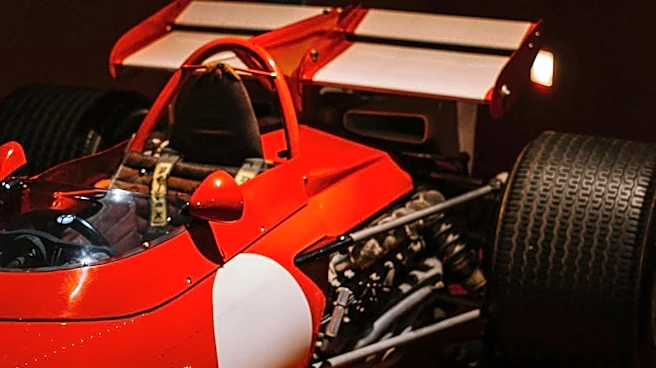
The late 1960s and early 1970s saw further changes to Group 4 regulations. In 1968, the FIA reduced the minimum production requirement from 50 to 25 units, responding to the small fields in Group 6 Prototype races. This change allowed manufacturers like Porsche and Ferrari to produce limited runs of high-performance cars, such as the Porsche 917 and Ferrari 512S, which were essentially Group 6 Prototypes with larger engines.
These changes reflected the evolving landscape of motorsport, where manufacturers were increasingly focused on producing specialized racing machines. The reduction in production requirements allowed for greater flexibility and innovation, leading to some of the most iconic racing cars of the era.
The Transition to Group B
By the late 1970s, the landscape of motorsport was shifting once again. In 1976, the production requirement for Group 4 was further reduced to 400 units over 24 months. This change was part of a broader trend towards more specialized and high-performance racing cars.
Ultimately, Group 4 was replaced by Group B in 1982, marking the end of an era. Group B introduced even more relaxed regulations, allowing for greater technological advancements and higher performance levels. The transition to Group B reflected the ongoing evolution of motorsport, where the focus was increasingly on pushing the boundaries of speed and performance.
The history of Group 4 racing cars is a testament to the dynamic nature of motorsport and the constant drive for innovation. From its early days to its eventual replacement, Group 4 played a crucial role in shaping the landscape of racing and setting the stage for future developments.