


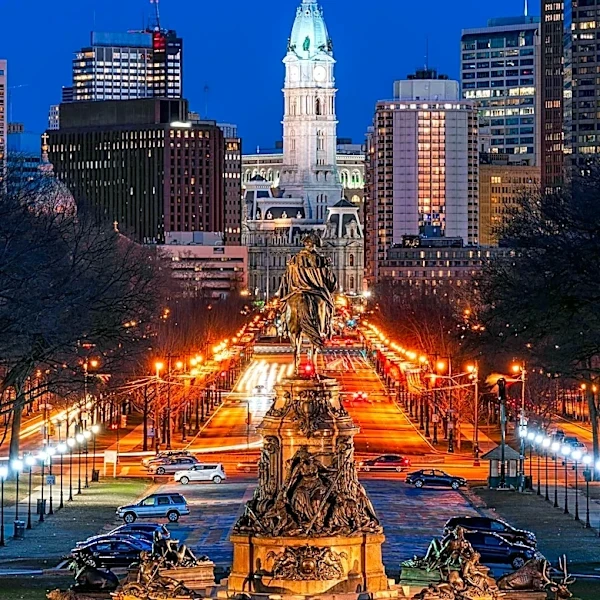




The First Continental Congress, convened in Philadelphia in the fall of 1774, was not merely a political assembly but also a crucible of diverse colonial identities and beliefs. Delegates from twelve of the Thirteen Colonies gathered at Carpenters' Hall, facing the monumental task of responding to British aggression. Beyond the formal resolutions and petitions, the internal dynamics, including spirited debates and a deeply moving moment of prayer,
played a crucial role in shaping the nascent American identity and fostering a sense of collective purpose among the varied representatives.
The Unifying Power of Prayer
On September 6th, a resolution was put forth by Thomas Cushing to begin the daily sessions of Congress with a prayer. This idea was supported by Samuel Adams, who proposed that the Anglican clergyman Reverend Jacob Duché lead the assembly. Duché's selection was significant, as the delegates represented a wide spectrum of colonial religious traditions, including Anglicans, Congregationalists, Presbyterians, Quakers, Lutherans, Baptists, and Reformed Christians. The diversity made even routine questions, such as whether to begin with prayer, matters of careful debate. Initially, some delegates objected on denominational grounds, fearing an Anglican prayer might alienate others or that a Quaker-influenced colony like Pennsylvania might not accept liturgical ceremony. Samuel Adams, however, skillfully reframed the issue, insisting he "could hear a prayer from any gentleman of piety and virtue who is a friend to his country," thereby emphasizing unity over doctrine.
On September 7th, at 9:00 a.m., Reverend Jacob Duché entered Carpenters' Hall in full Anglican clerical robes, carrying the Book of Common Prayer. The hall was described as unusually silent and expectant. Duché began by reading Psalm 35, a passage invoking divine justice against persecutors, which John Adams noted "thrilled through the whole assembly." Charles Thomson observed that it "seemed wonderfully adapted to the circumstances of America." Many delegates, including Quakers unaccustomed to such outward expressions of devotion, reportedly stood and followed the reading closely. When Duché knelt to pray, numerous delegates followed, with some accounts describing visible emotion, tears, and a "noble scene of devotion." Duché then offered an extemporaneous prayer asking for unity, wisdom, and divine favor on the colonial cause, a moment that was widely praised for its fervor and unifying effect.
Divergent Philosophies and the Quest for a Common Cause
While the prayer offered a moment of spiritual unity, the political deliberations revealed significant philosophical differences among the delegates. Conservatives like Joseph Galloway of Pennsylvania, John Dickinson, John Jay of New York, and Edward Rutledge of South Carolina, viewed their primary objective as pressuring Parliament to repeal its acts and ultimately achieving reconciliation with Great Britain. They sought a reasonable solution to the difficulties, aiming to restore harmonious relations.
In contrast, figures such as Patrick Henry of Virginia, Roger Sherman of Connecticut, and Samuel and John Adams of Massachusetts, believed the Congress's task was to issue a decisive statement of colonial rights and liberties. Their goal was to end what they perceived as abuses of parliamentary authority and to uphold rights guaranteed by colonial charters and the English constitution. Roger Sherman, for example, outright denied Parliament's legislative authority, while Patrick Henry even suggested the need for a completely new system of government, independent from Great Britain, arguing that existing colonial governments were already dissolved. Joseph Galloway's "Plan of Union," which proposed an American legislative body whose consent would be required for imperial measures, represented an attempt to bridge these differing views, but it was ultimately set aside, highlighting the growing chasm between those seeking reconciliation and those pushing for a more radical assertion of colonial autonomy.