


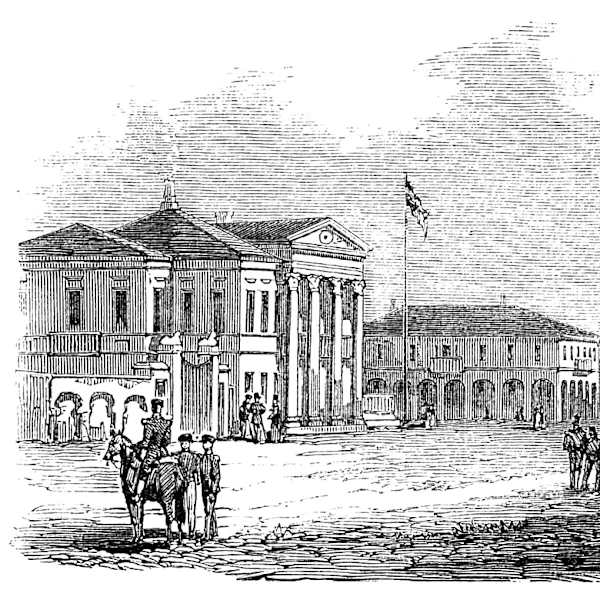






The annexation of Texas by the United States in 1845 was a catalyst for the Mexican-American War, a conflict that reshaped the geopolitical landscape of North America. This article explores the causes and consequences of the war, highlighting how Texas's entry into the Union played a pivotal role in escalating tensions between the U.S. and Mexico.
Prelude to Conflict
The annexation of Texas was a contentious issue for Mexico, which had never recognized Texas's independence
following the Texas Revolution. Mexico viewed the annexation as an act of aggression and a violation of its territorial sovereignty. The U.S. Congress's decision to annex Texas in 1845 further strained relations, as Mexico continued to consider Texas a renegade state.
Border disputes between Texas and Mexico exacerbated the situation. Texas claimed territory extending to the Rio Grande, while Mexico insisted that the border was at the Nueces River. These conflicting claims set the stage for military confrontation, as both nations sought to assert control over the disputed areas.
The Outbreak of War
The Mexican-American War officially began in 1846, following a series of skirmishes along the disputed border. The U.S. military, under President James K. Polk, launched a campaign to secure Texas and expand American territory further into the southwest. The war was marked by several key battles, including the capture of Mexico City by U.S. forces.
The conflict was driven by the U.S. desire for territorial expansion, a concept known as Manifest Destiny. The annexation of Texas was seen as a stepping stone towards acquiring additional lands, including California and New Mexico. This expansionist agenda fueled the war and shaped its objectives.
Aftermath and Legacy
The Mexican-American War concluded in 1848 with the Treaty of Guadalupe Hidalgo. Mexico relinquished its claim on Texas and ceded vast territories, including present-day California, Arizona, New Mexico, and parts of Colorado, Utah, and Nevada, to the United States. This significant territorial gain solidified the U.S. presence in the southwest and fulfilled its expansionist ambitions.
The war had lasting implications for U.S.-Mexico relations, creating a legacy of mistrust and resentment. It also intensified domestic debates over slavery, as the newly acquired territories raised questions about the extension of slavery into these areas. The annexation of Texas and the subsequent war were pivotal events that shaped the future of both nations and the broader North American region.