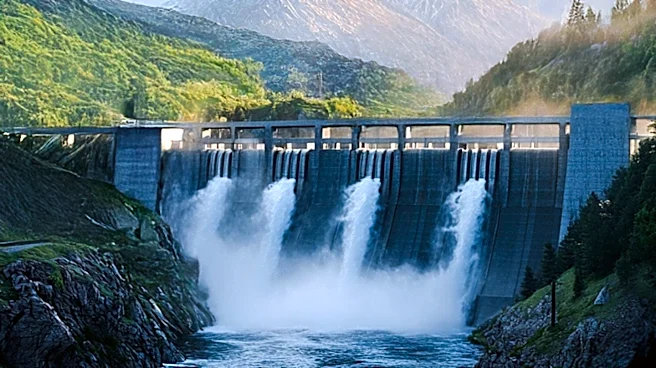



The Bonneville Lock and Dam, a significant structure spanning the Columbia River between Oregon and Washington, stands as a testament to large-scale infrastructure projects undertaken during the Great Depression. Located about 40 miles east of Portland, Oregon, in the scenic Columbia River Gorge, this complex was a monumental undertaking managed by the United States Army Corps of Engineers. Its primary purposes were, and continue to be, electrical
power generation and aiding river navigation. At the time of its construction in the 1930s, it was considered the largest water impoundment project of its kind in the nation, designed to withstand unprecedented flooding.
Genesis in the Great Depression
Before the New Deal era, there was already an understanding of the importance of developing the Columbia River for flood control, hydroelectricity, navigation, and irrigation. A 1929 report by the U.S. Army Corps of Engineers, known as the Columbia River 308 Report, had recommended the construction of ten dams on the river. However, concrete action on these recommendations did not begin until the administration of Franklin D. Roosevelt and the advent of the New Deal programs. This period coincided with the Great Depression, and the construction of projects like the Bonneville Dam offered crucial employment and economic benefits to the Pacific Northwest region.
With funding secured from the Public Works Administration in 1934, two major projects were initiated: the Grand Coulee Dam and the Bonneville Dam. The Bonneville Dam project alone employed approximately 3,000 laborers, many of whom were from relief or welfare rolls. These workers were paid 50 cents an hour and worked in non-stop eight-hour shifts, not only on the dam itself but also on raising local roads to accommodate the new reservoir. The availability of inexpensive hydroelectricity generated by the dam also fostered a robust aluminum industry in the area, though this industry has since ceased operations.
Engineering Marvels and Initial Operations
The construction of the Bonneville Locks and Dam involved innovative engineering techniques. The Army Corps of Engineers first built one of the largest scale models in history, meticulously replicating the proposed dam, the section of the river, and its various components. This model was instrumental in studying and planning the complex construction process. The initial phase involved building a new lock and a powerhouse on the south (Oregon) side of Bradford Island, alongside a spillway on the north (Washington) side. Cofferdams were erected to block half of the river, creating a dry construction site where the foundation could be laid. These initial components of the Bonneville Dam were completed in 1937.
Upon completion, the Bonneville Reservoir, also known as Lake Bonneville, formed behind the dam, submerging both the historic Cascades Rapids and the older lock structure that had been built in 1896. The original navigation lock at Bonneville, which opened in 1938, was a significant achievement for its time, boasting the highest single-lift in the world with a vertical lift of 60 feet. While the dam began generating hydroelectricity in 1937, commercial electricity transmission from the facility officially commenced in 1938. The Bonneville Power Administration is responsible for distributing the electrical power generated at the dam.
Expansion and Enduring Legacy
The dam's capacity was later expanded with the construction of a second powerhouse and dam structure, which began in 1974 and was completed in 1981. This expansion involved widening the river channel on the Washington side, leading to the creation of Cascades Island between the new powerhouse and the original spillway. The combined rated electrical output of the two powerhouses at Bonneville now stands at 1.2 gigawatts. Despite its record-setting size in 1938, the original Bonneville Lock eventually became the smallest among eight locks on the Columbia and Snake rivers. A new, larger lock was subsequently built on the Oregon shore, opening to ship and barge traffic in 1993, while the old lock remains present but is no longer in use. The Bonneville Dam Historic District was recognized as a National Historic Landmark District in 1987, acknowledging its historical significance.