








In the United States, the first-sale doctrine is a crucial principle within copyright law that significantly impacts how consumers and businesses interact with copyrighted works. This doctrine allows the owner of a legally purchased copy of a copyrighted work to resell or transfer that specific copy without needing permission from the copyright holder. It's a fundamental concept that underpins the legality of second-hand bookstores, used CD sales,
and many other forms of aftermarket commerce. While it grants freedom to the owner of a physical copy, it's important to understand that this doctrine does not extend to the reproduction rights of the copyright holder, meaning one cannot make additional copies and distribute them.
Origins and Purpose of the Doctrine
The first-sale doctrine was established by courts to clarify the legality of reselling books, particularly in second-hand bookstores. Before this doctrine was firmly in place, there might have been ambiguity regarding whether reselling a copyrighted book constituted an infringement of the publisher's rights. The doctrine essentially states that once a copyright holder sells a particular copy of their work, their control over that specific physical item is "exhausted." This exhaustion of rights allows for a vibrant secondary market for copyrighted goods, benefiting consumers who can purchase items at a lower cost and promoting the circulation of creative works.
This principle is also known as "exhaustion of rights" in other countries and applies, though with some differences, to patent and trademark rights as well. Its core purpose is to prevent copyright holders from exercising perpetual control over every individual copy of their work after it has been initially sold. Without it, the act of lending a book to a friend or donating a CD to a charity could theoretically be seen as infringing on the copyright holder's distribution rights, which would severely limit the practical use and enjoyment of copyrighted materials.
Key Legal Interpretations and Limitations
The application of the first-sale doctrine has been tested and refined through various legal cases. For instance, the doctrine was upheld in the case of *Vernor v. Autodesk, Inc.*, which helped to solidify its standing in relation to software. This case, among others, has reinforced the idea that once a legitimate copy is sold, the owner of that copy has the right to dispose of it as they see fit, without further permission from the copyright owner. However, it's critical to remember that this right is strictly limited to the specific copy involved; it does not grant the right to make or distribute additional copies.
Copyright law explicitly states that it does not restrict the owner of a copy from reselling legitimately obtained copies of copyrighted works, provided those copies were originally produced by or with the permission of the copyright holder. This means that if a book or CD was manufactured and sold with the copyright owner's consent, its subsequent resale is legal under the first-sale doctrine. This distinction is vital, as it differentiates between legitimate copies entering the market and unauthorized reproductions.
International Implications and the Kirtsaeng v. John Wiley & Sons Case
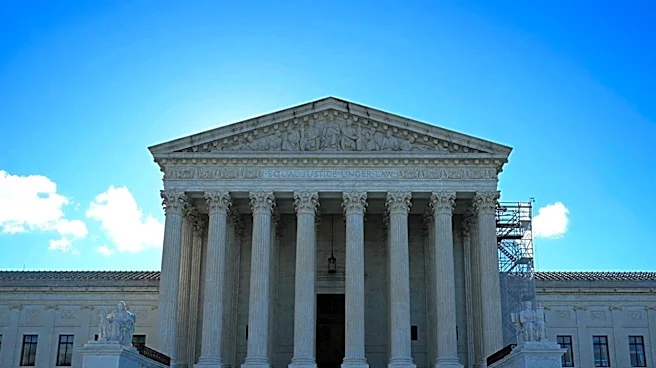
The scope of the first-sale doctrine was significantly expanded in the United States by the 2013 Supreme Court decision in *Kirtsaeng v. John Wiley & Sons, Inc.* This landmark case addressed the issue of goods manufactured abroad with the copyright owner's permission but then imported into the U.S. without the copyright owner's specific permission for importation. The case involved a plaintiff who imported Asian editions of textbooks that had been produced abroad with the publisher's consent and then resold them on eBay without the publisher's permission.
The Supreme Court, in a 6–3 decision, ruled that the first-sale doctrine applies to these "gray market" goods. This ruling severely limits the ability of copyright holders to prevent such importation, effectively extending the doctrine to cover copies made lawfully anywhere in the world, as long as they were made with the copyright owner's permission. This decision has profound implications for global commerce and the control copyright holders can exert over the distribution of their works across international borders, particularly for items like textbooks and other media produced for different markets.