


Baklava is a renowned layered pastry dessert, celebrated for its intricate construction and rich flavors. At its core, this sweet treat is composed of filo pastry, finely chopped nuts, and a sweetening agent, typically syrup or honey. The creation of baklava is an art form that involves careful layering and precise preparation, resulting in a unique texture and taste that has captivated palates across West Asia, Southeast Europe, Central Asia, and North
Africa. Understanding the components and methods behind this dessert reveals the craftsmanship involved in its production.
Essential Ingredients and Their Roles
The primary ingredients of baklava are filo pastry, nuts, and syrup. Filo pastry, known for its paper-thin sheets, forms the delicate layers that give baklava its characteristic flakiness. These layers are typically separated by melted butter and starch, which are crucial for achieving the pastry's unique texture. The starch, in particular, contributes to the crispness and separation of the layers, preventing them from becoming dense or soggy.
The filling consists of finely chopped nuts, with walnuts or pistachios being the most common choices. Occasionally, hazelnuts and almonds are also used, offering slight variations in flavor and texture. These nuts are distributed between the filo layers, providing a rich, earthy contrast to the sweet pastry. The final touch is the sweet syrup, which can be made from sugar, honey, or a combination, often infused with flavorings like orange blossom water or lemon juice, adding moisture and sweetness to the finished dessert.
The Layering Process and Structural Variations
Baklava is prepared in large pans of various shapes, allowing for different presentations. The layering process is meticulous: multiple sheets of filo dough are brushed with melted butter and sometimes starch before being stacked. Finely chopped nuts are typically added partway through these layers, creating a delicious core within the pastry. While most recipes feature numerous layers of both filo and nuts, some variations exist where the pastry is concentrated only at the top and bottom, with a thicker nut filling in the middle.
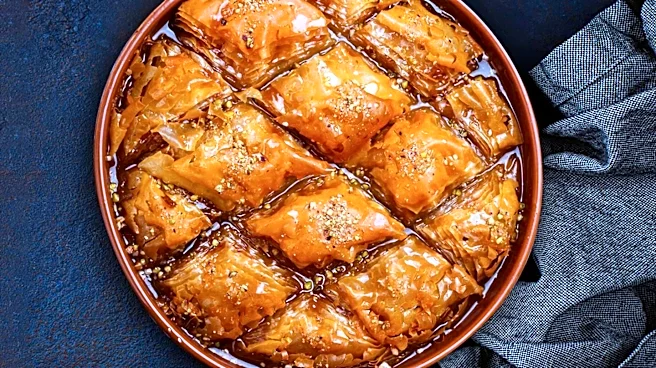
For instance, Syrian baklava is often made with 24 layers of buttered filo dough. The filling can be either chopped pistachios or walnuts, and the syrup is a blend of sugar, orange blossom water, and lemon juice. This specific construction results in a pastry that is both delicate and substantial. Syrian baklava also comes in many shapes, though the diamond shape is particularly common, showcasing the aesthetic diversity within baklava preparation.
Regional Styles and Serving Preferences
Beyond the classic baklava, regional variations like Syrian warbat offer different textural experiences. Warbat consists of filo dough layers filled with a semolina-based custard, though it can also be filled with pistachios, walnuts, almonds, or sweet cheese. This variation highlights the adaptability of the filo pastry base to different fillings, expanding the range of flavors and textures within the baklava family. The dessert is then topped with a sweet syrup, often called Qatir, made from sugar, water, and lemon juice, which is boiled and then cooled to thicken.
Baklava can be served in various ways, depending on preference. It is commonly enjoyed cold or at room temperature, allowing the flavors to meld and the pastry to maintain its crispness. Some prefer it re-warmed, which can soften the pastry slightly and enhance the aroma of the nuts and syrup. This versatility in serving temperature further contributes to baklava's widespread appeal as a dessert suitable for many occasions.