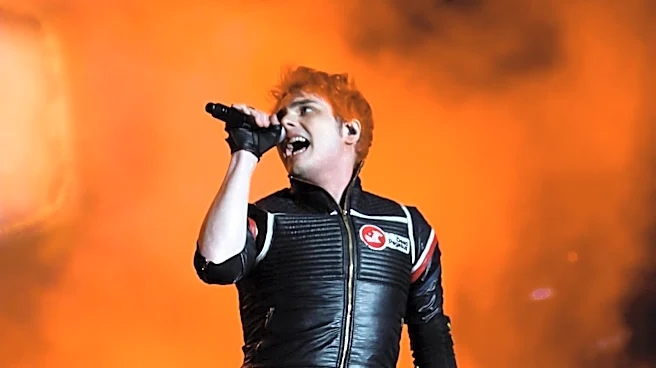





My Chemical Romance's third studio album, "The Black Parade," released on October 23, 2006, stands as a landmark concept album in the rock genre. This ambitious project centers on the narrative of "The Patient," a man grappling with terminal cancer and his journey into the afterlife. Far from a simple collection of songs, the album was a deliberate artistic endeavor to create something enduring and impactful, a goal that pushed the band through significant
creative and personal challenges. Its development was a complex process, marked by a desire to surpass previous successes and forge a cohesive, generation-spanning work.
From "Revenge Part Two" to a Grand Vision
Following the commercial and critical success of their 2004 album, "Three Cheers for Sweet Revenge," My Chemical Romance found themselves under intense scrutiny. The band worried about being a "flash-in-the-pan" and that their image would be permanently tied to the themes of their previous work. This concern fueled their initial approach to the next album. They began by refining demos from a 2005 touring side project, which they informally called "Revenge part two." Songs like "Dead!," "Disenchanted," and "I Don't Love You" emerged from these sessions. "Dead!" specifically addressed the criticism and expectations the band faced, serving as a defiant statement against their detractors. These early ideas laid the groundwork for the broader concepts that would define their third album when they began formal work in early 2006 at S.I.R. Studios in New York City.The band aimed not just to replicate the emotional intensity of "Revenge" but to vastly exceed it in scale. Their ambition was to produce a "classic" album, one that would resonate across generations. While "Revenge" was largely a compilation of individual band members' contributions, they sought a more unified and coherent approach for their new project, focusing on shared themes and a central storyline. Frontman Gerard Way developed a narrative initially centered on life and death, which evolved into the story of a man dying of cancer. In this narrative, death manifests as his most cherished childhood memory: his father taking him to see a marching band. This core concept allowed Way to create a rich cast of characters, including Mother War, Fear and Regret, The Soldiers, and The Escape Artist, all inhabiting the album's world. The album's working title, "The Rise and Fall of My Chemical Romance," eventually gave way to "The Black Parade."
The Paramour Mansion and Creative Tribulations
In April 2006, My Chemical Romance relocated to Los Angeles to continue working on "The Black Parade," choosing the Paramour Mansion as their primary recording location. They enlisted Rob Cavallo, known for his work with bands like Green Day, to produce the album. Upon their arrival at the mansion, only about a third of the album had been written. The mansion itself proved to be a significant influence on the creative process; band members described it as scary and unsettling, believing its atmosphere "bled" into the music and left a profound impact on them. Gerard Way felt compelled to "cut himself open" creatively, immersing himself fully in the mansion's environment, often struggling with "night terrors" that disrupted his sleep.The intense environment took a toll on the band. Bassist Mikey Way developed depression and alcoholism, partly due to the isolation and lack of communication with the outside world. After a period of intense strain, the band took a brief break to perform at Emo's in Austin, Texas. While this helped their mental health, it led to a creative roadblock, halting the album's writing process. Despite Frank Iero managing to write "House of Wolves" during this time, the band recognized their struggle to regain momentum. Frustration spurred Ray Toro to experiment with a song titled "The Saddest Music in the World." Motivated by concerns for Mikey's well-being, Gerard Way collaborated with Toro, and this collaboration ultimately resulted in "Famous Last Words." This song served as an emotional release, helping Gerard and the rest of the band reignite their creative flow. Around the same time, Gerard wrote "Sleep," drawing from his own difficulties with insomnia.
The Evolution of a Centerpiece and Unreleased Material
Following these breakthroughs, the band revisited an early song concept, "The Five of Us Are Dying." This proved to be the most challenging song to complete, requiring multiple rewrites without satisfying the band. During its creation, Gerard Way also experienced a breakup with his girlfriend of six years, adding further stress to the production. The turning point came when producer Rob Cavallo presented a short piano piece he had written, which was then incorporated into the beginning of the song. This addition helped the band realize their vision for the track, which eventually evolved into the album's iconic centerpiece, "Welcome to the Black Parade."Despite the extensive writing and recording, a significant amount of music created for the album was ultimately cut. This included an unrecorded cover song and other original tracks. In 2016, Gerard Way revealed that "The Black Parade" "could have been, and almost was, a double album." One notable cut song was "Kill All Your Friends," which Gerard Way later expressed regret about not including on the final release. Recording for "The Black Parade" concluded by August 2006, with the band assisting Cavallo in the final production stages. Chris Lord-Alge handled the mixing, and Doug McKean served as the engineer, bringing the ambitious project to its completion.