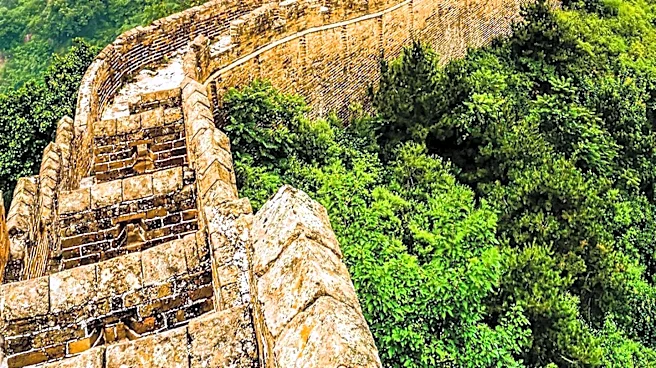





The Great Wall of China, an iconic symbol of ancient engineering and historical defense, faces significant challenges in its modern existence. While certain sections, particularly those north of Beijing and near major tourist centers, have benefited from preservation efforts and extensive renovation, a substantial portion of this vast structure is currently in a state of disrepair. This deterioration is a result of various factors, ranging from natural
erosion to human activities, posing a serious threat to the long-term integrity of this world heritage site.
Widespread Disrepair and Material Degradation
Away from the well-maintained tourist areas, many parts of the Great Wall are visibly crumbling. The wall, in some instances, has been treated as a convenient source of building materials, with stones being pilfered for the construction of houses and roads by local communities. This practice, while perhaps born of necessity, directly contributes to the wall's degradation. Furthermore, sections of the wall are frequently subjected to graffiti and vandalism, defacing its historical surfaces. Inscribed bricks, which hold historical value, have been stolen and sold on the market, sometimes for prices as high as 50 renminbi, further diminishing the authenticity and physical fabric of the structure.
Beyond these direct human impacts, parts of the wall have been deliberately destroyed to clear paths for new construction projects or mining operations. A report from the National Cultural Heritage Administration in 2012 revealed a stark reality: 22% of the Ming Great Wall, equating to 1,961 kilometers (1,219 miles), had already vanished. This alarming statistic underscores the scale of the loss. Natural forces also play a significant role, particularly in western sections of the wall. In Gansu province, it was estimated in 2007 that over 60 kilometers (37 miles) of the wall could disappear within two decades due to erosion caused by sandstorms. In some of these areas, the wall's height has been drastically reduced from over 16 feet to less than 6 feet 7 inches, and many of the distinctive square lookout towers have completely disappeared.
Vulnerability of Different Construction Types
The vulnerability of the Great Wall to erosion and damage varies significantly depending on its construction materials. While the more famous sections built during the Ming dynasty often utilized durable bricks and stone, many western sections were constructed primarily from mud. These mud-built portions are inherently more susceptible to the forces of erosion, making them particularly vulnerable to sandstorms and other environmental factors. The differing material compositions mean that conservation strategies must be tailored to the specific needs of each section, acknowledging their unique weaknesses.
Recent attempts at repair have also drawn criticism. In 2014, a portion of the wall near the border of Liaoning and Hebei province was controversially repaired with concrete. This method, seen by many as inappropriate for a historical monument, sparked considerable debate. More recently, in 2023, a section of the wall in Shanxi province suffered severe damage when construction workers widened an existing gap to create a shortcut for an excavator. Police described this act as causing "irreversible damage to the integrity of the Ming Great Wall and to the safety of the cultural relics." These incidents highlight the ongoing challenges in balancing modern development with the preservation of this ancient wonder, emphasizing the urgent need for more effective protection and conservation measures.