

Lunar eclipses are fascinating celestial events that capture the attention of skywatchers around the world. Unlike solar eclipses, which are visible only from specific locations, lunar eclipses can be observed from anywhere on the night side of Earth. This article explores the mechanics behind lunar eclipses, the different types that occur, and the unique visual effects they produce.
The Mechanics of Lunar Eclipses
A lunar eclipse occurs when the Moon passes through Earth's shadow.
This happens when the Sun, Earth, and Moon align in such a way that Earth is directly between the Sun and the Moon. The Earth's shadow consists of two parts: the penumbra, where the shadow is partial, and the umbra, where the shadow is complete. When the Moon moves into the umbra, a total lunar eclipse occurs, causing the Moon to darken significantly.
During a total lunar eclipse, the Moon's near side is entirely within Earth's umbral shadow. This alignment allows the Moon to be visible from anywhere on the night side of Earth, making it a widely accessible event. The duration of a total lunar eclipse can last up to nearly two hours, which is significantly longer than a total solar eclipse, where the Moon's shadow is much smaller and the event is brief.
Types of Lunar Eclipses
Lunar eclipses can be categorized into three main types: total, partial, and penumbral. A total lunar eclipse occurs when the entire Moon passes through Earth's umbra, resulting in a dramatic darkening of the lunar surface. In contrast, a partial lunar eclipse happens when only a portion of the Moon enters the umbra, leaving part of the Moon in the penumbral shadow.
A penumbral lunar eclipse is the least noticeable, as the Moon only passes through the penumbra, causing a subtle shading that can be difficult to detect with the naked eye. Despite their differences, all types of lunar eclipses offer unique opportunities for observation and study, as they reveal the dynamic interactions between the Earth, Moon, and Sun.
The Visual Effects of Lunar Eclipses
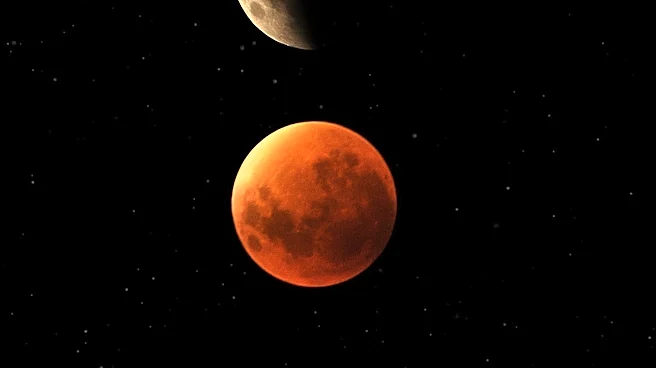
One of the most striking features of a total lunar eclipse is the reddish hue that the Moon takes on during the event. This phenomenon, often referred to as a "blood moon," occurs because of Rayleigh scattering. As sunlight passes through Earth's atmosphere, shorter wavelengths like blue and violet are scattered, leaving longer wavelengths like red to illuminate the Moon.
The intensity of the red color can vary depending on atmospheric conditions, such as the presence of dust or clouds. Volcanic eruptions, which release large amounts of dust into the atmosphere, can enhance the red coloration of the Moon during an eclipse. This variability adds an element of unpredictability to each lunar eclipse, making them a captivating subject for both amateur and professional astronomers.