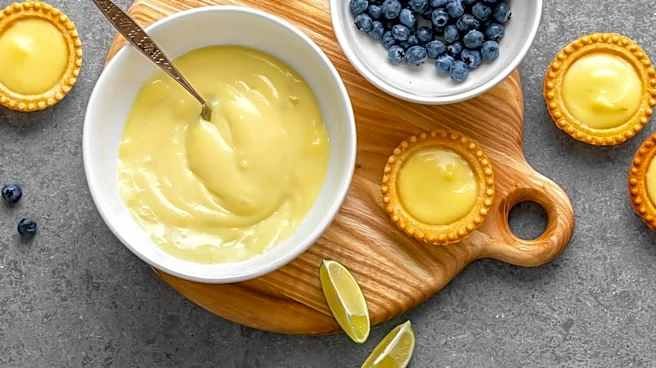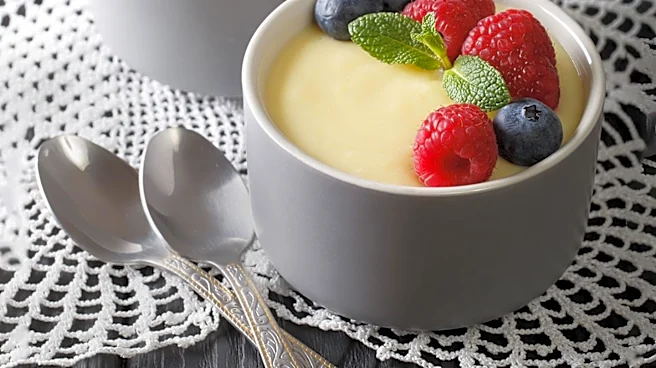

Custard, a seemingly simple culinary preparation of sweetened milk and eggs, harbors a fascinating array of scientific principles that dictate its texture and stability. From the precise temperature controls
required during cooking to the intricate interactions of proteins and starches, understanding the chemistry behind custard reveals why this dish can range from a thin pouring sauce to a thick, firm gel. The delicate balance of ingredients and cooking methods is crucial for achieving the desired consistency, making custard a prime example of food science in action.
The Role of Eggs and Proteins in Custard Formation
At its core, custard relies on the coagulation of egg proteins for its thickening and gel structure. Stirred custards achieve their thickness through this protein coagulation, while baked custards develop their characteristic gel structure from the same process. The type of milk used also plays a role in the final outcome, influencing the overall texture and richness of the custard. Eggs are not just thickeners; they also contain emulsifiers that help maintain the custard's structure, preventing separation of the milk and egg components.Egg yolks, in particular, contribute significantly to custard's properties. They contain enzymes like amylase, which can break down any added starch, influencing the custard's thinning in the mouth. Additionally, lecithin, found in egg yolks, is vital for maintaining the interface between milk and egg, ensuring a smooth, homogenous mixture. The proteins within egg whites begin to set at temperatures between 140 and 176 degrees Fahrenheit (60–80 degrees Celsius), highlighting the importance of careful temperature management during cooking.
The Stabilizing Power of Starch and pH
To prevent premature curdling and enhance stability, starch is sometimes incorporated into custard recipes. This addition serves as a heat buffer, absorbing heat as it hydrates and helping to maintain a consistent rate of heat transfer throughout the mixture. The presence of starch also contributes to a smoother texture and a thicker mouthfeel, which are desirable qualities in many custard preparations. When starch is added, the resulting product is often referred to as 'pastry cream' or confectioners' custard, a key ingredient in many French desserts like mille-feuille.Beyond ingredients, the pH level of the custard mixture is another critical factor. If the pH is 9 or higher, the resulting gel can become excessively hard. Conversely, if the pH drops below 5, the gel structure struggles to form properly because protonation interferes with the creation of covalent bonds necessary for a stable gel. This demonstrates the precise chemical environment required for optimal custard formation, where even slight deviations can significantly alter the final product's consistency.
The Unique Physical Properties of Cooked Custard
Cooked custard exhibits fascinating physical properties. It is classified as a weak gel, meaning it has a certain degree of firmness but can still be easily manipulated. Furthermore, custard is viscous and thixotropic. Thixotropy refers to a property where a material becomes easier to stir or flow the more it is agitated. However, unlike many other thixotropic liquids, cooked custard does not regain its lost viscosity over time once it has been stirred. This means that once a set custard is stirred, it will remain thinner than its original state.In contrast, a suspension of uncooked imitation custard powder (which is primarily starch) in water, when mixed in the correct proportions, displays the opposite rheological property: it is negative thixotropic, or dilatant. This means it becomes thicker or more resistant to flow when subjected to stress, a phenomenon famously demonstrated by people "walking on custard." These contrasting behaviors highlight the diverse scientific principles at play in different custard-related preparations, from the delicate egg-thickened gels to the starch-based suspensions.