



The cable machine stands as a cornerstone piece of equipment in many weight training and functional training environments. This apparatus is recognized for its adaptability, allowing for a wide range of exercises that target various muscle groups. Its design, featuring a system of cables and pulleys, provides a consistent and adjustable form of resistance, making it a valuable tool for individuals at different fitness levels and with diverse training objectives.
Anatomy and Functionality of a Cable Machine
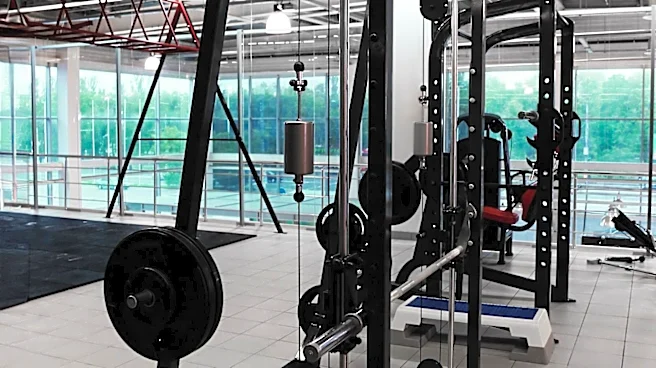
A typical cable machine is characterized by its rectangular, vertically oriented steel frame, which commonly measures about 3 meters wide and 2 meters high. Central to its operation is a weight stack, which is connected to one or more handles via a sophisticated cable and pulley system. The cables themselves run through adjustable pulleys, a key feature that allows users to fix the point of resistance at virtually any height. This adjustability is what grants the cable machine its remarkable versatility, enabling exercises to be performed from high, low, or mid-range angles.To select the desired amount of resistance, users interact with a perforated steel bar that runs down the center of the weight stack. A metal pin is inserted into a labeled hole, corresponding to the chosen weight. The opposite end of the cable forms a loop, designed for attaching various handles or accessories appropriate for the specific exercise being performed. Most cable machines are engineered with a minimum resistance of approximately 20 pounds (about 9 kilograms) to counterbalance the weight of the typical attachments, ensuring a smooth and effective starting point for exercises.
Cable Machines in Rowing and Other Exercises
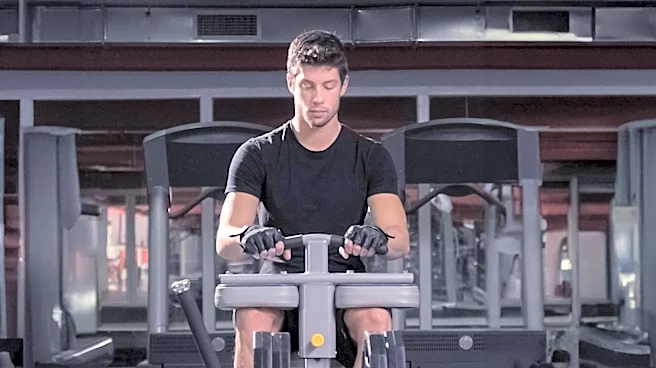
The cable machine is particularly well-suited for rowing exercises, such as the cable seated row. In this variation, the machine provides a controlled path of motion and consistent tension throughout the movement, effectively targeting the latissimus dorsi, trapezius, and rhomboids. The ability to adjust the pulley height also allows for variations in rowing angles, which can emphasize different parts of the back muscles.Beyond rowing, the cable machine facilitates a multitude of other strength training movements. For instance, the upright row, an exercise that engages the trapezius, deltoids, and biceps, can be effectively performed using a cable machine. This demonstrates the machine's capacity to support both compound and isolation exercises across various muscle groups. The consistent tension provided by the cable system, unlike the varying resistance of free weights, can be beneficial for muscle development and rehabilitation, offering a unique training stimulus that complements other forms of resistance training.