

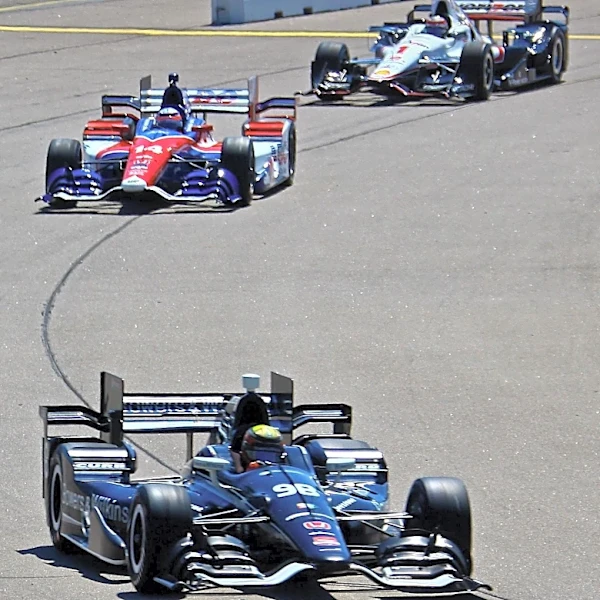


The Indianapolis 500, an annual auto race held at the Indianapolis Motor Speedway, has a rich history marked by both groundbreaking innovations and significant safety concerns. From its inaugural running in 1911 to its evolution through the mid-20th century, the race has consistently pushed the boundaries of automotive engineering while grappling with the inherent dangers of high-speed competition. This duality of progress and peril has shaped the event
into one of the most prestigious and challenging races in the world.
Early Innovations and Safety Measures
The inaugural 1911 International 500-Mile Sweepstakes Race saw Ray Harroun, an engineer with the Marmon Motor Car Company, achieve a remarkable feat by driving solo. In an era where two-man cars, consisting of a driver and a riding mechanic, were standard, Harroun famously affixed a rearview mirror to his machine. This is believed to be the first rearview mirror mounted on a racing car, though Harroun himself claimed the idea came from seeing a similar mirror on a horse-drawn vehicle in 1904. Despite his claim that the mirror vibrated constantly and was largely useless, this innovation addressed concerns from fellow competitors about his ability to see other cars without a mechanic. Harroun also employed a preplanned strategy of maintaining a steady 75 mph pace to reduce tire wear, a testament to early strategic thinking in racing.
However, the early years were not without tragedy. During the 1911 race, Sam Dickson, the riding mechanic for Arthur Greiner, was fatally injured after a crash on lap 12. This incident highlighted the extreme risks involved. By the early 1930s, rising race speeds made the track increasingly dangerous, leading to 15 fatalities between 1931 and 1935. In response, the track underwent repavement, replacing bricks with tarmac in parts. Further safety enhancements in 1935–36 included removing the inside wall in corners, realigning the outside wall to reduce vaulting potential, making hard crash helmets mandatory, and installing the first yellow light system around the track.
Rule Changes and the "Junkyard Formula"
The Great Depression significantly impacted the race, with the purse dropping from $50,000 for the winner in 1930 to $18,000. During this period, rules were changed in what was sometimes called the "junkyard formula." This was not merely to allow more entries during the depression, but rather an effort by the Speedway to encourage more car manufacturers to participate by discouraging the specialized racing machines that had dominated in the mid-to-late 1920s. These rule changes were being planned even before the market crash. In 1931, Dave Evans's Cummins Diesel Special completed the entire 500 miles without a pit stop, marking the first diesel entrant. In 1933, a record 42 cars started the race.
Fuel consumption limits were introduced in 1934, starting at 45 US gallons, then reduced to 42.5 gallons in 1935, and 37.5 gallons in 1936. These limits, however, led to several top competitors running out of fuel in the closing stages, and were subsequently abandoned, though the use of pump gasoline remained mandatory. The field size was later standardized to 33 drivers, with only three exceptions, such as in 1947 when only 30 cars started due to a strike by certain teams. The 1950s saw the rise of "roadsters" like the Kurtis, Kuzma, and Watson chassis, predominantly powered by Offenhauser engines, with cars topping out at 150 mph. This era, however, was also the most dangerous in American racing, with nearly half of the 33 drivers who qualified for the 1953 race eventually dying in racing accidents.
The 1964 Tragedy and Lasting Impact
The 1964 Indianapolis 500 is primarily remembered for a fiery seven-car accident that resulted in the deaths of racers Eddie Sachs and Dave MacDonald. MacDonald's car, a rear-engined Sears-Allstate Special, was known to have handling issues, with other drivers expressing concerns. On the second lap, MacDonald's car spun, hit the inside wall, and ignited, causing a massive fire and involving seven other cars. Sachs, attempting to find an opening, hit MacDonald's burning car, causing a second explosion and his immediate death. MacDonald, though pulled from the wreckage alive, died later from severe burns and flame inhalation.
This tragedy led to significant changes. USAC mandated cars carry less fuel and effectively eliminated gasoline for the 1965 season, leading to a switch to methanol fuel. Ethanol was introduced in 2006, and a blend of 85% ethanol and 15% gasoline (E85) became standard in 2012. The crash also prompted the 1965 introduction of the Firestone "RaceSafe" fuel cell, utilizing technology from military helicopters. The 1964 race was also the last won by a front-engined "roadster," as subsequent races were won by rear-engined, formula-style cars, marking a pivotal shift in racing technology and safety.