







The Cassini-Huygens mission stands as a remarkable example of international collaboration in space exploration. This joint space-research endeavor brought together NASA, the European Space Agency (ESA), and the Italian Space Agency (ASI) with a singular goal: to thoroughly study Saturn and its intricate system, including its iconic rings and diverse natural satellites. Launched on October 15, 1997, the mission represented a significant step forward
in our understanding of the outer solar system, combining the capabilities of a powerful orbiter and a dedicated lander to achieve its ambitious scientific objectives.
An International Partnership for Deep Space Exploration
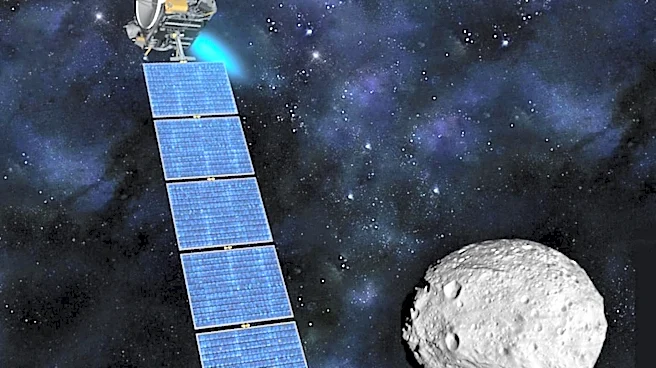
The Cassini-Huygens mission was a Flagship-class undertaking, a designation reserved for the most ambitious and complex planetary missions. The robotic spacecraft itself was a composite, featuring NASA's Cassini space probe, designed to orbit Saturn, and ESA's Huygens lander, specifically built to descend onto Saturn's largest moon, Titan. This division of labor and expertise across multiple space agencies underscored the mission's collaborative spirit. The Cassini orbiter was built by the Jet Propulsion Laboratory (JPL) in California, while the Huygens lander was constructed by Aerospatiale for ESA. The Italian Space Agency (ASI) contributed the high-gain antenna for the orbiter, further illustrating the widespread involvement.
The mission was commonly referred to as the Saturn Orbiter Titan Probe (SOTP) during its development phase, reflecting its dual nature. The names of the two craft honored astronomers Giovanni Cassini and Christiaan Huygens, whose historical contributions to astronomy laid some of the groundwork for such a mission. This international effort allowed for a pooling of resources, knowledge, and technological advancements, enabling a mission of unprecedented scope and duration to the Saturnian system.
Ambitious Objectives for Saturn and its Moons
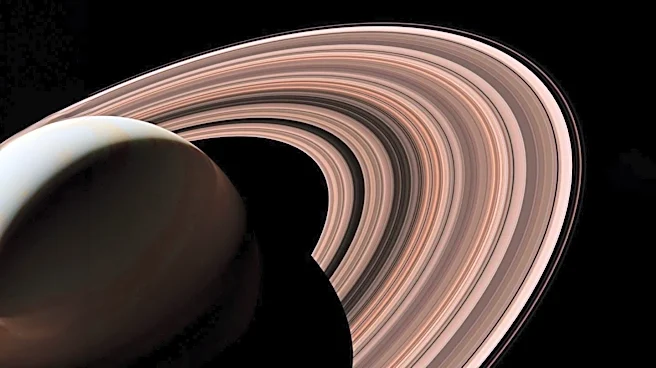
Cassini had a comprehensive set of objectives that guided its thirteen years in Saturn's orbit. These included determining the three-dimensional structure and dynamic behavior of Saturn's rings, which are a defining feature of the gas giant. Another key goal was to ascertain the surface composition and geological history of Saturn's moons, providing insights into their formation and evolution. The mission also aimed to understand the origin and nature of the dark material found on the leading hemisphere of Iapetus, one of Saturn's more enigmatic moons.
Beyond the rings and moons, Cassini was tasked with measuring the behavior and three-dimensional structure of Saturn's magnetosphere, the region of space dominated by the planet's magnetic field. Investigating Saturn's atmosphere at the cloud level was another critical objective, as was studying the temporal variations of Titan's clouds. Finally, a major focus was the investigation of Titan's surface, a task uniquely addressed by the Huygens lander. These diverse objectives required a sophisticated suite of instruments and a prolonged presence in the Saturnian system, which the Cassini-Huygens mission successfully provided.
Launch and Journey to the Ringed Planet
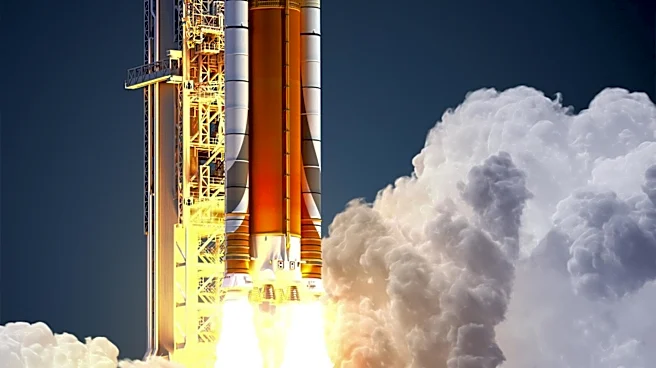
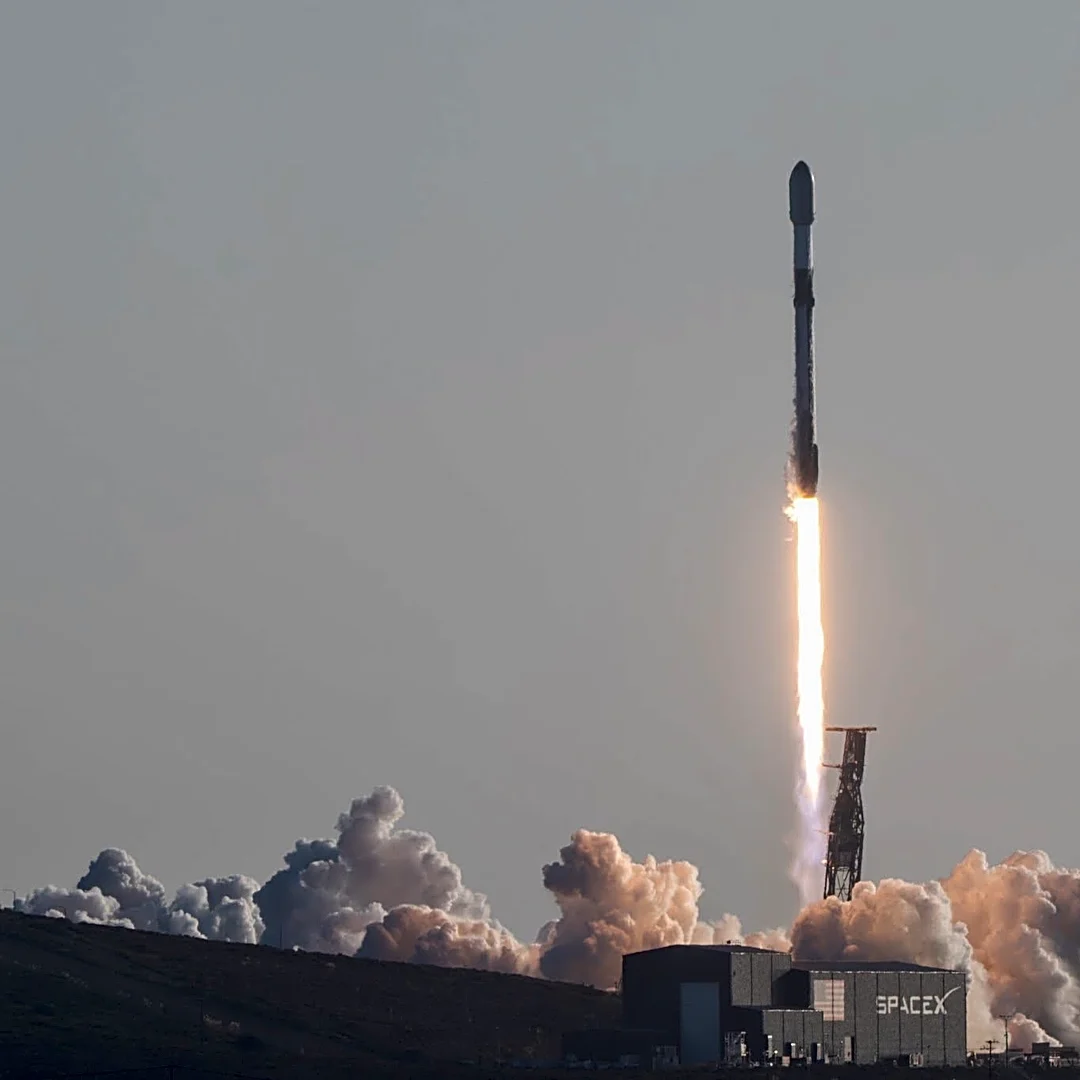
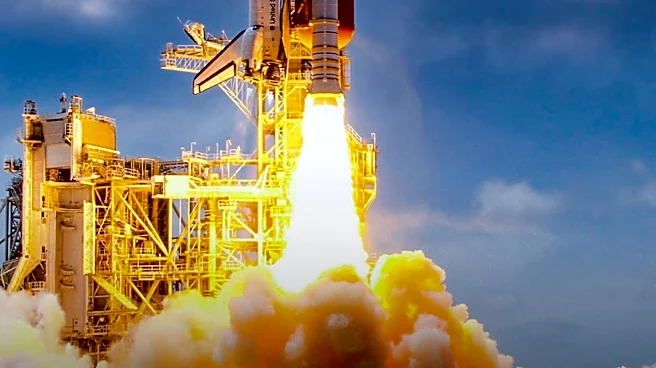
Cassini-Huygens began its journey on October 15, 1997, launching from Cape Canaveral Air Force Station's Space Launch Complex 40. The launch vehicle was a powerful U.S. Air Force Titan IVB/Centaur rocket, a complete launcher composed of a two-stage Titan IV booster, two strap-on solid rocket engines, the Centaur upper stage, and a payload enclosure. The spacecraft utilized gravity assists from Venus (in April 1998 and June 1999), Earth (in August 1999), and Jupiter (in December 2000) to gain the necessary speed and trajectory to reach Saturn. This complex interplanetary cruise demonstrated advanced navigation techniques.
Upon its arrival in the Saturn system in June 2004, Cassini performed a critical Saturn Orbit Insertion (SOI) burn on July 1, 2004, becoming the first space probe to enter Saturn's orbit. This maneuver involved cutting its velocity by 626 meters per second to allow for a stable orbit. The mission's duration at Saturn spanned from 2004 to 2017, far exceeding its initial planned primary mission of four years. This extended operational period allowed for an unprecedented wealth of data collection, revolutionizing our understanding of Saturn and its complex environment.