






Operation Uphold Democracy, a multinational military intervention in Haiti between September 19, 1994, and March 31, 1995, aimed to restore the democratically elected President Jean-Bertrand Aristide to power after a 1991 coup. While the operation involved significant military preparation and deployment, a crucial turning point was a diplomatic mission that ultimately averted a full-scale combat invasion. This shift from an imminent military confrontation
to a peacekeeping and nation-building effort highlights the complex interplay of force projection and negotiation in international relations.
The Genesis of the Crisis and International Response
The political turmoil in Haiti began in December 1990 when Jean-Bertrand Aristide, a populist Roman Catholic priest, won the presidential elections with 67% of the vote. These elections were widely considered free and fair by international observers. However, Aristide's policies and the actions of his supporters caused alarm among the country's elite. In September 1991, a violent coup d'état overthrew Aristide, bringing General Raoul Cédras to power. This coup was met with violent resistance, resulting in hundreds of deaths and forcing Aristide into exile. Estimates suggest that between 3,000 and 5,000 Haitians were killed during the military regime's rule.
The coup also triggered a large-scale exodus of refugees towards the United States. Between 1991 and 1992, the U.S. Coast Guard rescued or intercepted 41,342 Haitians, though most were denied entry and repatriated. In response to the coup, the United Nations Security Council passed Resolution 841, imposing international sanctions and an arms embargo on Haiti. Despite these measures, the military regime continued to govern until 1993, and various initiatives for a peaceful resolution failed. By July 1994, with increased repression and the expulsion of a human rights monitoring mission, the UN Security Council passed Resolution 940, authorizing member states to use all necessary means to facilitate the departure of the Haitian military leadership and restore constitutional government.
The Brink of Invasion and Diplomatic Intervention
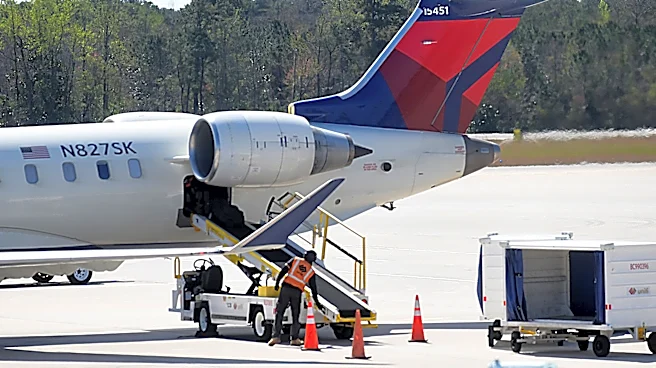
As U.S. troops prepared for an imminent invasion to commence Operation Uphold Democracy in mid-September 1994, President Bill Clinton dispatched a high-level negotiating team to Haiti. This delegation was led by former President Jimmy Carter and included former Senator Sam Nunn and former Chairman of the Joint Chiefs of Staff, General Colin Powell. Their mission was to persuade the military authorities to step down and allow the return of constitutional rule. The U.S. forces, including elements of the U.S. Navy and Air Force, were already deployed in Puerto Rico and southern Florida, ready to support an airborne invasion, with advance elements from the U.S. Special Operations Command and the 82nd Airborne Division.
The diplomatic effort proved successful, largely because the U.S. delegation could credibly point to the concentrated forces already in the air and poised to enter the country. Faced with the undeniable threat of military intervention, General Cédras and other key leaders agreed to resign. This agreement transformed the nature of the military mission from a combat operation into a peacekeeping and nation-building endeavor. The immediate deployment of U.S. forces then led to the establishment of a multinational force in Haiti. By October, President Aristide was able to return to Haiti, marking a significant diplomatic achievement that avoided a potentially bloody invasion.
Transition to Peacekeeping and Democratic Restoration
Following the successful diplomatic resolution and the initial deployment, Operation Uphold Democracy officially concluded on March 31, 1995. It was then replaced by the United Nations Mission in Haiti (UNMIH). U.S. President Bill Clinton and Haitian President Jean-Bertrand Aristide presided over the ceremony marking this transfer of authority. From March 1995 to March 1996, approximately 2,400 U.S. personnel from the original Operation Uphold Democracy remained in Haiti as a support group under UNMIH, operating under a new mission called Operation New Horizons. UN forces, under various designations, continued their mission in Haiti from 1995 until 2000, overseeing the transition and stabilization efforts. This period saw further democratic processes, including elections in June 1995 where Aristide's coalition, the Lavalas Political Organization, achieved a landslide victory. In February 1996, René Préval, a close ally of Aristide, was elected president with 88% of the vote, marking Haiti's first transition between two democratically elected presidents.