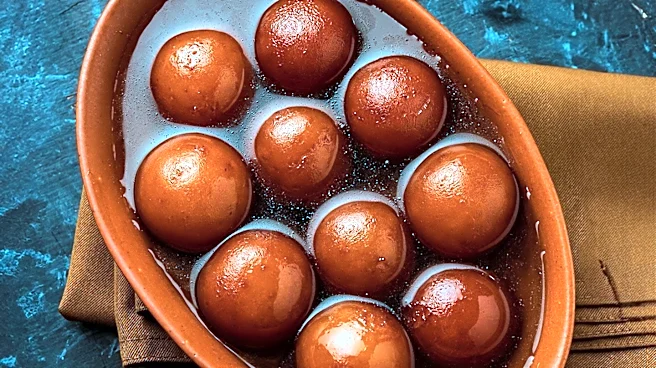









Gulab jamun, a celebrated dessert from the Indian subcontinent, is a testament to the rich culinary traditions of the region. At its heart, this sweet delicacy is composed of milk solids, meticulously shaped into balls, fried until golden, and then steeped in an aromatic sugar syrup. Its widespread appeal spans across India, Pakistan, Nepal, Bangladesh, and Myanmar, and extends to various global communities with South Asian heritage. The creation
of gulab jamun is an art form, involving specific ingredients and techniques that contribute to its unique texture and flavor, while also giving rise to a fascinating array of variations, from the classic preparation to the distinct kala jamun.
The Foundation: Khoa and Dough Preparation
The cornerstone of authentic gulab jamun is khoa, also referred to as khoya. This essential ingredient is milk that has been slowly evaporated and thickened, concentrating its flavors and milk solids. For homemade versions, khoa is typically combined with a small quantity of all-purpose flour, fine wheat flour, or whole wheat flour, though the flour can sometimes be omitted. To achieve the desired texture and rise, baking powder is incorporated into the mixture. Clarified butter, or ghee, is also a common addition, contributing richness and aiding in the dough's consistency. These ingredients are carefully kneaded together to form a smooth, pliable dough, which is then portioned and rolled into small, uniform balls, ready for the next stage of preparation.
The Frying and Soaking Process
Once the dough is prepared and shaped, the gulab jamun balls undergo a crucial frying process. They are deep-fried in oil or ghee until they develop a characteristic reddish-brown color. This step is vital not only for cooking the dough through but also for creating a slightly crisp exterior that contrasts with the soft interior once soaked. Immediately after frying, the hot gulab jamun balls are transferred into a warm sugar syrup. This syrup is often infused with fragrant elements such as rose water, saffron, or cardamom, which impart the dessert with its signature aroma and taste. The balls then absorb the syrup, becoming plump, moist, and intensely sweet, a process that can take several hours to achieve optimal flavor and texture.
Exploring the Spectrum of Gulab Jamun Variations
The versatility of gulab jamun is evident in its numerous regional variations. In Bengali cuisine, for example, the dessert takes on different names and forms, such as Kalo Jam and Pantua. These Bengali versions share similarities with the traditional gulab jamun but often feature distinct preparations or ingredient ratios that give them a unique character. Ledikeni, a specific type of Pantua, further illustrates the regional diversity within this sweet category, showcasing how local culinary traditions adapt and evolve a core recipe.
One of the most striking variations is the kala jamun, which translates to "black jamun." Unlike the reddish-brown classic, kala jamun has a much darker, almost black hue. This darker color is achieved either by adding sugar directly to the dough, which caramelizes during frying, or by using khoya with a higher sugar content. The caramelization process imparts a deeper, more complex flavor profile to the kala jamun. Beyond these sweet variations, some regions, like Rajasthan, have even transformed gulab jamun into a savory dish. Here, the fried milk-solid balls are cooked in a rich gravy made from spices, nuts, and tomatoes, creating a unique preparation known as Gulab Jamun ki Sabzi, demonstrating the remarkable adaptability of this beloved culinary component.