





The Wilderness Act of 1964 stands as a landmark piece of American environmental legislation, fundamentally altering how the nation's wild spaces are managed and protected. Signed into law by President Lyndon B. Johnson on September 3, 1964, after years of dedicated effort, this act established the National Wilderness Preservation System (NWPS). Its passage was a direct response to growing concerns about the rapid disappearance of untouched natural
landscapes in the United States, a trend exacerbated by post-World War II population growth and expanding transportation systems. The Act not only provided a legal definition for wilderness but also set in motion a formal mechanism for designating and safeguarding these invaluable federal lands for future generations.
A Decade of Deliberation: The Legislative Journey
The path to the Wilderness Act was a long and arduous one, spanning over sixty drafts and eight years of intensive work, primarily spearheaded by Howard Zahniser of The Wilderness Society. The concept of a federal wilderness system began to gain serious traction in 1948 when Congressional members requested a report on the topic from the Legislative Reference Service within the Library of Congress. This report, completed a year later, provided crucial data on the state of federal lands, laying the groundwork for future legislative efforts.
By 1956, committee hearings on protecting Wildlife Refuge areas commenced in both the House and Senate. The first drafts of the Wilderness Act were introduced in the House in January 1957, with six bills appearing over four days, followed by a Senate draft a month later. President John F. Kennedy was a vocal supporter, and his administration actively worked to rally legislators behind the bill. During the 87th Congressional session, the Senate successfully passed a version of the Wilderness Act, though it ultimately failed to reach a vote in the House, leaving its fate uncertain.
Presidential Support and Final Passage
The momentum for the Wilderness Act continued into the 88th Congress. The Senate debated and passed the Wilderness Bill in April 1963. Following President Kennedy's assassination, President Lyndon B. Johnson took up the mantle, continuing executive efforts to ensure the bill's passage. In a press conference on June 23, 1963, President Johnson notably included the Wilderness Act among his list of 30 "musts" for legislative action, underscoring its importance to his administration.
After navigating a conference committee to reconcile differences between the House and Senate versions, the Act finally received President Johnson's signature on September 3, 1964. This bipartisan agreement, evidenced by overwhelming votes in both the Senate (73–12) and the House of Representatives (373–1), highlighted a broad consensus on the critical need to preserve natural landscapes. The Act initially protected 9.1 million acres of national forest wilderness areas, which had previously been safeguarded by administrative orders, and formally established the National Wilderness Preservation System.
Defining Wilderness and Establishing Protections
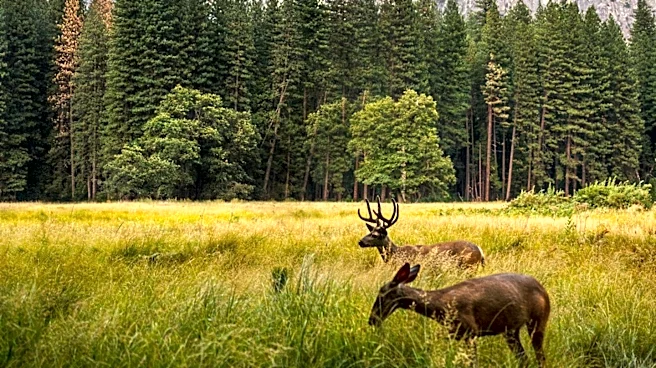
The Wilderness Act is renowned for its concise and poetic definition of wilderness, describing it as an area "where the earth and its community of life are untrammeled by man." Section 2 of the Act provides a detailed justification and criteria for what constitutes a wilderness area. These criteria include minimal human imprint, opportunities for unconfined recreation, a minimum size of five thousand acres, and educational, scientific, scenic, or historical value. Crucially, these areas are to have no commercial enterprises, motorized travel, or other forms of mechanical transport.
Section 3 of the Act outlines the creation and regulation of the National Wilderness Preservation System. Once Congress designates a wilderness area with specific boundary lines, its protection and boundaries can only be altered by Congress. The Act aims to restrain human influences within these areas, allowing ecosystems to evolve naturally, free from human manipulation. While wilderness areas serve multiple uses, these uses are strictly limited to those consistent with preserving the "wilderness character of the area." This means that activities like logging and oil and gas drilling are prohibited, though certain pre-existing uses, such as mining, grazing, and water uses that do not significantly impact the majority of the area, may be grandfathered in to some degree. These areas are vital for protecting watersheds, clean water supplies, and diverse wildlife habitats, including endangered species, while also offering opportunities for non-motorized outdoor recreation and non-invasive scientific research.
Expanding the System and Addressing Uncertainties
Sections 5, 6, and 7 of the Wilderness Act address the future expansion of the program, detailing how Congress would handle the acquisition of more land, gifts, and the addition of new designated wilderness areas. However, the initial Act left some uncertainties. For instance, it initially ignored lands managed by the Bureau of Land Management (BLM) due to policy makers' uncertainty about their future. This was clarified in 1976 with the Federal Land Policy and Management Act, which mandated that BLM-managed lands would remain federally owned and be reviewed for potential wilderness classification between March 1978 and November 1980.
Another area of ambiguity concerned the definition of