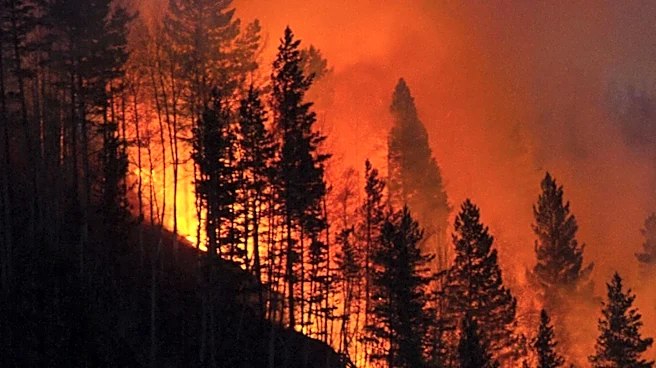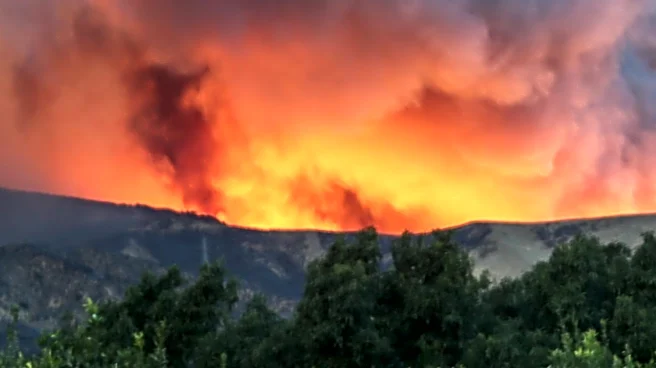






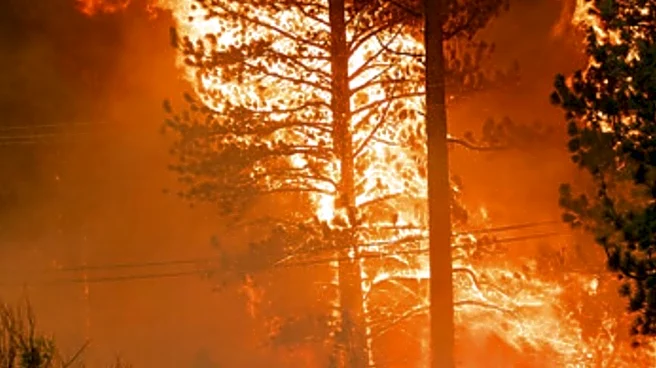
The SCU Lightning Complex fires represented a significant series of wildfires that impacted Northern California during the 2020 wildfire season. Burning across multiple counties in the Diablo Range, these fires were a direct consequence of a widespread lightning siege that struck the region in August 2020. The complex earned its name from the Santa Clara Unit (SCU) of the California Department of Forestry and Fire Protection (Cal Fire), which is responsible
for fire management in Santa Clara, Alameda, Contra Costa, and parts of San Joaquin and Stanislaus counties. Ultimately, the SCU Lightning Complex became one of the largest wildfires in California's modern history, leaving a notable mark on the landscape and communities.
Genesis and Geographic Scope
The SCU Lightning Complex fires ignited on August 16, 2020, following a series of lightning strikes. The complex was not a single blaze but rather a collection of fires grouped into three distinct zones. These zones included the Deer Zone in Contra Costa County, the Canyon Zone spanning Alameda, Santa Clara, and parts of Stanislaus counties, and the Calaveras Zone affecting parts of Stanislaus, San Joaquin, and Merced counties. This wide geographic spread underscored the challenge faced by firefighting agencies in containing the rapidly developing situation.
The fires quickly gained intensity and size, becoming a major concern for residents and authorities. The initial lightning strikes were part of a broader event that sparked numerous fires across California, straining resources and making containment efforts particularly difficult. The complex's extensive reach across several counties highlighted the interconnected nature of wildfire management in the state, requiring coordinated efforts across various jurisdictions.
Progression and Containment Efforts
As the fires progressed, they posed threats to both natural landscapes and human infrastructure. By August 20, the fires had reached the Lick Observatory, an astronomical telescopic observatory operated by the University of California on Mount Hamilton. While one residential building not in use was destroyed and some other residential buildings sustained damage, the critical telescope domes themselves were spared from burning. This incident showcased the immediate danger the fires presented to important scientific and cultural sites.
Containment efforts were ongoing, with varying degrees of success across the different zones. By August 26, the Deer Zone was reported as fully contained, a positive step in managing the overall complex. However, the Canyon and Calaveras zones continued to expand, eventually merging into a single, larger branch of the fire. This consolidation indicated the persistent challenge of controlling the larger fire fronts. Cal Fire ultimately reported that the entire fire complex was fully contained on October 1, 2020, marking the end of active firefighting operations for this massive event.
Scale and Impact
The SCU Lightning Complex fires burned a total of 393,624 acres, or 159,294 hectares, from August 16 to October 1, 2020. This immense acreage positioned it as the fifth-largest overall wildfire recorded in California's modern history at the time. It was surpassed only by the 2018 Mendocino Complex Fire, the 2021 Dixie Fire, the 2024 Park Fire, and the 2020 August Complex fire. The sheer scale of the SCU Complex placed it among the most destructive fire events in the state, alongside other major complexes like the LNU, CZU, and August complexes that also burned during the same period.
In terms of direct impact, the fires destroyed 222 structures and damaged an additional 26. Six people sustained injuries, but fortunately, no fatalities were recorded as a direct result of the SCU Lightning Complex. Beyond immediate property damage and injuries, the fires also had ecological consequences, which were monitored in the year following the event. The East Bay Regional Park District (EBRPD) and Save Mount Diablo (SMD) observed that the burn was mostly beneficial for the ecology of the region, attributing this to the fire's moderate to low intensity. This intensity spared most park trees, rejuvenated vegetation, and triggered the germination of rare species of fire poppies, leading Cal Fire officials to consider increasing the use of prescribed burning in Alameda and Contra Costa counties.