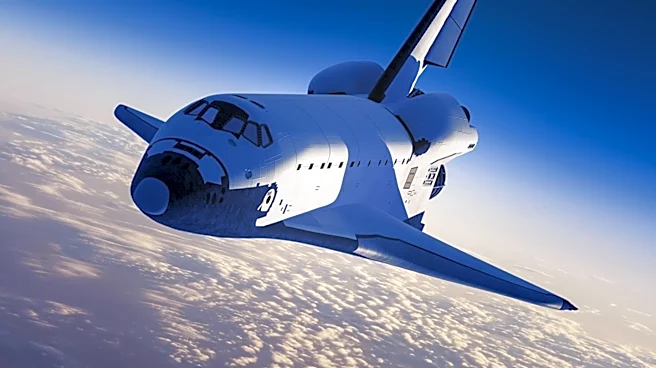

The Space Shuttle Columbia embarked on its fifth journey into space as STS-5, marking the fifth mission in NASA's ambitious Space Shuttle program. This flight, which launched on November 11, 1982, was
a pivotal moment, being the first officially "operational" mission and the first to deploy commercial communications satellites. Over its five-day duration, STS-5 showcased the shuttle's growing capabilities, from carrying the largest crew to date to integrating diverse scientific experiments. The mission's detailed timeline reveals a series of carefully executed maneuvers and unexpected challenges, all contributing to the rich tapestry of early shuttle operations.
Launch and Initial Deployments
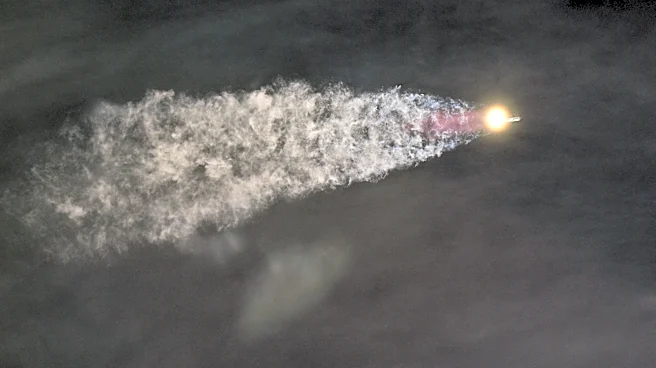
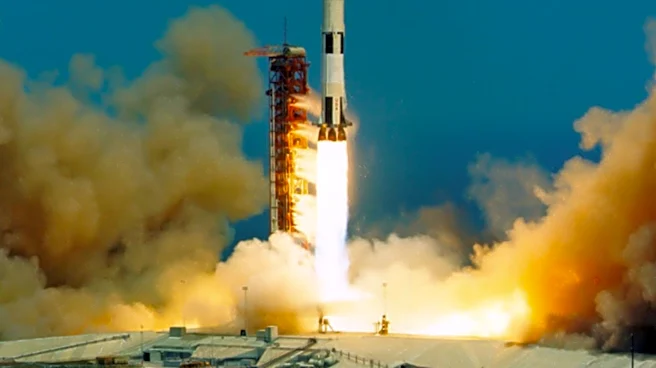
The Space Shuttle Columbia lifted off precisely on schedule from Kennedy Space Center (KSC) at 07:19:00 a.m. EST on November 11, 1982. Aboard were four astronauts, representing the largest crew ever flown on a single spacecraft up to that point. The primary payload for this historic flight consisted of two commercial communications satellites, a first for the Space Shuttle program. These satellites were SBS-3, owned by Satellite Business Systems, and Anik-C3, belonging to Telesat Canada. Both were advanced HS-376-series satellites manufactured by Hughes.
Upon successful deployment from Columbia's payload bay, these commercial satellites were then propelled into their designated operational geosynchronous orbits. This critical phase was accomplished using McDonnell Douglas PAM-D kick motors, which provided the necessary thrust to position the satellites correctly. The successful deployment of these commercial assets underscored the Space Shuttle's emerging role as a reliable and efficient platform for commercial space ventures. In addition to these primary payloads, STS-5 also carried a microgravity Getaway Special (GAS) experiment canister, sponsored by West Germany, further diversifying the mission's scientific contributions. The crew also engaged in educational activities by conducting three student-designed experiments during their time in orbit.
The Unfulfilled Spacewalk and Crew Adaptations
A significant planned event for STS-5 was the first spacewalk of the Space Shuttle program, intended to be performed by Mission Specialists William B. Lenoir and Joseph P. Allen. The objective was to test newly developed space suits, which were designed to be more economical and less complex than their Apollo-era predecessors. However, this historic extravehicular activity (EVA) encountered several obstacles. The spacewalk was initially postponed by one day due to Lenoir experiencing space motion sickness, a common ailment among astronauts adapting to microgravity.
Further complications arose with the equipment itself, leading to the complete cancellation of the EVA. Lenoir's suit was found to have a poorly functioning oxygen regulator, while Allen's suit suffered from a broken recirculation fan. These critical equipment failures made it unsafe to proceed with the spacewalk. This cancellation was unprecedented in the history of space exploration, marking the first time an EVA was called off specifically due to issues with the space suits. Despite this setback, the mission continued to achieve its other objectives. Notably, STS-5 was also the first Space Shuttle flight where the crew did not wear pressure suits during the launch, reentry, and landing phases, a procedural change that had been observed in earlier Soviet Voskhod and Soyuz missions.
Mission Conclusion and Legacy
After traveling 3,397,082 kilometers (2,110,849 miles) across 81 orbits, the Space Shuttle Columbia concluded its STS-5 mission. The landing occurred on November 16, 1982, at 06:33:26 a.m. PST, on Runway 22 at Edwards Air Force Base. The entire mission spanned 5 days, 2 hours, 14 minutes, and 26 seconds. Following its successful return to Earth, Columbia was ferried back to Kennedy Space Center on November 22, 1982. STS-5's legacy is defined by its pioneering role in commercial satellite deployment, its operational firsts, and the valuable lessons learned from its technical challenges, all of which contributed to the ongoing evolution and success of the Space Shuttle program.