





The cherry barb, scientifically known as *Rohanella titteya*, is a tropical freshwater fish that has become a favorite among aquarium hobbyists due to its striking red coloration. Originating from Sri Lanka, this small, elongated fish belongs to the Cyprinidae family. Despite its popularity in the aquarium trade, where it is farmed in large numbers, the cherry barb faces significant threats in its natural habitat, leading to its classification as vulnerable.
Distinctive Appearance and Sexual Dimorphism
Measuring up to 2 inches (5 cm) in length, the cherry barb exhibits clear differences between males and females, a characteristic known as sexual dimorphism. The female typically displays a fawn color on top with a subtle greenish sheen, complemented by gleaming silver highlights on her sides and belly. She may also have a rosy tone on her back and upper sides. A prominent horizontal stripe runs from her snout, through the eye, and extends to the base of her caudal fin. When ready to breed, females develop two pinkish color stripes down their sides, which also darken.
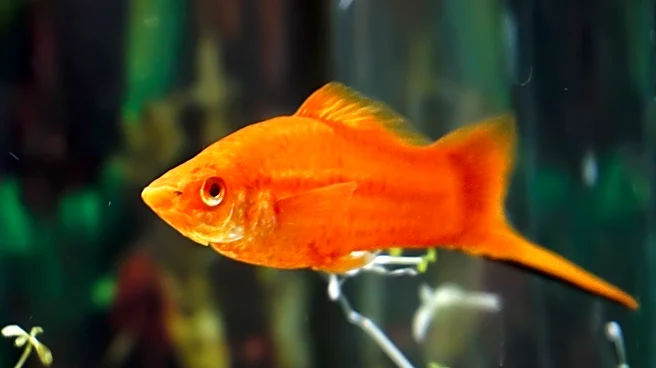
In contrast, the male cherry barb is distinctly reddish, with his color intensifying to a very deep red during breeding periods. Males also possess a more slender body shape compared to the females. This vibrant coloration is a key reason for the fish's appeal in the aquarium trade. The species was first named *Puntius titteya* by Paules Edward Pieris Deraniyagala in 1929, and it is now the sole species within the genus *Rohanella*.
Ideal Aquarium Conditions and Social Behavior
For aquarium enthusiasts, understanding the cherry barb's needs is crucial for its well-being. This species thrives in community tanks and is best kept in groups of five or more individuals, as they are schooling fish. While their schools may not be as tightly knit as those of other barb species, a hierarchy will likely form within the group. It is recommended to maintain a ratio of at least two females for every male. This is because males can be quite persistent in their breeding attempts, and having multiple females allows each to occasionally escape the male's constant attention, reducing stress.
The ideal aquarium setup for cherry barbs should mimic their natural habitat, which is characterized by heavily shaded, shallow, and calm water bodies with silty, leaf-covered substrates. The tank should feature abundant plant material, covering approximately two-thirds to three-quarters of the tank space. However, it's also important to provide open areas for swimming. Cherry barbs tend to be shy and will often seek refuge under plant cover. While younger males are generally peaceful, mature males can become aggressive during breeding. Appropriate tankmates include other calm fish species, such as Rasboras. The average lifespan of a cherry barb is about four years, though some can live up to seven years.
Conservation Concerns and Global Presence
Despite its widespread presence in the aquarium trade, the cherry barb faces significant conservation challenges in its native Sri Lanka. The species is listed as vulnerable, primarily due to overcollection from the wild and ongoing habitat loss. Its natural tropical climate habitat prefers water with a pH of 6 to 8, a water hardness (dH) of 5 to 19, and a temperature range of 73 to 81 °F (23 to 27 °C). Beyond Sri Lanka, introduced populations of cherry barbs have successfully established themselves in Mexico and Colombia, highlighting their adaptability, yet the pressures on their original populations remain a concern.