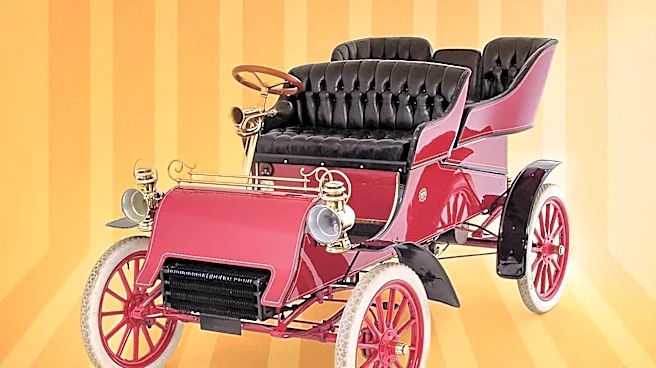







Before the era of paved interstates and ubiquitous service stations, embarking on a cross-country journey by automobile was an adventure fraught with challenges and requiring significant preparation. The Lincoln Highway, America's first transcontinental road, offered pioneering motorists a route from the Atlantic to the Pacific, but it was far from a smooth ride. According to the Lincoln Highway Association's 1916 Official Road Guide, a trip across
the continent was considered "something of a sporting proposition," demanding resilience, resourcefulness, and a well-equipped vehicle.
The Demands of the Open Road
Completing the journey in 30 days, a common goal for early travelers, meant maintaining an average speed of 18 miles per hour for six hours each day. Driving was strictly limited to daylight hours, underscoring the primitive conditions and lack of nighttime visibility on many sections of the road. The estimated daily cost for a traveler was around $5, which covered food, gasoline, and oil, and even allowed for "five or six meals in hotels." However, this budget did not account for the inevitable car repairs that were a frequent part of early automobile travel, which would certainly increase the overall expense.
One of the most critical pieces of advice for motorists was to top off their gasoline tank at every available opportunity, regardless of how recently they had filled up. This was due to the sparse distribution of gasoline stations, particularly in the more rural and western parts of the country. Running out of fuel in a remote area could lead to significant delays and hardship. Beyond fuel, the guide offered practical tips for navigating the varied terrain. For instance, motorists were advised to wade through water crossings before driving their vehicles through them, a crucial step to verify the depth and avoid getting stuck or damaging the car.
Essential Equipment and Survival Tips
The list of recommended equipment for a Lincoln Highway journey was extensive and reflected the self-reliance required of early motorists. It included chains for traction, a shovel for digging out of mud or sand, an axe for clearing obstacles, jacks for tire changes, spare tire casings and inner tubes, and a comprehensive set of tools for roadside repairs. And, as a touch of patriotic flair, travelers were encouraged to carry a pair of Lincoln Highway pennants. A particularly memorable piece of advice from the guide was, "Don't wear new shoes," suggesting that comfort and practicality were paramount over appearance.
While firearms were deemed unnecessary, the guide strongly recommended full camping equipment for travelers venturing west of Omaha, highlighting the vast, undeveloped stretches of the route. Warnings were also issued against drinking alkali water, which could cause serious cramps, emphasizing the importance of carrying potable water. In certain isolated areas, specific instructions were provided for seeking assistance. For example, near Fish Springs, Utah, travelers experiencing trouble were advised to "build a sagebrush fire. Mr. Thomas will come with a team. He can see you 20 miles off." Later editions of the guide omitted Mr. Thomas, but continued to offer localized advice, such as stopping at Orr's Ranch for advice when traveling westbound, or checking with Mr. K.C. Davis of Gold Hill, Nevada, for eastbound motorists. These details paint a vivid picture of a time when road travel was an intrepid undertaking, demanding foresight, preparation, and a spirit of adventure.