





Snetterton Circuit, located in Norfolk, England, is a renowned motor racing track with a rich history. Originally opened in 1953, the circuit has undergone significant transformations over the decades. Its journey from a World War II airfield to a modern racing venue is a fascinating tale of adaptation and growth. This article delves into the historical development of Snetterton Circuit, highlighting its origins, key milestones, and its current status
as a major player in British motorsport.
Origins as an Airfield
Snetterton Circuit's story begins during World War II when it served as RAF Snetterton Heath. The airfield was operational from May 1943 and was used by the United States Army Air Force. It played a crucial role during the war, but by November 1948, it had closed. The airfield's runways and taxiways laid the groundwork for what would become a significant racing venue.
After the war, the airfield was returned to local landowner Fred Riches. In 1951, Oliver Sear and Dudley Coram of the Aston Martin Owners Club approached Riches with the idea of using the defunct airbase for club racing. Riches agreed, with the condition that racing would not interfere with Sunday church services. This agreement marked the beginning of Snetterton's transformation into a racing circuit.
Early Racing Days
The first racing event at Snetterton took place on October 27, 1951, organized by the Aston Martin Owners Club. The event, described as "speed trials," was essentially a series of one-lap sprint races. The circuit quickly gained popularity, and by 1953, it was hosting motorcycle races organized by the Snetterton Combine, an association of local clubs.
Throughout the 1960s and 1970s, Snetterton became a testing ground for prominent racing teams like Team Lotus and Norfolk Racing Co. The circuit's layout evolved during this period, with the addition of new corners and straights to enhance the racing experience. Notably, the Russell bend was introduced to improve safety, although it became infamous for accidents.
Modern Developments
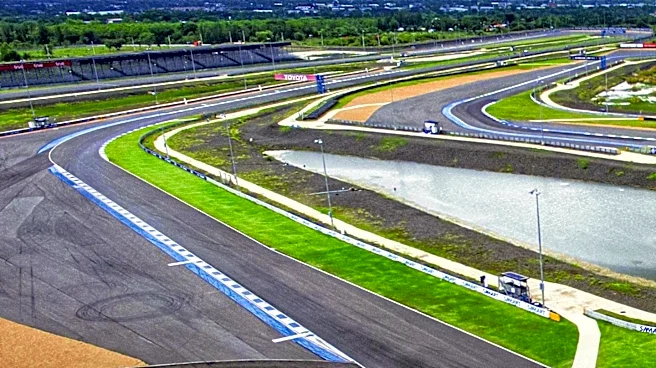
In 2004, Snetterton Circuit was acquired by MotorSport Vision, which initiated a series of upgrades to modernize the facility. The most significant change came in 2011 with the introduction of the Snetterton 300 layout. This new configuration incorporated an infield section, making it the second longest racing track in the UK.
Today, Snetterton hosts major British motorsport events, including the British Touring Car Championship and the British Superbike Championship. The circuit's transformation from a wartime airfield to a premier racing venue is a testament to its adaptability and enduring appeal in the world of motorsport.