



San Diego Stadium, known by various names throughout its history including Jack Murphy Stadium, Qualcomm Stadium, and SDCCU Stadium, was more than just a sports venue; it was a significant stage for some of the most prestigious events in American sports. From its opening in 1967 until its closure in 2020, the multi-purpose stadium in San Diego, California, consistently attracted national attention by hosting Super Bowls, World Series games, MLB All-Star
Games, and numerous college football bowls. Its ability to adapt to different sports configurations made it a versatile and invaluable asset to the city and the broader sports community.
Hosting the NFL's Pinnacle: The Super Bowl
One of the most defining aspects of San Diego Stadium's legacy was its role as a host for the National Football League's championship game, the Super Bowl. The stadium had the distinct honor of hosting three Super Bowls: Super Bowl XXII in 1988, Super Bowl XXXII in 1998, and Super Bowl XXXVII in 2003. This made it the most recent multi-purpose stadium to host the NFL's title game, a testament to its capabilities and the city's appeal as a host destination.
The preparations for these events often spurred significant upgrades to the stadium. For instance, the 1997 renovations, which included adding approximately 11,000 seats, 34 suites, and 4 Club Lounges, were directly linked to the upcoming Super Bowl XXXII. These enhancements brought the stadium's capacity to over 70,500, ensuring it met the stringent requirements for such a high-profile event. The ability to successfully host multiple Super Bowls cemented San Diego Stadium's place in NFL history and showcased its capacity to manage large-scale, complex sporting spectacles.
A Dual-Sport Marvel: MLB Championships and All-Star Games
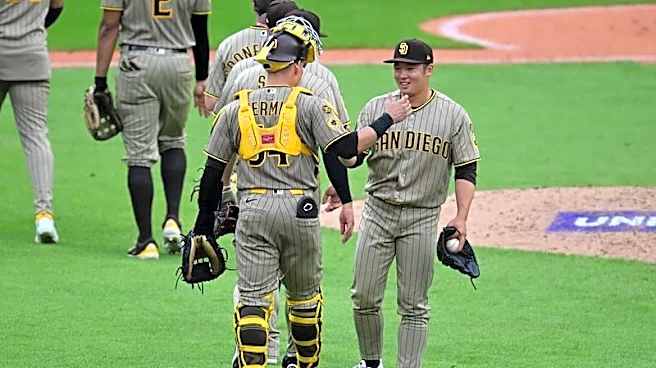
Beyond football, San Diego Stadium was equally prominent in the world of Major League Baseball. It served as the home field for the San Diego Padres from 1969 until 2003, allowing it to host a variety of significant baseball events. The stadium hosted two World Series, in 1984 and 1998, showcasing its versatility as a dual-sport venue. It also welcomed the MLB All-Star Game twice, in 1978 and 1992, bringing together the league's brightest stars to San Diego.
Remarkably, San Diego Stadium holds the unique distinction of being the only stadium ever to host both the Super Bowl and the World Series in the same year, achieving this feat in 1998. This highlights its exceptional adaptability and the rare ability to transition between the demands of two major professional sports at their highest levels. Furthermore, it was one of only three stadiums, alongside the Hubert H. Humphrey Metrodome in Minneapolis and the Los Angeles Memorial Coliseum, to host the Super Bowl, World Series, and the MLB All-Star Game, underscoring its elite status among multi-purpose venues.
College Football Traditions and Other Events
San Diego Stadium was also deeply embedded in college football traditions, hosting several annual bowl games. The Holiday Bowl had been a fixture at the stadium since 1978, bringing collegiate teams and their fans to San Diego each year. Additionally, the Poinsettia Bowl was held at the stadium from 2005 onwards, further solidifying its role in the college football postseason landscape. These bowls provided consistent high-level competition and contributed to the stadium's vibrant event calendar.
Beyond sports, the stadium occasionally served other community and cultural functions. For example, it was utilized as an evacuation center during the California fires in October 2007, demonstrating its utility beyond entertainment. It even made an appearance in popular culture, serving as a filming location in 1979 for the movie "The Kid from Left Field," starring Gary Coleman and Ed McMahon. These diverse uses illustrate the stadium's broad impact and its integral role in the life of San Diego for over five decades.