


The Burning of Washington on August 24, 1814, during the War of 1812, was a catastrophic event that saw many of the young nation's most important government buildings and documents destroyed. However, amidst the chaos and destruction, several individuals undertook heroic efforts to preserve crucial historical records and artifacts, ensuring that the nascent United States did not lose its foundational papers and symbols. These acts of foresight and bravery,
often carried out under immense pressure, played a vital role in safeguarding the nation's memory and continuity of government, even as its capital lay in ruins.
The Devastation and the Race Against Time
The British invasion of Washington D.C. in August 1814 resulted in widespread destruction. A significant portion of the Capitol Building was destroyed, and the U.S. Treasury was reduced to ashes. The War and State Departments, as well as the Navy Yard, were scorched, and the White House was famously burned. This devastation extended to the nation's archives; the original library of the United States Congress, containing all 3,000 of its books, was completely destroyed in the fire. The loss of such vital records and symbols of government created an urgent need for action, prompting individuals to act quickly to save what they could before it was too late.
Prior to the establishment of the national archives in 1934, each executive department was responsible for maintaining its own records. This meant that important national papers were often stored in less-than-ideal conditions, such as boxes and trunks in the attics of public buildings scattered across the city. These storage methods left the documents vulnerable to weather, water damage, neglect, fire, and theft. The British attack brought these vulnerabilities to a head, forcing clerks and officials to make desperate attempts to rescue these irreplaceable items from the advancing flames.
Unsung Heroes: Clerks and First Lady Dolley Madison
Among the most notable acts of preservation were those carried out by clerks from the Department of State. John Graham, Stephen Pleasanton, and Josias King were instrumental in saving the documents under their care. They brought bags and trunks to load onto carts, successfully rescuing books and papers from the State Department. Their efforts preserved unpublished secret journals of Congress, George Washington's commission and correspondence, the Articles of Confederation, the papers of the Continental Congress, and treaties, laws, and correspondence dating back to 1789. Crucially, these clerks also managed to save the Constitution, the Declaration of Independence, and the Bill of Rights, ensuring that these foundational documents of American democracy survived the conflagration.
First Lady Dolley Madison also played a significant role in preserving national treasures. She famously saved numerous Cabinet papers, along with Gilbert Stuart's renowned Landsdowne portrait of George Washington. Her quick thinking and decisive action ensured that these important historical and artistic items were not lost to the British attack. While a majority of the archives of Congress stored in the Capitol were destroyed due to a lack of resources, people, and time, some congressional documents were spared. House clerks Samuel Burch and J. T. Frost moved House papers to a secret location, and Senate clerk Lewis Machen took Senate documents to his farm in Maryland. The salvaged documents included military numbers and logistics, the Senate's history over the past quarter century, and various confidential papers, providing invaluable continuity for the government in the aftermath of the attack.
Rebuilding the Nation's Library and Legacy
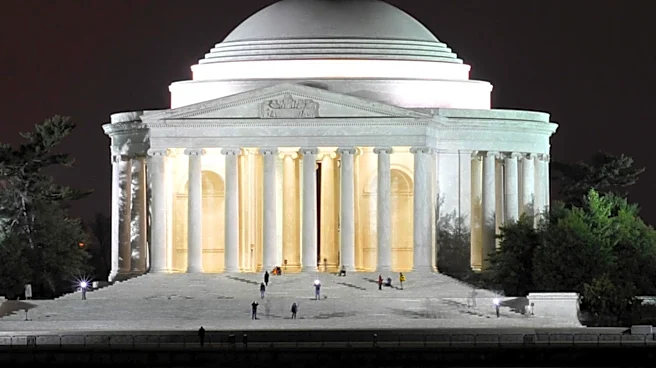
The destruction of the Congressional Library was a significant loss, but it also paved the way for a new beginning. Less than a month after the fire, Thomas Jefferson offered his private collection of 6,487 books as a replacement to Congress. The United States purchased his library for $23,950 in 1815, and this collection became the foundation of the modern Library of Congress. This act not only replaced what was lost but also significantly expanded the intellectual resources available to the nation's lawmakers. The collective efforts to save documents and rebuild institutions underscore the resilience of the young American government in the face of profound adversity, ensuring that its history and principles would endure.