







George Harrison's *Wonderwall Music*, released on November 1, 1968, marked a significant moment in music history as the first solo album by a member of The Beatles. Issued by Apple Records, this album was not just a personal milestone for Harrison but also a groundbreaking work that introduced Indian classical music to a broader pop and rock audience. Conceived as the soundtrack for Joe Massot's 1968 film *Wonderwall*, the album showcased Harrison's deep
engagement with diverse musical traditions, blending them into a unique sonic landscape that transcended conventional genre boundaries.
The Genesis of a Soundtrack: From Film to Album
The creation of *Wonderwall Music* was intrinsically linked to the film it accompanied. Director Joe Massot's *Wonderwall* premiered at the Cannes Film Festival on May 17, 1968, with George and Pattie Harrison in attendance, alongside Ringo Starr and his wife Maureen, and various cast members. The film's UK release followed on January 12, 1969. Harrison's involvement as the composer for the soundtrack meant that the music was crafted to complement the film's narrative and visual style. He frequently visited Twickenham Film Studios during the editing process to ensure his compositions fit the scenes perfectly and were of the appropriate length. This close collaboration between composer and director was crucial in shaping the album's structure and mood.
A Tale of Two Continents: Recording in London and Bombay
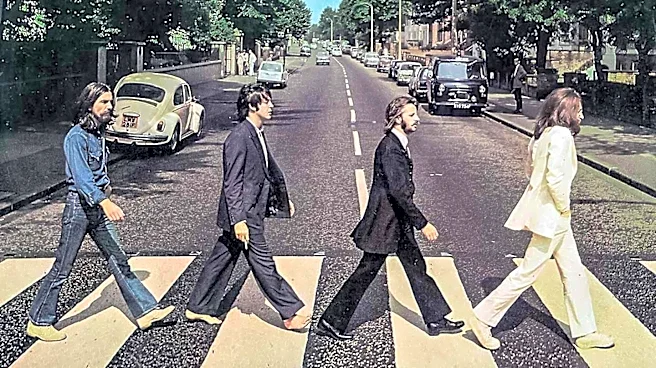
The recording of *Wonderwall Music* was a transatlantic endeavor, taking place in two distinct phases and locations: Great Britain and India. Between November 1967 and February 1968, several tracks were recorded in the UK, including pieces like "Drilling A Home," "Cowboy Music," "Greasy Legs," and "Ski-ing." These Western-style instrumental tracks were primarily recorded at Abbey Road Studios. Harrison detailed his process for these sessions, explaining how he used a stopwatch to time music to specific film scenes, then composed and recorded the pieces at Abbey Road. The British sessions benefited from four-track recording and mixing capabilities.
In contrast, the Indian sessions, which occurred from January 9 to 13, 1968, at the EMI Recording Studios in Bombay, presented a different technical environment. The EMI studio in India was less equipped, leading to live, two-track stereo recordings. During this period, Harrison also recorded the backing track for The Beatles' song "The Inner Light," which was later released as the B-side to "Lady Madonna" in March 1968. Harrison's search for Indian musicians was aided by sitar player Shambhu Das and HMV's head of A&R, Vijay Dubey. The album's tracks are largely instrumental, though some Indian musicians contributed vocalizations.
Collaborations and Pseudonyms: The Album's Personnel
*Wonderwall Music* featured a mix of credited and uncredited musicians, as well as the use of pseudonyms. George Harrison himself was credited as the producer, arranger, and composer for the album. Notably, Eric Clapton played guitar on "Ski-ing," contributing to the album's Western-influenced tracks. Some of the musicians listed on the record sleeve were actually pseudonyms for Harrison, Clapton, and Ringo Starr, adding an element of mystery to the credits. Peter Tork of The Monkees also contributed, playing a banjo borrowed from Paul McCartney, though he was not officially listed as a musician on the album. This blend of known collaborators and hidden identities further enriched the album's unique character, reflecting Harrison's eclectic approach to music-making and his desire to experiment beyond traditional rock formats.