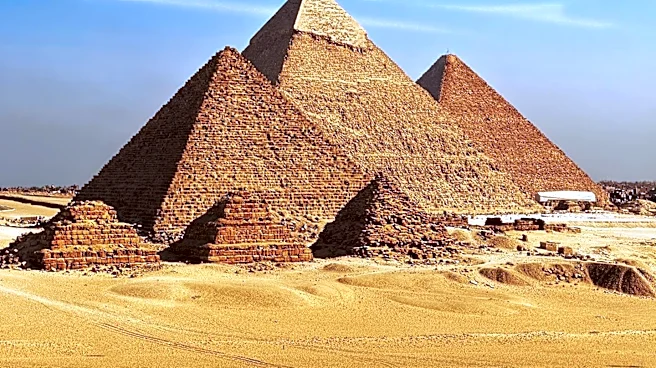





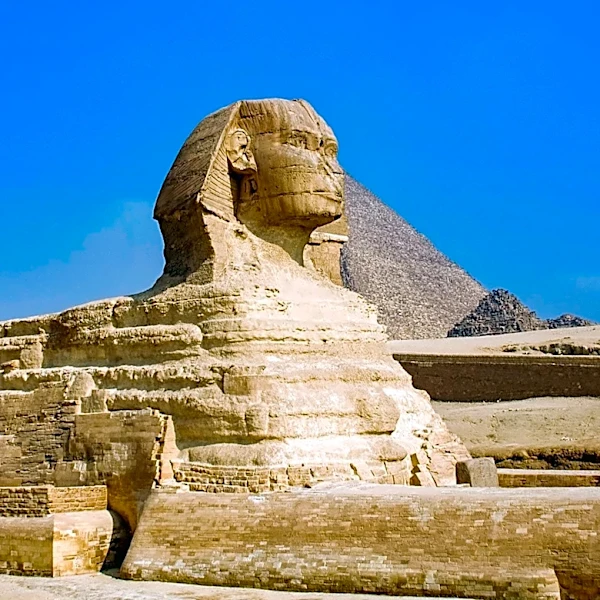

The Giza pyramid complex, also known as the Giza necropolis, stands as an unparalleled achievement of ancient Egyptian civilization. Located in Egypt, this sprawling site is home to the Great Pyramid, the Pyramid of Khafre, and the Pyramid of Menkaure, along with their associated complexes and the iconic Great Sphinx. All these monumental structures were erected during the Fourth Dynasty of the Old Kingdom, approximately between 2600 and 2500 BC.
Beyond the pyramids and the Sphinx, the complex includes various temples, cemeteries, and the remains of a workers' village, offering a comprehensive glimpse into the scale and sophistication of ancient Egyptian society.
The Pyramids and Their Royal Patrons
The Giza complex is dominated by three main pyramids. The Great Pyramid, also known as the Pyramid of Cheops or Khufu, was constructed around 2580–2560 BC. Slightly to its southwest lies the Pyramid of Khafre (or Chephren), and further southwest is the relatively modest-sized Pyramid of Menkaure (or Mykerinos). The Great Sphinx, with its human head and lion's body, is situated on the east side of the complex, with Egyptologists generally agreeing that its head represents Khafre. These pyramids were not isolated structures; they were part of elaborate complexes that included smaller "queens" pyramids, causeways, and temples, all designed to serve the pharaohs in their afterlife journey.
Construction Techniques and Labor
Building these colossal structures required immense logistical and engineering prowess. Most construction theories suggest that huge stones were quarried, then dragged and lifted into place. One likely method for transportation involved placing large stone slabs on wooden sledges, which were then moved over ground moistened with water to reduce friction. The architects selected stable bedrock sites, not sand, for foundations. After careful surveying, the pyramids were built in horizontal levels, one atop the other. The Great Pyramid alone utilized 5.5 million tons of limestone and 8,000 tons of granite, with most stone quarried locally and some transported from Tura across the Nile. Copper tools were used for softer limestone, while rough powders and sands, along with copper tools, were employed for harder granite. To ensure symmetry, exterior casing stones were meticulously cut to equal height and width, with workers carefully trimming surfaces for a precise fit.
Purpose and Religious Significance
The primary purpose of the Giza pyramids was to serve as tombs for the pharaohs and to facilitate their ascension to the afterlife. The Khufu Pyramid Complex, for instance, was commissioned by Pharaoh Khufu. Following his death, the Pyramid of Khafre was built for his son, and subsequently, the Pyramid of Menkaure for Khafre's son. Ancient Egyptians believed that a portion of the pharaoh's spirit, known as his "ka," remained with his corpse, necessitating proper care for his remains to perform his duties as king of the dead. The pyramids were thought to store items the pharaoh would need in the afterlife and to provide a direct connection to the sun god Ra, believed to be the father of all pharaohs. The pyramid's shape symbolized the sun's rays, and its slanted structure was intended to serve as a ramp or stairway for the deceased pharaoh's spirit to reach Ra.