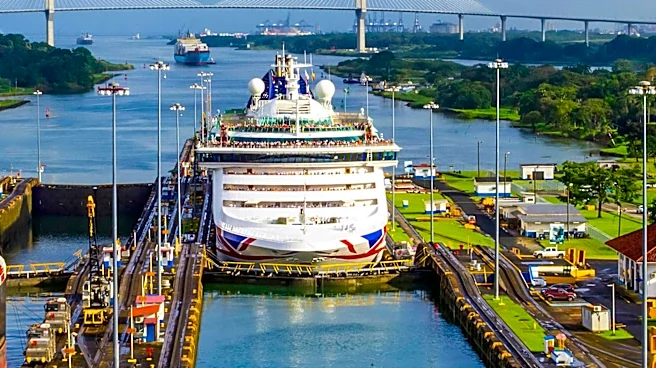




The Panama Canal, a vital artery for global maritime trade, is managed and operated by a dedicated entity known as the Panama Canal Authority (ACP). This agency, an integral part of the Panamanian government, assumed full administrative control of the canal on December 31, 1999. This significant transfer of power from the joint US–Panama Panama Canal Commission was a direct result of the Torrijos–Carter Treaties, marking a new era for the iconic waterway.
Headquartered in Balboa, a district within Panama City, the ACP is tasked with ensuring the canal's continued efficiency and strategic importance on the world stage.
The establishment of the Panama Canal Authority is deeply rooted in Panama's national legal framework. It operates under Title XIV of the National Constitution, which grants it exclusive responsibility for all aspects of the canal's existence. This includes its operation, administration, management, preservation, maintenance, and even its modernization. The ACP's mandate is clear: to operate the canal safely, continuously, efficiently, and profitably, thereby upholding its critical role in international commerce. The legal foundation for its organization and operations was further solidified with the passage of the Organic Law of the Panama Canal Authority on June 11, 1997.
A Unique Structure for a Unique Asset
Due to the Panama Canal's singular importance and nature, the Panama Canal Authority possesses a unique organizational structure that grants it significant autonomy. The ACP enjoys financial independence and holds direct ownership of all the canal's assets. This allows the authority to make strategic decisions regarding investments and operational improvements without undue external financial constraints, ensuring the canal can adapt to evolving global trade demands and technological advancements.
The governance of the ACP is overseen by a Board of Directors, which plays a crucial role in setting the strategic direction for the canal. This board is responsible for establishing policies that guide the canal's operation, its ongoing improvement, and its modernization efforts. Furthermore, the Board of Directors supervises the management of the canal, ensuring that all activities align with the principles laid out in the National Constitution, the Panama Canal Authority Organic Law, and all relevant regulations.
Leadership and Inalienable Patrimony
Composition of the Board of Directors reflects a balance of governmental oversight and long-term stability. The board includes a director designated by the president of the republic, who also serves as the chair and holds the rank of Minister of State for Canal Affairs. Another director is designated by the legislative branch, with the flexibility for free appointment or removal. The majority of the board, however, consists of nine directors appointed by the president of the republic. These appointments require the consent of the Cabinet Council and ratification by an absolute majority of the members of the Legislative Assembly.
These nine directors serve for a substantial term of nine years, providing continuity and expertise in the canal's long-term planning and management. Their removal is restricted to specific reasons outlined in Article 20 of the Panama Canal Authority Organic Law, further safeguarding the board's stability. This careful structuring underscores the profound significance of the Panama Canal to the nation. By law, the Panama Canal is defined as an inalienable patrimony of the Republic of Panama, meaning it cannot be sold, assigned, mortgaged, or otherwise encumbered or transferred. This legal protection ensures that the canal remains a permanent and sovereign asset of the Panamanian people, managed by the dedicated Panama Canal Authority for the benefit of the nation and global trade.