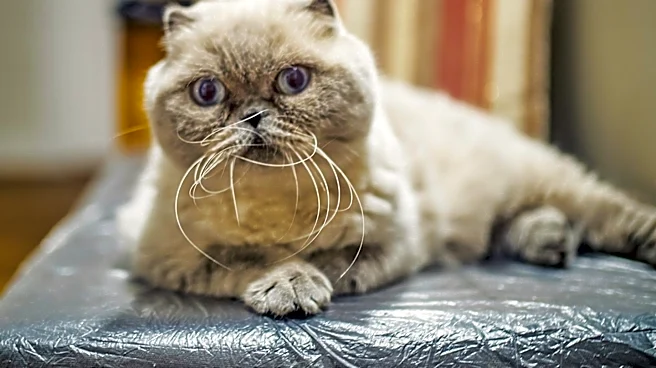







The Exotic Shorthair, a distinctive cat breed known for its short, dense coat and Persian-like appearance, has a fascinating origin story rooted in the late 1950s in the United States. This breed was not initially conceived as a separate entity but rather emerged from the clandestine efforts of some American Shorthair breeders who sought to enhance the body type of their cats. Their secret outcrossing with Persians, and occasionally with Russian Blues
and Burmese cats, ultimately led to the creation of a new and officially recognized breed.
Early Crossbreeding and Controversy
In the late 1950s, certain American Shorthair breeders began secretly using Persian cats as an outcross. The primary motivation behind these hidden pairings was to improve the body type of their American Shorthairs. Beyond Persians, crosses were also made with Russian Blue and Burmese cats, further diversifying the genetic pool. This practice, while intended to refine the American Shorthair, was not without its detractors.
The resulting crossbreed look, characterized by traits inherited from the Persian, started to gain attention and recognition within the cat show ring. However, this development was met with significant disapproval from other American Shorthair breeders. These unhappy breeders successfully advocated for a new breed standard that specifically disqualified American Shorthairs exhibiting any signs of crossbreeding, effectively pushing the new look out of their established category.
The Path to Official Recognition
Despite the initial resistance, one American Shorthair breeder recognized the unique potential of the Persian/American Shorthair crosses. This individual championed the idea of establishing these cats as a new and distinct breed. Their efforts eventually led to Jane Martinke, a judge for the Cat Fanciers' Association (CFA) and an American Shorthair breeder herself, officially recognizing these cats as a new breed in 1966. The breed was given the name Exotic Shorthair, marking a significant turning point in its history.
This official recognition by the CFA provided a legitimate platform for the Exotic Shorthair to develop and flourish. The breed's unique combination of a Persian-like appearance with a more manageable short coat began to appeal to a wider audience. The initial controversy surrounding its origins eventually gave way to its acceptance as a legitimate and distinct breed within the cat fancy world.
Evolution of Breeding Standards
Following its initial recognition, the breeding standards for the Exotic Shorthair continued to evolve. In 1987, the Cat Fanciers' Association made a crucial decision to close the Exotic Shorthair to any further shorthair outcrosses. This meant that from that point forward, the Persian became the only allowable outcross breed for the Exotic Shorthair. This decision solidified the breed's close genetic ties to the Persian, ensuring that its distinctive appearance, aside from the coat length, would remain consistent with its long-haired counterpart.
This refinement in breeding standards helped to further define the Exotic Shorthair's characteristics, emphasizing its role as a short-haired version of the Persian. The breed's history is a testament to how selective breeding, even when initially controversial, can lead to the creation of beloved and widely recognized animal companions.