






The contrast effect is a fundamental principle of perception that can dramatically alter how we see the world, often leading to fascinating optical illusions. These illusions highlight the brain's tendency to interpret visual information not in isolation, but in relation to its surroundings or preceding stimuli. This effect can make identical objects appear different based on their context, demonstrating the powerful influence of comparison on our
visual system.
One prominent example is the Chubb illusion, where the perceived brightness or luminance of an identical central visual target varies depending on the contrast of its larger uniform background. An object with low-contrast visual texture surrounded by a uniform field appears to have higher contrast than the same object presented on a field of high-contrast texture. This illusion, observed by Charles Chubb and his colleagues in 1989, provides valuable insights into the workings of human visual systems.
The Chubb Illusion Explained
In the Chubb illusion, two central target areas that are identical in brightness can appear different because their background fields are different. For instance, a central target on a dark background will appear lighter, while the same target on a lighter background will appear darker. This phenomenon is similar to simultaneous contrast, where the ratio of the central form's luminance to its background's luminance dictates its perceived brightness.
Researchers have explored various explanations for the Chubb illusion. One proposal, lateral inhibition, suggests that neurons strongly stimulated by a bright background might suppress the less strongly stimulated neurons of an interior rectangle, making it appear darker. However, this explanation doesn't fully account for all aspects of the illusion. An alternative, empirical explanation suggests that the Chubb illusion can be understood by considering the degree to which "imperfect transmittance" might have affected the light reaching the eye. This theory posits that our visual system interprets the scene based on past experiences with how light is affected by various media, leading to altered perceptions of contrast.
The Stepping Feet Illusion
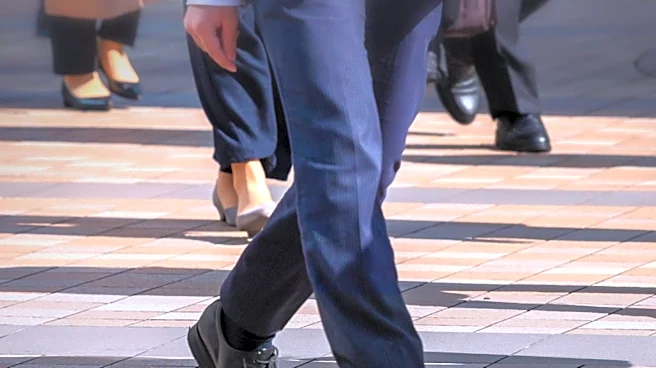
Another compelling example of the contrast effect in action is the stepping feet illusion. This motion perception phenomenon involves two "buses," one blue and one yellow, moving horizontally across a "street" made of black and white stripes. Although both buses move at a constant speed, their perceived speed varies dramatically depending on the background they are against.
When the blue bus is on the white stripes, the contrast is high, making it appear to move faster than its actual speed. Conversely, when the blue bus is against the black stripes, the contrast is low, and its movement looks slower. The opposite effect occurs for the yellow bus. This illusion demonstrates that higher-contrast movements appear faster than those with lower contrast. The effect disappears if the striped background is removed, underscoring how an object's background significantly influences its perceived speed. This illusion was initially demonstrated by Stuart Anstis in 2003, who also suggested that the contrast effect could explain why drivers in foggy conditions misjudge their speed and the speed of other cars, as reduced contrast makes objects appear slower.