






In Vedanta philosophy, particularly within Hinduism, the concept of *koshas* provides a framework for understanding the different layers or sheaths that constitute a human being. These five sheaths, collectively known as *Panchakosha*, are described in ancient texts like the Taittiriya Upanishad. They are often visualized as the layers of an onion, progressively moving from the grossest, outermost layer to the subtlest, innermost one. This hierarchical
model helps to explain the multifaceted nature of human existence, from the physical body to the most subtle aspects of consciousness, all enveloping the true Self, or Atman.
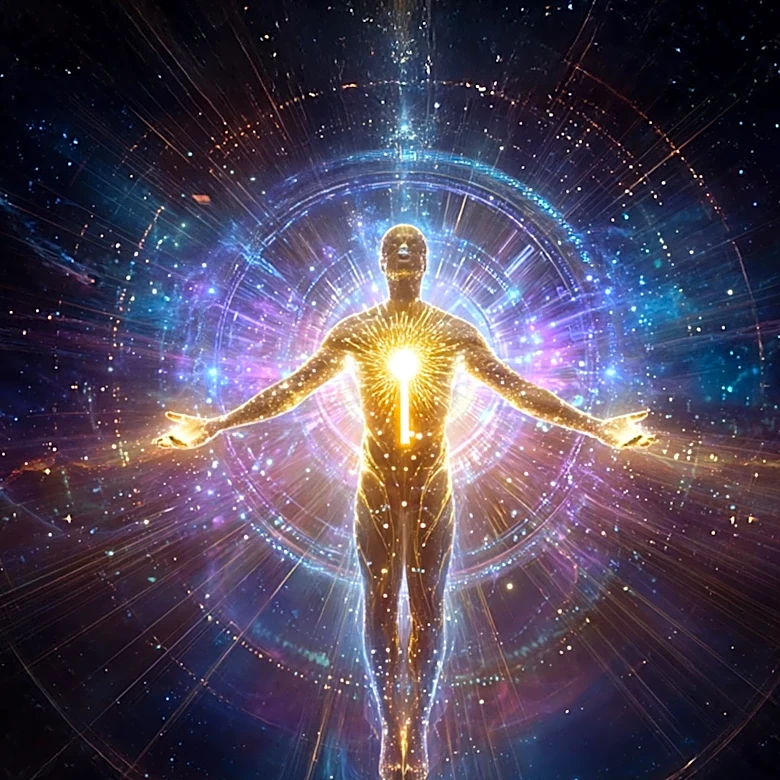
The purpose of understanding the koshas is to discern the Atman, which lies beyond these coverings. According to Vedanta, a wise person, by becoming aware of the subtle influences within each kosha, can distinguish the Self from mere appearances. The five koshas are arranged from gross to fine, each representing a different aspect of human experience and existence.
Annamaya Kosha: The Physical Body
The *Annamaya kosha* is the outermost and grossest of the five sheaths. Its name, derived from *anna* meaning food, signifies that it is the sheath of the physical body, nourished by food. This layer is composed of the five gross elements and corresponds to the *sthūlaśarīra*, or gross body. It is the visible, tangible aspect of a person, made of skin, flesh, fat, bones, and other physical components. Living through this layer, individuals often identify themselves solely with this physical mass. However, Vedantic philosophy teaches that the true Self is distinct from this body.
Attributes of the Annamaya kosha include birth and death, as it is transient and subject to origination and destruction. It is considered dependent and impure. The text emphasizes that it is not the Atman because it did not exist before its origin and ceases to exist upon its destruction. It is constantly changing, originating and being destroyed every moment. A deluded mind, failing to inquire deeper, might mistakenly identify the Atman with this physical body, thereby hindering the experience of true bliss.
Pranamaya Kosha: The Vital Sheath
Subtler than the Annamaya kosha is the *Pranamaya kosha*, the sheath of vital airs or life force. *Prana* is the vital principle that animates and holds together the body and mind. Its most evident physical manifestation is the breath. As long as this vital principle remains in an organism, life continues. This sheath is composed of *prana* in combination with the five organs of action (*karmendriyas*).
The Pranamaya kosha belongs to the *sūkṣmaśarīra*, or subtle body, and completely encloses and fills the Annamaya kosha. It is considered an effect of *Vayu*, or air. The Annamaya kosha receives life when *prana* enters it, enabling it to engage in various actions. *Prana* is seen as the life of all beings and the universal life force. Any events occurring in the Annamaya kosha are often mistakenly attributed to the Atman due to the pervasive influence of the Pranamaya kosha, which is itself unaware and dependent.
Manomaya Kosha: The Mind-Sheath
Moving inward, the *Manomaya kosha* is composed of *manas*, the mind, along with the five sensory organs (*jnanendriyas*). This "mind-sheath" is considered to approximate personhood more closely than the physical and vital sheaths. It is the psychological aspect, made up of thoughts and emotions, and is the source of diversity and the sense of "I" and "mine." The mind drives the senses, earning it the title "king of the senses." Adi Shankara used the analogy of clouds brought in and driven away by the wind to illustrate how the mind causes both bondage and liberation.
This kosha is powerful because both attachment and freedom stem from it. It pervades the Pranamaya kosha and is part of the *sūkṣmaśarīra*. The mind, when clouded by *rajas* (projection) and *tamas* (concealment), creates the illusion of *samsara* (the cycle of existence). However, when free from these impurities, it can lead to the realization of Brahman.
Vijnanamaya Kosha: The Intellect Sheath
The *Vijnanamaya kosha* is composed of *vijnana*, or intellect, which is the faculty of discrimination, determination, and will. It is associated with the organs of perception and is considered a sheath of intellection. This kosha, along with the *buddhi* (intellect) and its modifications, and the organs of knowledge, is seen as a cause of human transmigration. It is a modification of *prakriti* (nature) and is endowed with the function of knowledge, often identifying itself with the body and organs.
This sheath also belongs to the *sūkṣmaśarīra* and pervades the Manomaya kosha, which in turn pervades the Pranamaya kosha, and so on. The *Vijnanamaya kosha* is characterized by knowledge and action, and it is always identified with the body and organs. It is associated with the waking and dream states and the experiences of joy and sorrow. Being very luminous and in close proximity to the Paramatman (Supreme Self), it can, when deluded, cause the Atman to become a doer and enjoyer, leading to *jivahood* (individual soul existence) as long as delusion persists.
Anandamaya Kosha: The Bliss Sheath
The innermost and subtlest of the koshas is the *Anandamaya kosha*, the bliss sheath. While the provided text does not elaborate on this kosha, its position as the final layer before the Atman suggests it is the closest to the true Self, representing a state of inherent joy and peace. In the overall scheme of the koshas, it is the most subtle and is often associated with the *kāraṇaśarīra*, or causal body. The journey through the koshas is ultimately a process of realizing that the Atman is distinct from all these layers, leading to liberation from ignorance and attachment to the world.