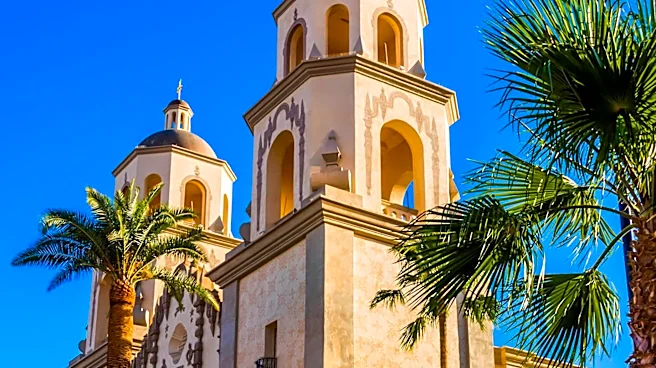









Mission San Diego de Alcalá, located in present-day San Diego, California, holds a significant place in the history of the Spanish missions in California. Founded on July 16, 1769, by Spanish friar Junípero Serra, it was the second Franciscan mission established in the Californias, a province of New Spain. This article delves into the early history of the mission, highlighting its founding, the challenges it faced, and its role in the Spanish colonization
efforts.
Establishment of the Mission
The mission was named after Saint Didacus of Alcalá, a Spanish Franciscan lay brother. It was established as part of Spain's broader strategy to convert the indigenous populations to Roman Catholicism and to secure its territorial claims in the region. The mission was strategically located in an area long inhabited by the Kumeyaay people, near the intersection of what are now Interstate 8 and Interstate 15.
The founding of Mission San Diego de Alcalá was part of a larger expedition led by Junípero Serra and Gaspar de Portolá. This expedition aimed to establish missions and presidios at key locations along the California coast, including San Diego and Monterey. The mission's establishment marked the beginning of a significant cultural and religious transformation in the region.
Early Challenges and Rebuilding
The mission faced numerous challenges in its early years. In 1775, the original mission church was destroyed by fire during an uprising by local indigenous people. This attack resulted in the death of Father Luis Jayme, California's first Christian martyr, and several others. The mission was pillaged and burned to the ground, leaving the survivors to rebuild from the ashes.
Despite these setbacks, Father Serra returned to the site in 1776 to oversee the rebuilding of the mission. The process was arduous, hindered by a lack of water and the difficulty of cultivating the land. However, the mission persevered, focusing on horse and mule breeding to support other missions in Alta and Baja California.
Growth and Spiritual Impact
As the mission was restored, it began to see significant spiritual growth. From 1778 to 1795, the mission recorded a substantial number of baptisms and conversions. By the end of this period, the mission had performed 567 baptisms, and the number of neophytes, or newly converted indigenous people, reached 908.
The mission's influence extended beyond its immediate surroundings, playing a crucial role in the spread of Christianity and Spanish culture in California. It served as a center for religious instruction and cultural exchange, leaving a lasting impact on the region's history.
Mission San Diego de Alcalá's early history is a testament to the resilience and determination of the Spanish missionaries and the indigenous people they sought to convert. Despite facing significant challenges, the mission laid the groundwork for the spread of Spanish influence in California, shaping the region's cultural and religious landscape for generations to come.