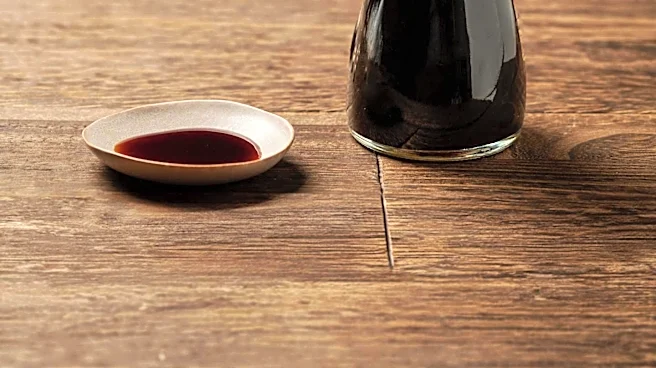






Fish sauce is a fundamental condiment and flavoring widely used across Southeast Asian cuisines, serving as a cornerstone ingredient that defines many regional dishes. This amber-colored liquid, extracted from the fermentation of fish or krill with sea salt, is more than just a seasoning; it's a culinary tradition with deep historical roots. While the basic principle of fermentation remains consistent, the characteristics of fish sauce can vary significantly
from one country to another, reflecting diverse local preferences and production methods. Its versatility allows it to be used directly in cooking or as a base for complex dipping sauces.
Regional Variations in Southeast Asia
Across Southeast Asia, fish sauce exhibits distinct regional characteristics. Thai and Cambodian fish sauces, for instance, are generally described as milder and less pungent when compared to their Vietnamese counterparts. In Myanmar, fish sauce is known as ngan bya yay and is often a byproduct of Hmyin ngapi, a Burmese fish paste made from small fish, anchovies, krill, and shrimp. This highlights how the production of fish sauce can be intertwined with other traditional fish-based products in the region.Cambodia offers another unique perspective on fish sauce, where it is called tik trei. Similar to prahok, another Cambodian fermented fish product, tik trei is believed to have origins dating back to the pre-Angkorean era. Industrial production in Cambodia involves mixing trei aing keuy or anchovies with coarse salt and fermenting them in large wooden vats. This process typically spans six to eight months, during which the liquid is distilled five times before being transferred to jars for a final two to three months of sun-fermentation. The Kampot Province is particularly famous for its fish sauce, with one company even producing a specialty version containing roe. Cambodian sweet fish sauce, a popular dipping sauce, is created by mixing fish sauce with sugar, lime juice, chili peppers, and crushed roasted peanuts.
Vietnamese Fish Sauce and Nuoc Cham
In Vietnam, fish sauce, or nuoc mam, is a central element of the cuisine. Vietnamese fish sauces are often noted for being more pungent than those from Thailand or Cambodia. A prime example is Phu Quoc fish sauce, made from fermented black anchovies, which has gained international recognition, including a European Union Protected Designation of Origin status. This particular variety is produced on Phu Quoc island and its surrounding islets, with traditional production methods dating back centuries.Beyond its use as a direct flavoring, Vietnamese fish sauce is the primary component of nuoc cham, a widely known prepared fish-based condiment. Nuoc cham is savory, lightly sweet, and salty, and can be made sour and spicy with the addition of lime juice and chili peppers. The basic recipe for nuoc mam pha, or mixed fish sauce, involves fish sauce, water, and sugar, often with lime juice or vinegar. Minced uncooked garlic, chopped bird's eye chilies, and sometimes shredded pickled carrot or white radish and green papaya are added. In central Vietnam, a less dilute form with fresh chili is preferred, while southern Vietnamese often use palm sugar and coconut water as sweeteners. This versatility underscores the integral role of fish sauce in creating the complex and balanced flavors characteristic of Vietnamese and broader Southeast Asian culinary traditions.