








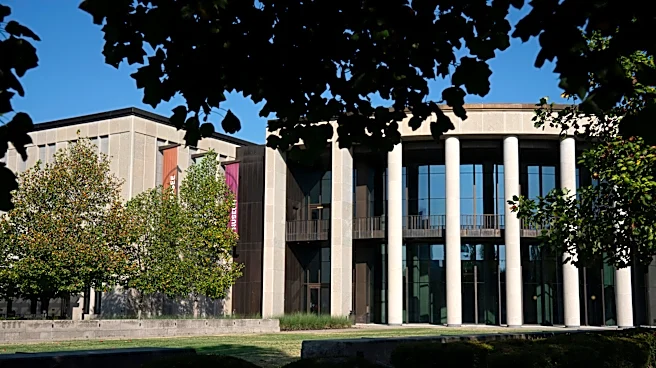
Jubilee Hall, located on the campus of Fisk University in Nashville, Tennessee, stands as a powerful symbol of resilience and the transformative power of music. Completed in 1876, this Gothic Revival architectural marvel was not just the university's first permanent building; it was a direct result of the extraordinary fundraising efforts of the Fisk Jubilee Singers. Their arduous tours across the United States and Europe generated the crucial funds
needed to construct this edifice, which was later designated a National Historic Landmark in 1974, recognizing its profound significance in American history and education.
The Urgent Need for a Permanent Home
Fisk University, founded in 1865 by the American Missionary Association and local supporters, aimed to provide a liberal arts education to newly freed African Americans. By 1871, however, the young institution faced severe financial distress, threatening its very existence. To avert bankruptcy and closure, George Leonard White, the university's treasurer and music director, conceived a bold plan: a student singing group would tour to raise the necessary funds. This initiative led to the formation of the Fisk Jubilee Singers, a nine-member ensemble tasked with securing the university's future through their voices.
The initial U.S. tours of the Jubilee Singers, which began in October 1871, were met with both challenges and eventual success. Despite facing prejudice, poor conditions, and financial struggles, their dedication paid off, raising $40,000 for the university. This early success laid the groundwork for even more ambitious endeavors, demonstrating the potential of their unique musical mission.
European Triumphs and the Funding of Jubilee Hall
The pivotal moment for Jubilee Hall's construction came with the Singers' tours of Great Britain and Europe. In 1873, an expanded group of eleven members embarked on their first European journey, performing for dignitaries such as Queen Victoria. The reception was overwhelmingly positive, and the financial returns were substantial. They returned for a second, even more extensive European tour from May 1875 to July 1878, which proved to be incredibly lucrative.
These European tours alone raised an estimated $150,000 for Fisk University. It was these vital funds that were directly allocated to the construction of Jubilee Hall. Designed by New York architect Stephen D. Hatch, the building was completed in 1876, providing Fisk University with its first permanent and substantial structure. This achievement was a testament to the Singers' global appeal and their unwavering commitment to their educational mission.
A Lasting Landmark and Legacy
Jubilee Hall is situated on the northern side of the Fisk University Campus, characterized by its large L-shaped masonry, six stories in height, and distinctive Gothic Revival architecture. Its main facade features a central section with slightly projecting end sections, and a tower rising at the junction of the center and right sections, culminating in an octagonal belfry and steeple adorned with Gothic spires. While the exterior has largely retained its original appearance, the interior has been modernized to serve as an undergraduate residence hall. The hall also houses a floor-to-ceiling portrait of the original Jubilee Singers, a gift from Queen Victoria during their 1873 tour.
Designated a National Historic Landmark in 1974, Jubilee Hall symbolizes the profound impact of the Fisk Jubilee Singers. It stands not only as an architectural landmark but also as a living monument to the perseverance of a group of students who, through their music, secured the future of their university and helped preserve the rich tradition of Negro spirituals. In 2017, the Tennessee Historical Commission installed a marker honoring the Fisk Jubilee Singers at Jubilee Hall, further cementing its place in history.