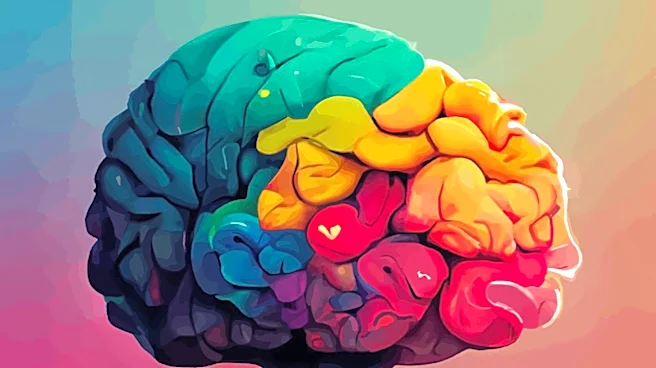










The cerebrum is not only the largest part of the brain but also the center of higher cognitive functions. It is responsible for complex processes such as memory, language, and decision-making. This article delves into the cerebrum's role in these cognitive functions and how it contributes to human intelligence and behavior.
Memory and Learning
Memory is a fundamental cognitive function attributed to the cerebrum, particularly the hippocampus and associated regions of
the medial temporal lobe. The hippocampus is crucial for forming explicit or declarative memories, which involve factual information. This was notably demonstrated in the case of a patient known as HM, who lost the ability to form new memories after the surgical removal of his hippocampus.
The cerebrum also plays a role in implicit or procedural memory, which involves learning complex motor behaviors. The basal ganglia, a subcortical structure within the cerebrum, are essential for this type of memory. Additionally, the prefrontal cortex contributes to working memory, which is used for problem-solving and planning. This area helps filter actions according to social norms and consider the outcomes of actions before they are executed.
Language and Communication
Language is another critical cognitive function associated with the cerebrum. Specific areas within the cerebral cortex, such as Broca's area in the frontal lobe and Wernicke's area at the temporal-parietal lobe junction, are responsible for different aspects of language processing. Broca's area is involved in the motor aspects of language, while Wernicke's area is crucial for speech comprehension.
These areas are interconnected by the arcuate fasciculus, a large white matter tract that facilitates communication between them. Damage to Broca's area can result in expressive aphasia, characterized by difficulty in producing speech, while damage to Wernicke's area can lead to receptive aphasia, where speech comprehension is impaired.
Decision-Making and Problem-Solving
The cerebrum is also central to decision-making and problem-solving, processes that involve evaluating information, considering potential outcomes, and making choices. The prefrontal cortex is particularly important in these functions, as it helps integrate sensory information with past experiences to guide behavior.
This area of the cerebrum is involved in planning for the future and making decisions based on ethical and moral considerations. It allows individuals to weigh the consequences of their actions and choose the most appropriate course of action. The cerebrum's role in these cognitive functions highlights its importance in shaping human behavior and intelligence.
In summary, the cerebrum's involvement in memory, language, and decision-making underscores its significance in higher cognitive functions. By processing and integrating complex information, the cerebrum enables humans to learn, communicate, and make informed decisions, contributing to the richness of human experience.