


The 2013 NASCAR Sprint Cup Series was a significant year in stock car racing, featuring 36 points-paying races that culminated in a championship battle. The season's calendar was officially released on September 25, 2012, setting the stage for a series of high-octane events across various tracks. Beyond the regular season, the schedule also incorporated exhibition races and qualifying events, most notably for the iconic Daytona 500, which traditionally
kicks off the racing year. This season was marked not only by thrilling competition but also by notable controversies and penalties that impacted several prominent teams and drivers.
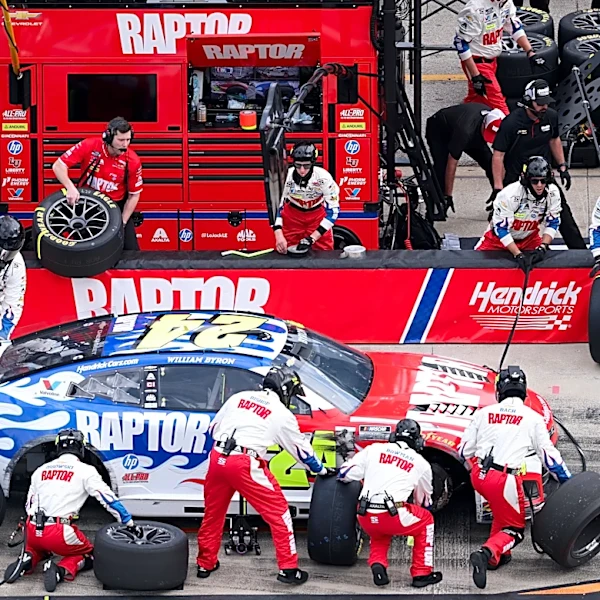
One of the standout events of the season was the 2013 NRA 500, held on April 13, 2013, at Texas Motor Speedway. This race, the seventh of the 36-race championship, saw Kyle Busch of Joe Gibbs Racing claim victory. His win at Texas was particularly significant as it marked his second win of the 2013 season and his first career victory at that specific track. Busch's performance was dominant, as he also secured the pole position and led 171 laps during the race. Martin Truex Jr. finished second, with Carl Edwards, Greg Biffle, and Joey Logano rounding out the top five finishers, showcasing the intense competition among the sport's elite.
Weekend Sweeps and Tragic Incidents
Kyle Busch's victory at the 2013 NRA 500 was part of a remarkable weekend sweep for the driver. He had also won the Nationwide Series race held on Friday night, replicating a feat he had previously accomplished earlier in the season at Fontana. These weekend sweeps highlighted Busch's versatility and skill across different NASCAR series. However, the event at Texas Motor Speedway was also marred by a tragic incident. A man committed suicide near the infield after an argument with another fan, casting a somber shadow over the race weekend.
This incident served as a stark reminder of the diverse and sometimes unpredictable nature of large public events, even those centered around sports. While the focus of NASCAR is typically on the competition and the spectacle, such occurrences underscore the broader human element present at these gatherings. The racing community, while celebrating the on-track achievements, also had to contend with the gravity of this off-track tragedy.
Post-Race Penalties and Controversies
The 2013 NRA 500 was followed by significant post-race penalties that stirred controversy within the NASCAR community. Three teams, in particular, faced sanctions. Michael Waltrip Racing's No. 56 car, driven by Martin Truex Jr., was penalized six driver points and six owner points for its front car height failing to meet NASCAR specifications. Crew chief Chad Johnston received a $25,000 fine and was placed on probation until June 5. Michael Waltrip Racing chose not to appeal this penalty.
More controversially, Penske Racing's No. 2 and No. 22 cars were fined for unapproved suspension parts. Driver Brad Keselowski of the No. 2 car was fined 25 driver points, and team owner Roger Penske was fined 25 owner points. Crew chief Paul Wolfe received a $100,000 fine, a suspension for two points races and the Sprint All-Star Race, and probation until December 31. Car chief Jerry Kelly, team engineer Brian Wilson, and Penske Racing competition director Travis Geisler were also suspended for three races and placed on probation. Similar penalties were issued to the No. 22 car, with driver Joey Logano and team owner Walt Czarnecki each fined 25 points, and crew chief Todd Gordon receiving the same financial and suspension penalties as Wolfe. Car chief Raymond Fox and team engineer Samuel Stanley also faced three-race suspensions and probation. Penske Racing appealed these decisions, resulting in a reduction of the suspension from seven races to three (two points races plus the Sprint All-Star Race), but the core penalties remained, highlighting NASCAR's strict enforcement of technical regulations.