








The Apollo program, while primarily focused on landing humans on the Moon, generated a ripple effect of innovation that extended far beyond space exploration. Its rigorous demands for reliability and performance pushed the boundaries of existing technology, leading to advancements that have since become integral to modern life. From scientific breakthroughs to practical consumer products, Apollo's legacy is woven into the fabric of our technological
landscape.
Catalyzing Technological Spinoffs
One of the most tangible impacts of the Apollo program is the vast number of technological spinoffs it produced. By 2015, over 1,800 products and technologies were attributed to Apollo-stimulated research and development. These innovations include items as diverse as cordless power tools, which benefited from advancements in battery technology and miniaturization, and fireproof materials, crucial for astronaut safety and later adapted for various industrial and consumer applications.
Beyond these, Apollo contributed to the evolution of heart monitors, improving medical diagnostics and care. The program also played a role in the development of solar panels, enhancing their efficiency and reliability for both space and terrestrial uses. Digital imaging technologies, now ubiquitous in cameras and smartphones, also saw significant advancements driven by the need for high-quality imagery from space. Even the use of liquid methane as fuel, a concept explored for advanced propulsion, has found applications in other fields.
Driving the Integrated Circuit Revolution
The Apollo program was a critical force behind the early research and development of integrated circuits (ICs). The sophisticated flight computers required for both the lunar and command modules demanded unprecedented levels of miniaturization and reliability. This need, alongside requirements from missile systems, propelled the nascent IC industry forward. By 1963, Apollo's demand was so significant that it accounted for 60 percent of the United States' total production of integrated circuits.
The program's emphasis on extreme reliability for its ICs was a crucial differentiator. Unlike missile systems, where a single failure might be acceptable in a large arsenal, the failure of a component in a crewed spacecraft could have catastrophic consequences. This stringent requirement for fault tolerance and durability in Apollo's electronics set new standards for the industry, influencing the design and manufacturing of integrated circuits for decades to come.
Shaping Future Space Capabilities and Scientific Knowledge
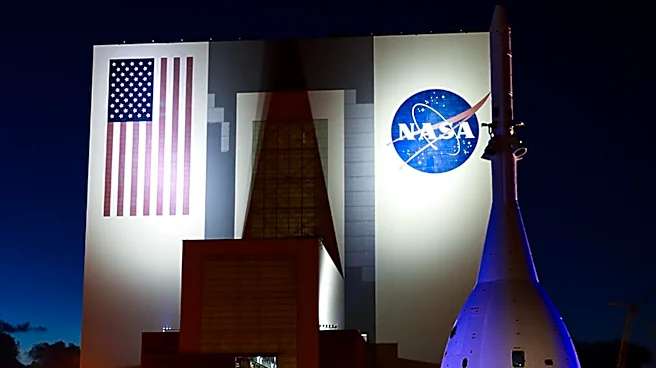
Beyond its direct technological contributions, Apollo fundamentally shaped NASA's future human spaceflight capabilities. The program necessitated the construction of major infrastructure, including the Johnson Space Center and Kennedy Space Center, which remain vital hubs for space operations. These facilities, along with the expertise developed during Apollo, provided the foundation for subsequent missions and programs.
Scientifically, the 842 pounds (382 kg) of lunar rocks returned by Apollo missions revolutionized our understanding of the Moon's composition and geological history. This invaluable collection of samples continues to be studied, yielding new insights into the formation and evolution of Earth's closest celestial neighbor. The program's influence thus extends from the practical tools we use daily to our fundamental comprehension of the cosmos.