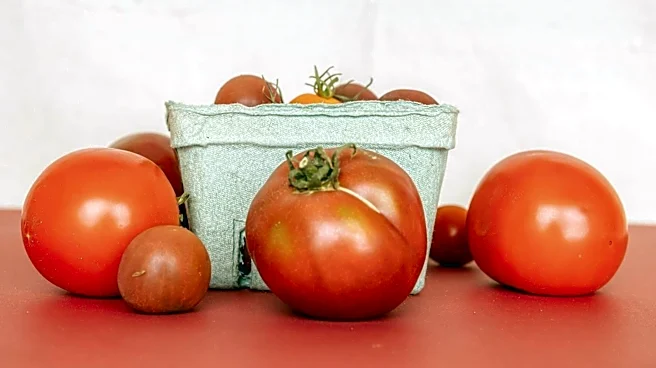










The tomato, a staple in kitchens worldwide, has a rich history that traces back to its origins in South America. This fruit, often mistaken for a vegetable, has traveled across continents and cultures, becoming an essential ingredient in various cuisines. Understanding the tomato's journey from its native lands to its widespread use today offers a fascinating glimpse into the history of global food exchange.
Origins in South America
The tomato originated in western South America,
with its wild ancestor, Solanum pimpinellifolium, native to regions like Chile, Peru, and Ecuador. The exact timeline of its domestication remains uncertain, but it is believed that the process began in either South America or Central America. The domesticated tomato likely started as a cherry tomato, which eventually evolved into the larger varieties we know today.
By 500 BCE, the tomato was already being cultivated in southern Mexico, where the Aztecs grew several varieties. The Aztecs referred to red tomatoes as xitomatl and used them in various sauces, showcasing the fruit's early culinary significance. The diversity of tomatoes in Aztec markets, as described by Bernardino de Sahagún, highlights the fruit's importance in pre-Columbian Mesoamerican cuisine.
Introduction to Europe
The Spanish were instrumental in introducing the tomato to Europe during the Columbian exchange in the 16th century. Initially, Europeans were cautious about consuming tomatoes due to their relation to the nightshade family, which was considered poisonous. As a result, tomatoes were first used ornamentally in European gardens.
In Italy, tomatoes were initially grown for their beauty rather than consumption. However, over time, the fruit's culinary potential was recognized, and it became a staple in Italian cuisine. The earliest known cookbook featuring tomato recipes was published in Naples in 1692, indicating the fruit's gradual acceptance in European kitchens.
Global Culinary Impact
Today, tomatoes are a cornerstone of global cuisine, used in a wide array of dishes from pasta sauces to salads. The fruit's savory umami flavor makes it a versatile ingredient, enhancing the taste of various culinary creations. In the United States, tomatoes have even been adopted as state symbols, reflecting their cultural significance.
The tomato's journey from South America to global prominence is a testament to the interconnectedness of world cultures and the impact of food exchange. As a key ingredient in countless recipes, the tomato continues to enrich our culinary experiences, bridging the gap between diverse traditions and tastes.