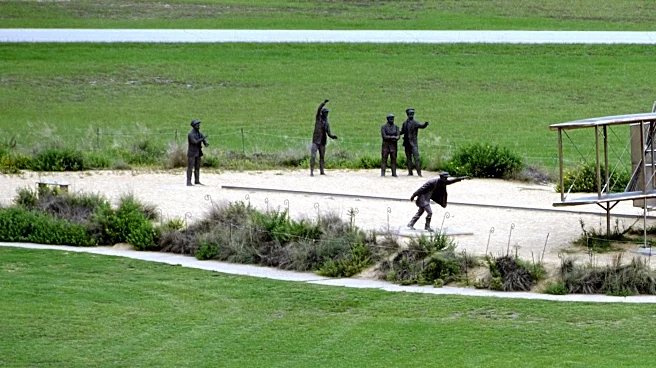





Orville and Wilbur Wright, American aviation pioneers, embarked on a remarkable journey that led to the invention of the airplane. Their path was not a straightforward one, involving various entrepreneurial ventures and a deep-seated curiosity that ultimately propelled them into the realm of flight. Their early lives and diverse experiences, from printing to bicycle manufacturing, laid the groundwork for the meticulous research and experimentation
that would define their legacy. This narrative explores the progression of their careers, the influences that shaped their thinking, and the pivotal moments that led to their historic achievements.
Early Life and Entrepreneurial Ventures
Both Wilbur and Orville Wright attended high school, though neither received a diploma. The family's move in 1884 from Richmond, Indiana, back to Dayton, Ohio, where they had lived in the 1870s, prevented Wilbur from receiving his diploma after completing four years of high school. He was posthumously awarded his diploma on April 16, 1994, which would have been his 127th birthday. In late 1885 or early 1886, Wilbur was struck in the face with a hockey stick during an ice-skating game, losing his front teeth. This incident led him to become withdrawn, despite his previous vigor and athleticism. He had planned to attend Yale but instead spent the next few years largely housebound, caring for his terminally ill mother, reading extensively in his father's library, and assisting his father with church controversies. During this time, he also expressed unease over his own lack of ambition.
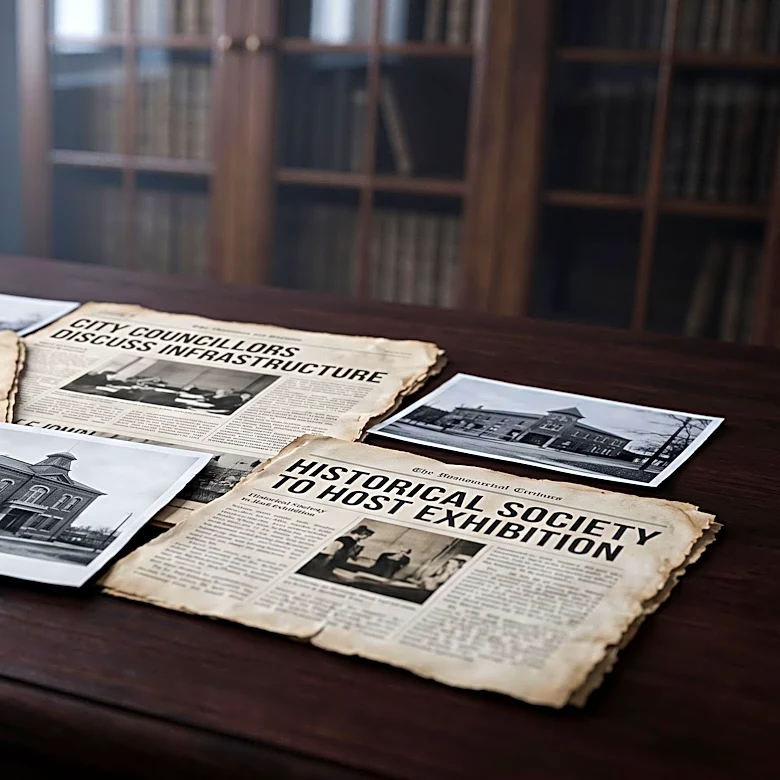
Orville, on the other hand, dropped out of high school after his junior year to start a printing business in 1889. He designed and built his own printing press with Wilbur's help. Wilbur joined the print shop, and in March, the brothers launched a weekly newspaper called the *West Side News*. Subsequent issues listed Orville as publisher and Wilbur as editor. In April 1890, they converted the paper to a daily, *The Evening Item*, but it only lasted four months. They then shifted their focus to commercial printing, with one notable client being Orville's friend and classmate, Paul Laurence Dunbar, who became an internationally acclaimed African-American poet and writer. For a brief period, the Wrights printed the *Dayton Tattler*, a weekly newspaper edited by Dunbar.
The Bicycle Craze and the Spark of Aviation
Capitalizing on the national bicycle craze, which was fueled by the invention of the safety bicycle, the brothers opened a repair and sales shop in December 1892. This business, initially called the Wright Cycle Exchange and later the Wright Cycle Company, began manufacturing their own brand of bicycles in 1896. This endeavor proved crucial as it provided the financial means to fund their burgeoning interest in flight. Their fascination with aviation was ignited in the early or mid-1890s when they encountered newspaper or magazine articles and photographs detailing the dramatic glides of Otto Lilienthal in Germany.
Several significant aeronautical events in 1896 further fueled their interest. In May, Smithsonian Institution Secretary Samuel Langley successfully flew an unmanned steam-powered fixed-wing model aircraft. Mid-year saw Chicago engineer and aviation authority Octave Chanute gather several men to test various glider types over the sand dunes along Lake Michigan. However, it was Lilienthal's death in August from a glider plunge that profoundly impacted the brothers. They later cited his death as the catalyst for their serious engagement in flight research. Wilbur acknowledged Lilienthal as "without question the greatest of the precursors, and the world owes to him a great debt." In May 1899, Wilbur wrote to the Smithsonian Institution, requesting information and publications on aeronautics. Drawing on the work of Sir George Cayley, Chanute, Lilienthal, Leonardo da Vinci, and Langley, they commenced their mechanical aeronautical experimentation that same year.
The Quest for Control and the Wright Company
Despite Lilienthal's tragic end, the brothers adopted his strategy of practicing gliding to master control before attempting motor-driven flight. The death of British aeronaut Percy Pilcher in another hang gliding crash in October 1899 reinforced their belief that a reliable method of pilot control was paramount for successful and safe flight. They viewed control as the unsolved third part of "the flying problem," believing that wings and engines were already sufficiently promising. Their approach diverged sharply from contemporaries like Ader, Maxim, and Langley, who built powerful engines and attached them to airframes with untested control devices, expecting to fly without prior experience. While agreeing with Lilienthal's emphasis on practice, the Wrights recognized the inadequacy of his body-weight shifting method for balance and control. They sought a superior solution.
Wilbur observed that birds changed the angle of their wingtips to roll right or left, concluding this would be an effective way for a flying machine to turn, or "bank," similar to a bird or a person on a bicycle. They also hoped this method would aid in recovering from wind-induced tilts. Their breakthrough came with the discovery of wing-warping, which Wilbur conceived by twisting a long inner-tube box at the bicycle shop. Unlike other investigators who thought of flight as surface locomotion with an elevated surface, using rudders for steering while keeping the machine level, the Wrights embraced the idea of deliberate leaning or rolling. They rejected the notion of "inherent stability" favored by some, believing pilots needed absolute control. Consequently, their early designs, including the 1903 first powered flyer, featured anhedral (drooping) wings, which are inherently unstable but less susceptible to gusty crosswinds. The Wright Company was incorporated on November 22, 1909, with Wilbur as president and Orville as vice president, marking their transition from inventors to industrialists, aiming to capitalize on their invention and further develop aviation.
The Wright Company and its Challenges
The Wright Company was established on November 22, 1909, with Wilbur as president and Orville as vice president. The brothers sold their patents to the company for $100,000, also receiving one-third of the shares in a million-dollar stock issue and a 10 percent royalty on every airplane sold. The company set up a factory in Dayton and a flying school/test flight field at Huffman Prairie, with its headquarters in New York City. In mid-1910, the Wrights modified the design of the Wright Flyer, moving the horizontal elevator from the front to the back and adding wheels while retaining the skids as part of the undercarriage. This new version, designated the "Model B," incorporated a rear elevator, which had become apparent would make an airplane easier to control, especially as speeds increased. The original canard design was never officially called "Model A" by the Wrights, though the U.S. Army Signal Corps, which purchased the airplane, did refer to it as "Wright type A."
With a limited market for airplanes, the Wrights formed the Wright Exhibition Team in early 1910, hiring and training salaried pilots to showcase their machines and win prize money. Wilbur, however, expressed disdain for this "mountebank business." The team debuted at the Indianapolis Speedway on June 13. Tragically, pilots Ralph Johnstone and Arch Hoxsey died in air show crashes before the year ended, leading the brothers to disband the team in November 1911. Nine men had served on the team, and four other former members later died in crashes. Despite these setbacks, the Wright Company made history on November 7, 1910, by transporting the first known commercial air cargo: two bolts of dress silk flown 65 miles from Dayton to Columbus, Ohio, for the Morehouse-Martens Department Store. Company pilot Phil Parmelee completed the flight in an hour and six minutes, with the cargo strapped into the passenger's seat. The $5,000 fee for this advertising exercise highlighted the commercial potential of aviation. The silk was later cut into small pieces and sold as souvenirs. Between 1910 and 1916, the Wright Brothers Flying School at Huffman Prairie trained 115 pilots, instructed by Orville and his assistants. Notable trainees included Henry "Hap" Arnold, who became a Five-Star General and the first head of the U.S. Air Force, and Calbraith Perry Rodgers, who made the first coast-to-coast flight in 1911. The company also employed Ida Holdgreve as head seamstress, who sewed fabric for the aircraft's wings, stabilizers, rudders, and fins. Wilbur Wright died in 1912, and Orville sold the company on October 15, 1915. The company later merged with the Glenn L. Martin Company to form the Wright-Martin Company, which eventually became part of Curtiss-Wright, a manufacturer of airplane components today.