





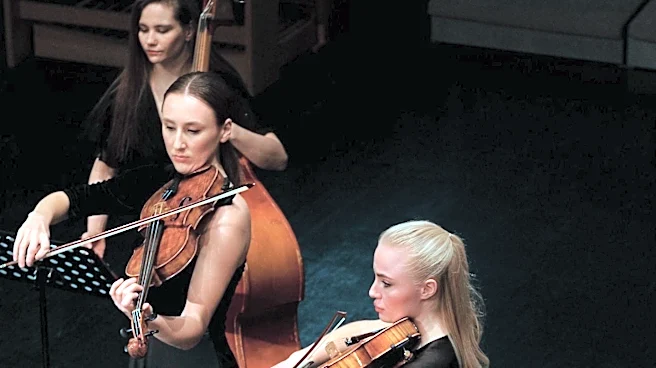

Philip Glass's Symphony No. 2, a work commissioned by the Brooklyn Academy of Music, stands as a notable example of contemporary minimalist composition. Premiered on October 15, 1994, by the Brooklyn Philharmonic Orchestra under the baton of Dennis Russell Davies, this symphony offers a unique exploration of musical structure and harmony. Lasting approximately 40 minutes, the piece is characterized by its postmodern and minimalist style, yet it delves
into experimental territories, particularly concerning its harmonic language. The symphony challenges conventional listening, inviting audiences to engage with music in a new way.
The Genesis and Premiere of Symphony No. 2
The journey of Philip Glass's Symphony No. 2 began with its commission by the Brooklyn Academy of Music, a significant institution in the contemporary arts scene. This commission set the stage for a work that would push boundaries within the symphonic form. The premiere performance was a landmark event, taking place on October 15, 1994. The Brooklyn Philharmonic Orchestra, led by conductor Dennis Russell Davies, brought Glass's vision to life for the first time. This initial performance introduced the public to a symphony that, despite its contemporary and minimalist roots, offered a rich tapestry of sound and structural innovation.
The choice of the Brooklyn Philharmonic Orchestra and Dennis Russell Davies for the premiere underscored the work's connection to a vibrant and forward-thinking musical environment. The symphony's duration of 40 minutes allowed for an expansive musical narrative, unfolding across three continuous movements. These movements, while linked, presented contrasting themes, contributing to the work's dynamic and evolving character. The premiere marked a significant moment in Glass's compositional output, showcasing his continued exploration of musical language.
Structural Experimentation and Orchestral Sonorities
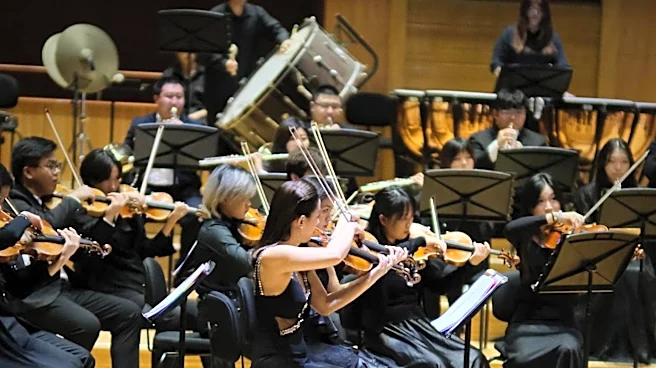
Beyond its minimalist classification, Symphony No. 2 is distinguished by its structural experimentation and the unique orchestral sonorities it employs. The scoring for the work is extensive, featuring piccolo, two flutes, two oboes doubling cor anglais, E-flat clarinet, two B-flat clarinets, bass/contrabass clarinet, two bassoons, four horns, three trumpets, three trombones, tuba, four percussionists, timpani, two harps, piano, celesta, and strings. This diverse instrumentation allows Glass to create a wide array of textures and colors, moving beyond the typical expectations of a minimalist piece.
James M. Keller highlights that while structural experimentation and orchestral sonorities are present, the most striking aspect of Glass's Symphony No. 2 lies in how melody and harmony interlock in a polytonal fashion. This polytonal approach is central to the symphony's innovative character. Glass himself has commented on his use of polytonality, noting that the "great experiments of polytonality carried out in the 1930s and 40s show that there's still a lot of work to be done in that area." This statement reveals his intention to build upon historical precedents while forging new paths.
The Ambiguous Qualities of Polytonality
Philip Glass's interest in polytonality in Symphony No. 2 is not merely an academic exercise but a deliberate effort to explore the "ambiguous qualities" that can arise from it. He explains that harmonic language and melodic language can coexist closely or at a calculated distance, and their relationship can be worked out in terms of either coexisting harmonies or ambiguous harmonies. This perspective suggests a nuanced approach to how different tonal centers interact within the composition.
Glass emphasizes that his primary interest lies in how a listener's perception of tonality can vary, akin to an optical illusion. He states, "how what you hear depends on how you focus your ear." This insight is crucial to understanding the symphony's impact, as it places the listener's active engagement at the forefront. The work is not about inventing a new language entirely, but rather about "inventing new perceptions of existing languages." This philosophy invites listeners to experience familiar musical elements in unfamiliar and thought-provoking ways, making Symphony No. 2 a compelling piece for those interested in the evolving landscape of contemporary classical music.