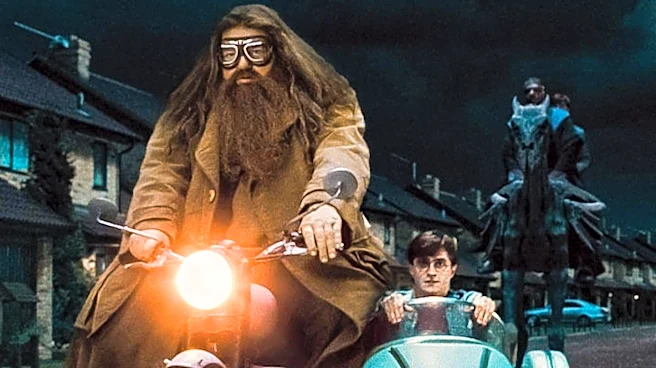



The cinematic adaptation of J.K. Rowling's final Harry Potter book, *Harry Potter and the Deathly Hallows*, presented a unique challenge for filmmakers. The decision to divide the single novel into two distinct films, *Part 1* and *Part 2*, was a significant creative choice that shaped the entire production. This approach allowed for a more comprehensive translation of the book's intricate plot and character arcs to the screen, ensuring that the beloved
story received the detailed treatment it deserved. The production aimed to remain faithful to the spirit of Rowling's work, a commitment that guided the extensive filming process.
The Creative Imperative to Split the Story
The idea to split *Harry Potter and the Deathly Hallows* into two parts originated from executive producer Lionel Wigram, who cited a "creative imperative" for the division. Initially, producer David Heyman was hesitant, but after rereading the book and discussing it with screenwriter Steve Kloves once the 2007–08 Writers Guild of America strike concluded, and with J.K. Rowling's approval, he agreed. This decision was driven by the recognition that the final book was packed with vital plot points essential to completing the story arcs of all its characters. Warner Bros. executive Jeff Robinov stated that expanding the adaptation into two parts was the best way to do justice to the book and its many fans.Both parts of *Deathly Hallows* were treated as a single film during principal photography, which began on February 19, 2009, and concluded on June 12, 2010. Reshoots for the epilogue scene took place in December 2010. This back-to-back filming approach allowed for continuity and a cohesive vision across the two installments, even though they would ultimately be released as separate films with distinct tones.
Directorial Vision and Tonal Differences
David Yates, who had directed previous films in the series, was chosen to helm both parts of *Deathly Hallows*. Other notable directors, including Alfonso Cuarón and Chris Columbus, had expressed interest in returning, and Guillermo del Toro had also shown interest but was unavailable due to commitments with *The Hobbit*. Yates's selection ensured a consistent directorial voice for the concluding chapters of the saga. J.K. Rowling was credited as a film producer for the first time, alongside David Heyman and David Barron, though her involvement in the filmmaking process remained consistent with previous films.Director David Yates and producer David Heyman emphasized that while *Part 1* and *Part 2* were produced as one film, they were conceived as two distinct cinematic experiences. Yates described *Part 1* as a "road movie" that is "quite real" and "almost like a vérité documentary." This approach aimed to capture the gritty, on-the-run nature of Harry, Ron, and Hermione's quest outside the confines of Hogwarts. Daniel Radcliffe, who played Harry Potter, noted that the absence from Hogwarts in *Part 1* would "freshen things up" and offer audiences a "totally different look."
Crafting the Narrative and Character Arcs
Screenwriter Steve Kloves wrote the script for *Part 1* before beginning work on *Part 2* in April 2009. The extended length provided by the two-part adaptation allowed for a closer recreation of the books than previous films. This commitment to fidelity was a cornerstone of the production, aiming to satisfy fans who had followed the story for years. Radcliffe also commented on the intense relationship between Harry and Voldemort in *Part 2*, highlighting the brutal nature of their final confrontation and how seeing Voldemort brutalize a 17-year-old boy would be impactful.The contrast between the two parts was a deliberate creative choice. While *Part 1* focused on the journey and the growing sense of isolation and danger, *Part 2* was envisioned as "much more operatic, colorful and fantasy-oriented," a "big opera with huge battles." This distinction allowed the filmmakers to explore different narrative styles and emotional depths, culminating in a grand finale. The events of the seventh book also influenced the writing of the sixth film, demonstrating the interconnectedness of the entire series' adaptation.