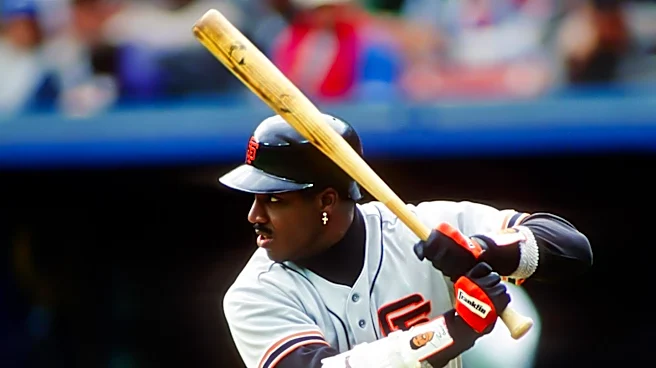





Barry Bonds' career with the San Francisco Giants, spanning from 1993 to 2007, represents a pivotal and record-setting period in Major League Baseball history. After establishing himself as a star with the Pittsburgh Pirates, Bonds made a highly anticipated move to the Giants, a team deeply connected to his family legacy. This era saw him achieve unprecedented individual statistics, solidify his status as one of the game's all-time greats, and etch
his name into the MLB record books with numerous hitting milestones. His time in San Francisco was not just about personal achievements, but also about his connection to the team and its history.
A Return Home and a New Number
Becoming an unrestricted free agent on October 26, 1992, Barry Bonds was a highly sought-after player, drawing interest from teams like the Atlanta Braves and New York Yankees. However, his decision to sign with the San Francisco Giants on December 6, 1992, was a significant moment, described by Bonds as coming "home." The six-year, $43.75 million contract was a record-breaking deal at the time, reflecting his immense value. This move held deep personal meaning for Bonds, as his father had played his first seven career years with the Giants, and his godfather, Willie Mays, had spent 21 of his 22 MLB seasons there.
Upon joining the Giants, Bonds initially intended to wear number 24, the number he had worn for most of his time with the Pirates. However, number 24 was retired by the Giants in honor of Willie Mays. Despite Mays' blessing to unretire the number for Bonds, public and media commotion led Bonds to choose number 25 instead. This decision was a tribute to his father, Bobby Bonds, who had worn number 25 during his time in San Francisco. The deal was finalized on December 8, 1992, and in an emotional press conference, Bonds expressed that following in the footsteps of his father and godfather was "unbelievable" and "like a boyhood dream that comes true for me." His father, Bobby Bonds, also joined the Giants as a coach in the same year, further cementing the family's connection to the franchise.
Unprecedented Hitting Records and Milestones
Bonds' tenure with the Giants was characterized by an extraordinary display of power and plate discipline. In the strike-shortened 1994 season, he hit .312 with 37 home runs, 81 RBI, and a league-leading 74 walks in just 112 games, finishing fourth in NL MVP voting. The following year, 1995, he played in 144 games, hitting .294 with 33 homers and 104 RBI. By 1997, he hit .291, his lowest average since 1989, but still managed 40 home runs for the second consecutive year, 101 RBI, and led the league with 145 walks. He also stole 37 bases, tying his father's record for most 30-30 seasons (five), and placed fifth in NL MVP balloting.
The 2002 season was particularly remarkable. Bonds re-signed with the Giants for a five-year, $90 million contract on January 15, 2002. He started the season by hitting five home runs in the Giants' first four games, tying Lou Brock's 35-year record. He won the NL batting title with a career-high .370 average, recorded 46 home runs, 110 RBI, and only 47 strikeouts in 403 at-bats. Despite playing nine fewer games than the previous season, he set a Major League record with 198 walks, 68 of which were intentional, surpassing Willie McCovey's 1969 record of 45. His .799 slugging percentage was then the fourth-highest all-time, and he broke Ted Williams' MLB record for on-base average with .582. Bonds also hit his 600th career Major League home run on August 9, 2002, against his former team, the Pittsburgh Pirates, less than a year and a half after hitting his 500th. In the 2002 postseason, he batted .322 with eight home runs, 16 RBI, and 27 walks, leading the Giants to the World Series, where they ultimately lost to the Anaheim Angels in seven games. In 2003, he became the only member of the career 500 home run/500 stolen base club by stealing second base on June 23.