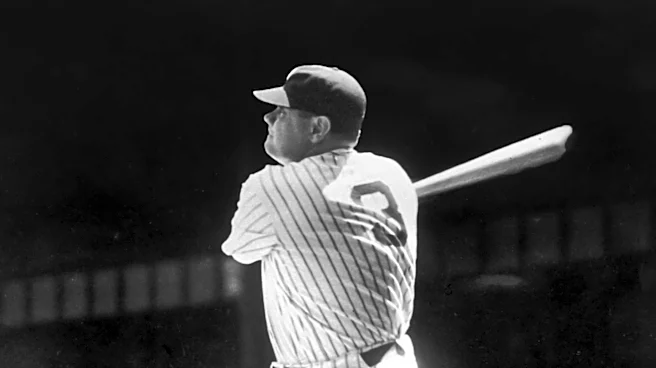






In November and December of 1934, baseball legend Babe Ruth embarked on a barnstorming tour of Japan that transcended mere athletic competition. As the undisputed face of American baseball and arguably the most famous athlete of his era, Ruth's presence transformed the 1934 Japan Tour into a monumental cultural event. He led an all-star team of American League players against a Japanese squad, captivating an entire nation with his charisma and prodigious
talent. This tour not only showcased Ruth's enduring appeal but also played a significant role in fostering goodwill and laying the groundwork for professional baseball in Japan, with Ruth at the very center of the spectacle.
The Arrival of a Legend
Babe Ruth's journey to Japan began in October 1934, when he sailed aboard the "Empress of Japan." His arrival, along with 14 other American League all-stars, was met with an extraordinary display of public enthusiasm. More than half a million Japanese citizens lined the streets of Tokyo to welcome the baseball contingent, a testament to Ruth's global fame and the widespread excitement surrounding the tour. This massive reception underscored the fact that Ruth was more than just a baseball player; he was an international celebrity, a symbol of American sporting prowess and cultural influence.
Ruth's status as a global icon was evident throughout his stay. His daughter, who accompanied him on the tour, later recalled the immense popularity her father enjoyed. She noted that fans would rise to their feet every time Ruth came to bat, waving both Japanese and American flags in a unified display of admiration. This level of adoration highlighted the profound impact Ruth had on the Japanese public, transcending language and cultural barriers through the universal appeal of his athletic achievements and larger-than-life persona.
Ruth's Dominance on the Diamond
During the 18 games played against the All-Nippon team, Babe Ruth continued to demonstrate why he was considered one of the greatest players of all time. The American team, composed entirely of American League stars, won all eighteen contests, showcasing their superior skill. However, it was Ruth's individual performance that often stole the show. He hit an impressive 13 home runs during the tour, thrilling tens of thousands of fans who packed stadiums like Meiji-Jingu in Tokyo and Koshien in Kobe.
Each home run further solidified his legendary status in the eyes of the Japanese spectators, who eagerly anticipated his every at-bat. His powerful hitting was a spectacle that transcended the competitive aspect of the games, becoming a central attraction of the tour. Ruth's ability to consistently deliver such memorable performances ensured that his visit would be etched into the memories of those who witnessed it, reinforcing his image as a baseball titan.
Off-Field Encounters and Lasting Impressions
Beyond the baseball diamond, Babe Ruth's interactions with the Japanese public further illustrated his immense popularity. One memorable anecdote occurred while he was staying at the Imperial Hotel in Tokyo. A gentleman, dressed in a kimono, knocked on Ruth's door, initially asking for a single autograph on a baseball. Ruth happily obliged, only for the man to then produce a dozen or so more baseballs from his kimono for the star to sign. This charming encounter, witnessed by Ruth's wife and daughter, highlighted the fervent desire of fans to connect with the legendary player.
After the Japanese leg of the tour concluded, the American team played additional games in Shanghai and Manila. While most players returned home, Ruth and his family continued their westward journey for another four months, extending his global travels. The 1934 tour was not just a series of games for Ruth; it was a significant chapter in his life, cementing his popularity in Japan and contributing to the global spread of baseball. His presence was a "big factor in making professional baseball possible in Japan," leaving an indelible mark on the sport's history in the country.