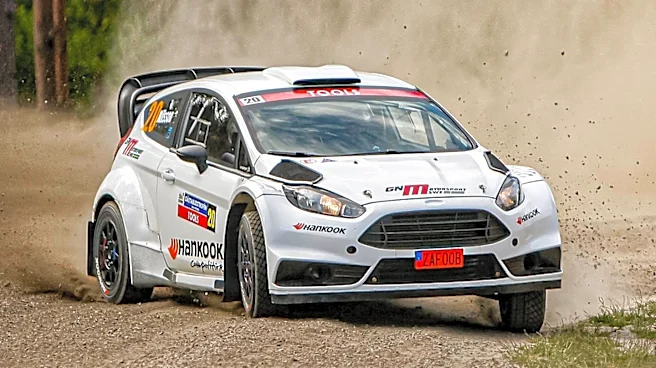






Rally Poland, known in Polish as Rajd Polski, stands as a testament to enduring motorsport tradition, having been established in 1921. This makes it the third-oldest rally event globally, surpassed only by the Österreichische Alpenfahrt and the Monte Carlo Rally. Its long history reflects a deep-rooted passion for rally racing in Poland, evolving from its early days into a significant fixture on the international motorsport calendar. The event has
seen various transformations, including periods as part of the European Rally Championship and the prestigious World Rally Championship, showcasing its adaptability and continued relevance in the sport.
Early Beginnings and European Prominence
The Rally of Poland's inauguration in 1921 marked the start of a rich legacy. For decades, it cultivated a strong reputation within Europe, eventually becoming a permanent fixture of the European Rally Championship in 1960. This consistent presence underscored its importance in the European rally scene, attracting top talent and fostering a competitive environment. While primarily a European championship event, there were occasional editions where it was elevated to the World Rally Championship, highlighting its potential and the quality of its organization.
In 1973, the Rally of Poland achieved a significant milestone by being included as one of the thirteen rounds of the newly established World Rally Championship. This was a major recognition of its stature and the challenging nature of its courses. However, its tenure in the WRC was brief, as it was removed from the 1974 calendar. Despite this setback, the event continued to thrive within the European championship framework, maintaining its status as a premier rally competition.
The Quest for World Rally Championship Return
After its initial brief appearance in the WRC, event organizers harbored ambitions for a permanent return. A pivotal move occurred in 2005 when the rally relocated to Mikołajki in the Masurian Lake District. This strategic change was part of a concerted effort to lobby for the event's re-inclusion in the World Rally Championship. The organizers' dedication led to the rally being run as a candidate event in both 2007 and 2008, demonstrating their commitment to meeting WRC standards.
Their persistence paid off, and Poland successfully returned to the World Rally Championship in 2009, an event won by Mikko Hirvonen. This marked a triumphant comeback, albeit a short-lived one, as the rally was again removed from the WRC after just one season, replaced by Rally Bulgaria. The journey to secure a stable position in the WRC was challenging, characterized by periods of inclusion and subsequent removal, reflecting the dynamic nature of international motorsport calendars.
Renewed WRC Inclusion and Safety Concerns
The FIA's tender for new events during the 2012 season presented another opportunity for Rally Poland. After a one-year delay, events in various countries, including Poland, were considered for the 2014 season calendar. The Rally of Poland emerged as the successful candidate, making its return to the championship in 2014. This iteration of the rally even proposed a route that featured stages in nearby Lithuania, mirroring the format of the Rally of Sweden, which crosses into Norway.
Despite its successful return and innovative route planning, the Rally of Poland faced renewed scrutiny regarding safety. The FIA repeatedly raised concerns about the event's safety protocols, ultimately leading to its removal from the calendar after the 2017 season. This decision underscored the paramount importance of safety in top-tier motorsport, even for an event with such a long and storied history. The Rally of Poland's journey through the World Rally Championship highlights the continuous evolution and challenges faced by major motorsport events in maintaining their status and ensuring participant and spectator safety.