




Carl Vinson, a prominent American politician, played a crucial role in the expansion of the United States Navy during the 20th century. Known as "The Father of the Two-Ocean Navy," Vinson's legislative efforts were instrumental in preparing the U.S. Navy for the challenges of World War II. Serving in the U.S. House of Representatives for over 50 years, Vinson's dedication to national defense and naval power left a lasting legacy. This article explores
Vinson's contributions to naval expansion and his impact on the U.S. Navy.
Early Legislative Efforts
Carl Vinson's journey in Congress began in 1914 when he was elected as a representative from Georgia. A member of the Democratic Party, Vinson quickly became a champion for national defense, particularly the U.S. Navy and Marine Corps. In 1931, he became chairman of the House Naval Affairs Committee, a position that allowed him to influence naval policy significantly.
Vinson's first major legislative achievement was the Vinson–Trammell Act of 1934, which authorized the replacement of obsolete vessels and a gradual increase in ships within the limits of the Washington Naval Treaty of 1922 and London Naval Treaty of 1930. This act was necessary to address the aging U.S. Navy and the growing threat from the Japanese Navy, which had repudiated the naval treaties in late 1934.
The Two-Ocean Navy Act
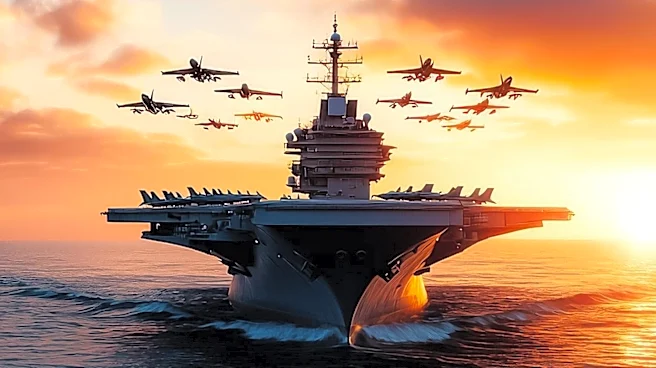
Vinson's most notable contribution came with the Two-Ocean Navy Act of 1940, also known as the Vinson–Walsh Act. This ambitious program called for a 70% increase in the size of the U.S. Navy, adding 257 ships amounting to 1,325,000 tons. The act emphasized aircraft carriers as the backbone of modern naval task forces, reflecting Vinson's understanding of the evolving nature of naval warfare.
The Two-Ocean Navy Act was enacted on July 19, 1940, and played a pivotal role in preparing the U.S. Navy for World War II. The expanded fleet allowed the United States to match the latest ships from Japan and project power across both the Atlantic and Pacific Oceans. Vinson's foresight and leadership were instrumental in ensuring the U.S. Navy's readiness for the global conflict.
Legacy and Recognition
Carl Vinson's contributions to the U.S. Navy were recognized with numerous honors. In recognition of his efforts, a nuclear-powered aircraft carrier was named USS Carl Vinson, an honor rarely given to a person while living. Vinson Massif, Antarctica's highest mountain, is also named after him, along with Mount Vinson and Vinson Plateau.
Vinson's legacy extends beyond his legislative achievements. His commitment to national defense and the modernization of the military during the Cold War era ensured that the U.S. Navy remained a formidable force. As the longest-serving member of the U.S. House of Representatives from Georgia, Vinson's impact on American naval history is undeniable.